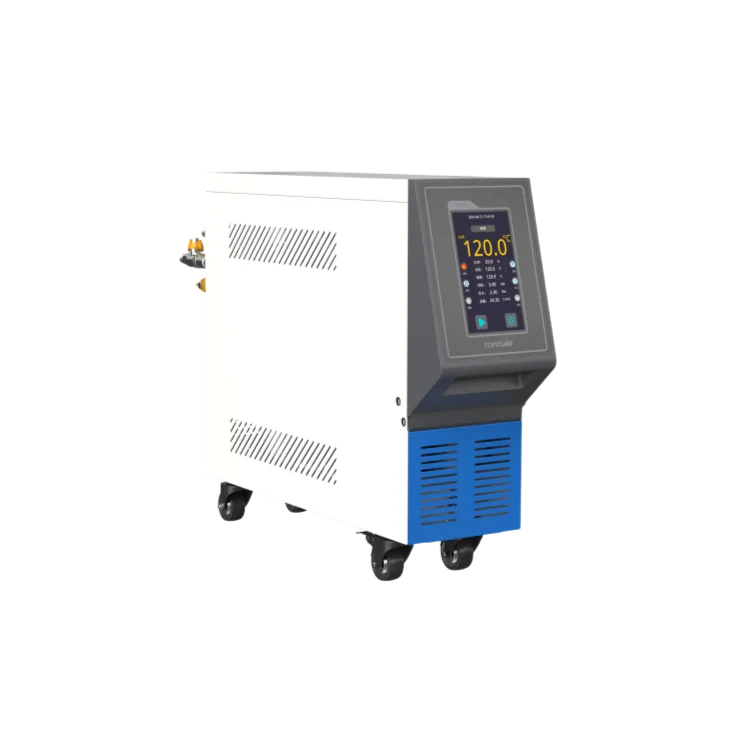
Temperature stability is key to ensuring consistent quality in injection moulding. When a mould temperature controller exhibits uneven temperature distribution or overheating, this often rapidly triggers a series of problems, such as dimensional deviations, surface defects, extended cycle times, and increased scrap rates. As a Product Manager for Topstar’s advanced moulding equipment, I have assisted numerous production teams in diagnosing and resolving these issues through practical and systematic adjustment methods. With engineers mastering the correct techniques and following a logical sequence of steps, most temperature issues can be resolved without replacing major components.
Identifying Symptoms of Temperature Inhomogeneity in Mould Temperature Controllers
Identifying the symptoms of temperature inhomogeneity is the crucial first step in resolving issues with mould temperature controllers. Operators often notice differences in product appearance or dimensions between different cavities, extended cooling times in specific areas of the mould, or inconsistent surface gloss. Even when the mould temperature controller’s temperature setting remains unchanged, sensor readings may indicate temperature differences of several degrees between different parts of the mould.
At the injection moulding machine level, these thermal fluctuations can lead to uneven shrinkage, warping and deformation, as well as uneven cavity filling. Topstar’s service records show that when teams encounter such issues, they often adjust injection moulding process parameters first, when in fact the root cause is uneven mould temperature. Systematic observation of process data and the physical characteristics of the products helps to identify the mould temperature controller as the source of the problem. A manufacturer of precision electronic enclosures once encountered persistent dimensional deviations on one side of a multi-cavity mould. After mapping the surface temperature distribution of the mould, the team confirmed that the temperature output from the mould temperature controller was uneven.
Checking the Temperature Control Unit’s Fluid Flow Rate and Circuit Balance
Checking the fluid flow rate and circuit balance is an effective method for addressing common causes of temperature unevenness in temperature control units. Restricted flow, blocked flow channels, or an unbalanced parallel circuit can all lead to localised overheating or overcooling within the mould. Even if the heaters and pumps are functioning correctly, they cannot compensate for the effects of uneven distribution of the heat transfer fluid. Topstar recommends verifying the flow rate in each circuit, inspecting filters and strainers, and ensuring that hoses and fittings are free from kinks or internal collapses. Balance valves should be adjusted to ensure that the flow rate in each area matches its thermal load. For large moulds, analysing circuit diagrams in conjunction with simple flow meter tests can quickly identify flow imbalances that are difficult to detect by visual inspection alone.
A manufacturer of automotive interior components resolved persistent temperature variations on large panel moulds by systematically balancing the temperature control unit’s fluid supply circuits. Once flow rates were balanced, temperature variations across the mould surface were significantly reduced, and the flatness of the moulded parts improved accordingly. Regular flow rate checks remain one of the most effective means of ensuring uniform temperature distribution.
Correcting Sensor Installation and Calibration Issues in Mould Temperature Controller
Correcting issues relating to sensor installation and calibration ensures that the mould temperature controller receives accurate feedback and responds appropriately. If a sensor is positioned too far from a critical surface, is not properly seated in its mounting hole, or provides inaccurate readings due to calibration drift, the controller will adjust based on incorrect values, which may result in systematic overheating or insufficient heating of the mould.
Topstar recommends checking the installation depth of the sensors, the quality of thermal contact and the integrity of the wiring, and comparing the readings with a calibrated reference thermometer. Many modern controllers allow for offset adjustments once the actual temperature difference has been determined. Replacing ageing sensors at the recommended intervals prevents a decline in moulding machine stability caused by gradual drift.
Adjusting the PID Settings and Control Response of a Mould Temperature Controller
Adjusting the PID settings and control response allows fine-tuning of how the mould temperature controller reacts to temperature deviations. Excessive proportional gain can lead to overshoot and oscillation; insufficient gain, on the other hand, can result in a sluggish response and persistent deviations. The integral and derivative terms further determine the controller’s ability to eliminate steady-state error and suppress rapid changes.
Topstar technicians typically begin by adopting the PID parameters recommended by the manufacturer for a specific controller model and heat transfer medium, before making fine adjustments whilst monitoring temperature trends. Recording the response following manual changes to the setpoints provides a clear indication of whether the control loop is stable, sluggish or oscillating. Appropriate parameter adjustments can both minimise overheating and reduce the time required for temperature recovery following mould changes or production interruptions.
Managing the Thermal Load and Cooling Capacity of Mould Temperature Controller
Effective management of thermal load and cooling capacity prevents issues arising from the mould temperature controller operating under excessive load during production. High-speed moulding cycles, large moulds or high cooling medium temperatures may all cause the equipment to exceed its design capacity, leading to a gradual rise in temperature and ultimately triggering an overheating alarm. In such cases, whilst the equipment may appear to have failed, the actual problem often lies in a mismatch between the equipment’s capacity and the requirements, or an insufficient supply from the central cooling system.
Topstar recommends verifying that the temperature control unit’s specifications match the mould’s thermal requirements and ensuring that the factory’s cooling water conditions or environmental conditions meet the unit’s rated performance requirements. Cleaning the heat exchanger, inspecting the condition of the pump housing, and ensuring adequate ventilation around the unit can often restore the unit to its original performance. In certain applications, distributing the thermal load across two temperature zones or two units can provide a more robust solution.
Preventative Maintenance Measures to Maintain Temperature Controller Performance
Preventative maintenance measures ensure that temperature controllers operate within their design parameters and reduce the frequency of faults caused by temperature inconsistencies or overheating. Regularly cleaning filters, checking fluid quality, inspecting hoses, and verifying pump performance can prevent many common potential faults. Scheduled sensor calibration and control parameter checks allow issues to be identified and corrected before parameter drift affects production.
Topstar provides maintenance guidelines tailored to different operating environments and duty cycles. Factories that adhere to these maintenance programmes experience fewer unplanned downtimes for their injection moulding machines and enjoy more stable thermal performance. Simple daily checks can often effectively prevent serious faults from occurring.
