A Winter of Wood Heat is Earned During the Hottest Working Months
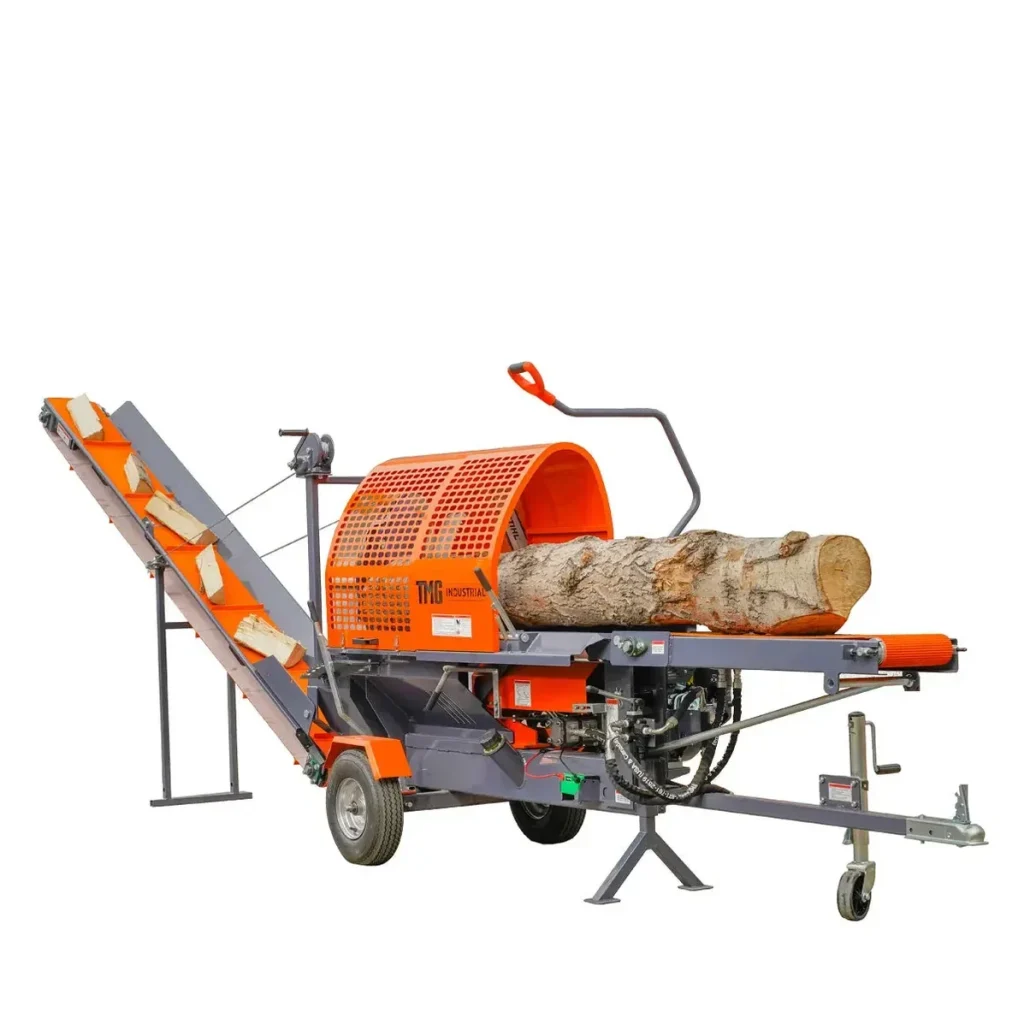
Across the rural United States, households that heat with wood spend the long days of summer laying in the cords a cold season will demand, and the machine that has made that push manageable is the firewood processor.
The reason is timing. Green wood needs months to dry, so the cutting and splitting must happen in the summer heat to be ready by the first frost.
A Twenty Ton Rating is Really a Promise About Daily Volume
The twenty tons name the force the hydraulic ram brings to each round, which lets one machine work oak and elm nearly as fast as softer pine.
Matched to a fourteen horsepower engine, a firewood processor turns a steady feed of logs into finished wood by the hour rather than the afternoon.
How the Logs Reach the Machine Sets the Pace of the Day
Feeding is the quiet limit on what a firewood processor yields. A whole log is heavy, and lifting each by hand tires a crew long before the engine labors.
Rolling logs onto a feed deck, or placing them with a loader, keeps the operator upright and the throat fed without a punishing lift each time.
- Feed deck: roll logs on without a lift
- Loader or grapple: place the heaviest logs
- Cut lengths: bucked to suit the trough
Log Size and Species Decide What a Session Yields
Straight, sound logs of a middling diameter feed fastest, round after round. Oversized butts and forked crotch wood slow the line and resist the wedge.
Reading the wood on hand is how an operator judges a realistic day, since a uniform stack of eight inch logs far out-produces a heap of gnarled rounds.
Volume Work Rewards a Settled, Unhurried Routine
Handling logs all day is where fatigue and haste creep in, and both turn dangerous around a saw and wedge.
Keep hands well clear of the cutting zone, stand on firm footing, and let the firewood processor cycle at its own pace through a long session.
Fresh Split Wood is Only Half Finished Until it Seasons
The wood that leaves the machine is wet, near half its weight in water, and burning it green wastes heat and coats a chimney in creosote.
Summer is the drying window as much as the cutting one, so how the pile is stacked matters as much as how it was split.
- Off the ground: keeps the bottom row dry
- Single rows: let the summer air pass through
- Cover the top only: shed rain, keep airflow
Where the Machine Pays Off and Where it Does Not
- Strength: whole logs into split wood fast
- Strength: one worker lays in a winter supply
- Limit: the heaviest logs still need a loader
- Limit: green wood must season before it burns
For a home that burns several cords a winter, a firewood processor that clears a cord in under an hour builds a whole season across a few weekends.
A Summer Machine that Pays Back Every Cold Night
Read across the season, the value sits in the sequence: cut and split in summer, stack to dry through the heat, and burn seasoned wood all winter.
As more rural households cut their own fuel, the wood processing equipment that TMG Industrial builds keeps the summer woodpile a full season ahead of the winter stove.
