Ever noticed your shoes feeling tighter at the end of the day than they did in the morning? It’s a common experience. Whether you’ve spent hours on your feet, sat through a long flight, or worked at a desk all day, swelling in the legs and feet can leave them feeling heavy, stiff, and uncomfortable.
For many people, compression socks for swollen legs offer a simple, clinically supported way to manage this discomfort. By encouraging healthy circulation, they can help reduce swelling, ease tired legs, and improve day-to-day comfort when used correctly.
What Causes Swollen Legs and Feet?
Swelling, medically known as oedema, occurs when excess fluid builds up in the body’s tissues. Because gravity pulls fluid downward, it often collects around the ankles and feet, especially after long periods of sitting or standing.
Some of the most common causes include:
- Standing for long work shifts
- Sitting for extended periods at work or while travelling
- Pregnancy
- Minor injuries or recovery after physical activity
- Chronic venous insufficiency (poor blood flow in the leg veins)
- Certain medical conditions affecting the heart, kidneys, liver, or lymphatic system
Occasional swelling after a busy day is often harmless. However, swelling that appears suddenly, affects only one leg, or is accompanied by severe pain, redness, chest pain, or shortness of breath requires immediate medical attention.
How Compression Socks Help Reduce Swelling
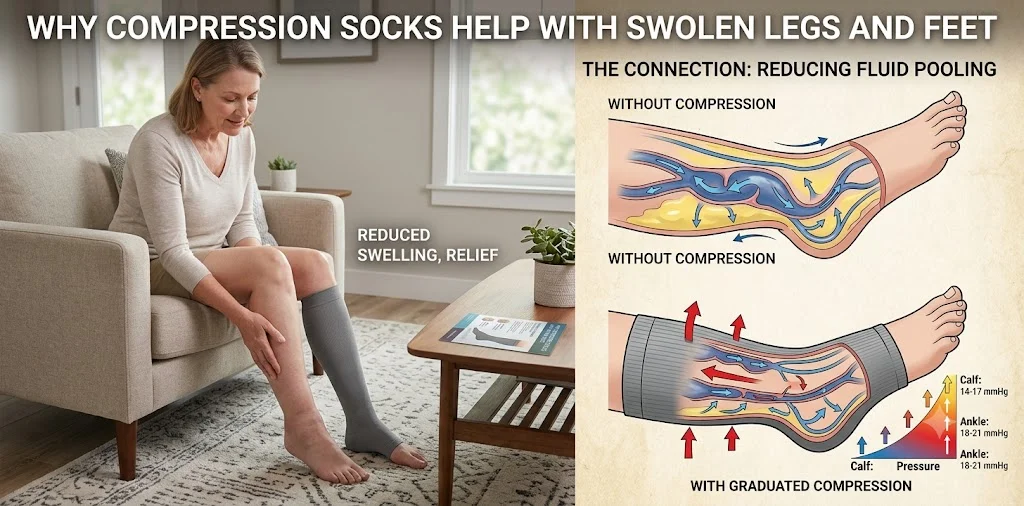
The main reason compression socks for swollen legs work is their graduated compression design.
Unlike ordinary socks, they apply the greatest pressure around the ankle and gradually less pressure higher up the leg. This gentle pressure supports the veins in moving blood back towards the heart, helping reduce fluid pooling in the lower limbs.
When worn correctly, compression socks may help:
- Reduce swelling in the ankles and feet
- Improve blood circulation in the legs
- Ease feelings of heaviness and tiredness
- Improve comfort during prolonged sitting or standing
- Reduce swelling associated with long-distance travel
Many people report that their legs feel lighter and less fatigued after wearing compression socks throughout the day.
When Should You Wear Compression Socks?
For the best results, put compression socks on first thing in the morning, before swelling has a chance to develop.
They’re especially useful during:
- Long workdays spent standing
- Office work involving prolonged sitting
- Air travel or long road trips
- Walking or exercise, when recommended by your healthcare professional
- Recovery from certain medical conditions or procedures, following medical advice
Consistency matters. Wearing them during activities that usually trigger swelling provides the greatest benefit.
How Tight Should Compression Socks Feel?
Compression socks should feel firm but comfortable.
You should notice gentle, even pressure without pain, numbness, tingling, or significant discomfort. If your toes become cold, change colour, or feel unusually numb, the socks may not fit correctly or the compression level may be unsuitable.
Choosing the correct size based on your ankle and calf measurements is essential for both comfort and effectiveness.
Can Compression Socks Be Used With Other Support Products?
Yes, but it’s important to understand that different products serve different purposes.
Compression socks are designed to improve circulation and help manage swelling. If you also experience foot pain caused by poor foot mechanics or plantar fasciitis, supportive footwear or orthotic insoles plantar fasciitis products may help improve foot comfort and alignment.
While these products can complement each other in a broader treatment plan, they address different issues. Compression socks are not a treatment for plantar fasciitis, and orthotic insoles do not reduce leg swelling.
Who Should Avoid Compression Socks?
Compression socks are not suitable for everyone.
Before wearing them, speak with your GP or healthcare professional if you have:
- Severe peripheral arterial disease
- Certain circulation disorders
- Significant skin infections or open wounds
- Severe heart failure
- Diabetes with known circulation or nerve problems
A healthcare professional can recommend whether compression therapy is appropriate and advise on the correct compression level.
Conclusion
Swollen legs and feet can make even simple daily activities feel more tiring than they should. Fortunately, the right support can make a noticeable difference.
Compression socks for swollen legs help improve circulation, reduce fluid build-up, and ease feelings of heaviness throughout the day. Whether you’re working long shifts, travelling, or simply looking for greater daily comfort, they can be a practical addition to your routine.
If your swelling is persistent, worsening, or accompanied by concerning symptoms, seek medical advice to identify the underlying cause before beginning compression therapy.
FAQs
1. Do compression socks reduce swollen feet?
Yes. Compression socks help improve blood circulation and reduce fluid accumulation in the lower legs and feet, which can help decrease swelling for many people.
2. When should I wear compression socks during the day?
They’re generally most effective when put on first thing in the morning and worn during activities involving prolonged sitting, standing, or travel.
3. Are compression socks good for standing all day at work?
Yes. People who spend long hours standing, such as nurses, teachers, retail workers, and hospitality staff, often wear compression socks to help reduce leg fatigue and swelling.
4. How tight should compression socks feel?
They should feel snug and supportive without causing pain, numbness, tingling, or restricted circulation. Correct sizing is essential.
5. Who should avoid wearing compression socks?
People with severe peripheral arterial disease, certain circulation disorders, significant skin infections, or severe heart failure should seek medical advice before wearing compression socks. Individuals with diabetes should also consult a healthcare professional, particularly if they have reduced circulation or nerve damage.
