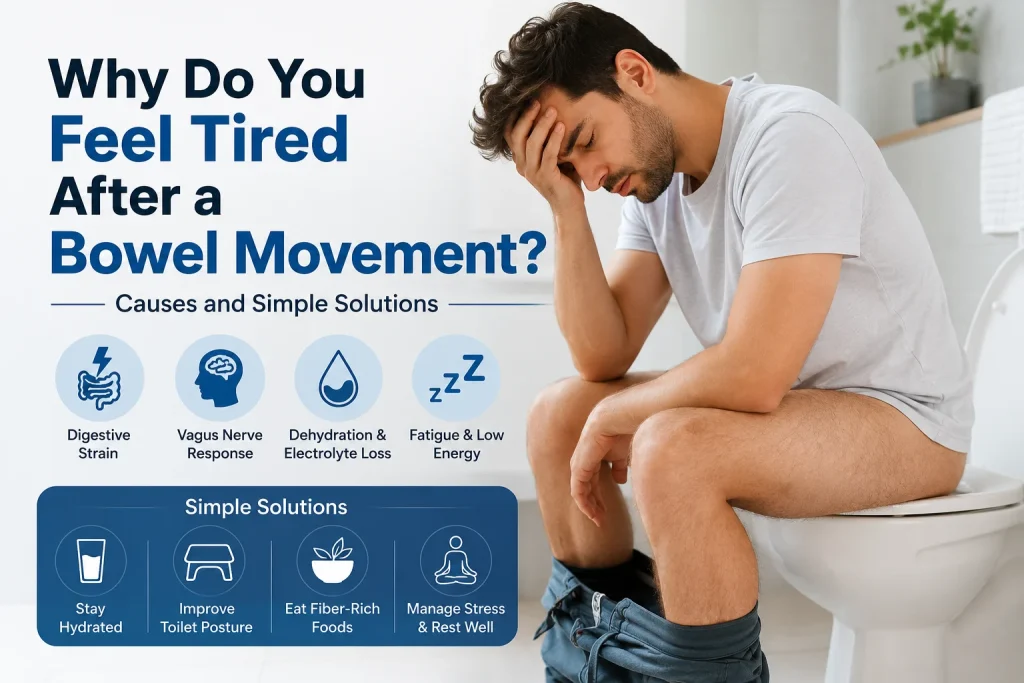
You finish using the toilet, wash your hands, then notice something odd. Instead of feeling relieved, you feel drained. Maybe you’re a little lightheaded. Maybe all you want is to sit down for a few minutes.
If you’ve experienced feeling tired after pooping, you’re not alone. While it can feel unusual, there are several possible reasons behind it. In many cases, it’s linked to temporary factors such as straining, dehydration, or your body’s natural response during a bowel movement.
Here’s what could be happening, when it’s considered normal, and a few simple ways to make bathroom visits more comfortable.
Why do I feel weak or sleepy after pooping?
Feeling weak or sleepy after a bowel movement doesn’t always point to a medical problem. Often, it’s related to how your body reacts while passing stool.
Some common reasons include:
A temporary vasovagal response
During a bowel movement, especially if you’re straining, the vagus nerve can be stimulated. In some people, this triggers a vasovagal response, which may briefly lower heart rate and blood pressure.
This can lead to temporary symptoms such as:
- Feeling weak
- Mild dizziness
- Sweating
- Nausea
- Sleepiness
These symptoms usually improve within a few minutes.
Constipation and straining
If you’re constipated, your body has to work harder to pass stool. Repeated straining increases pressure in the abdomen and can contribute to temporary fatigue, particularly if bowel movements are difficult or prolonged.
Dehydration
Not drinking enough fluids can make stools harder and more difficult to pass. Dehydration itself can also contribute to tiredness, headaches, and feeling lightheaded.
Is it normal to feel dizzy after a bowel movement?
Yes, occasional mild dizziness can happen, especially if you’ve strained, are dehydrated, or stand up too quickly after sitting for several minutes.
However, dizziness should only be temporary.
If you regularly experience fainting, severe dizziness, chest pain, or ongoing weakness after using the toilet, it’s important to see your GP to identify the underlying cause.
Can straining during bowel movements make you tired?
Yes. Straining is one of the most common reasons people report feeling tired after pooping.
Rather than forcing a bowel movement, it’s worth addressing what’s causing the straining in the first place.
Common contributors include:
- Constipation
- Low fibre intake
- Not drinking enough fluids
- Ignoring the urge to go
- Sitting in a position that makes bowel movements less comfortable
Reducing the need to strain can help make bathroom visits easier.
Could your toilet posture be making things harder?
Most modern toilets place your hips and knees at roughly a right angle. For some people, this position may make bowel movements less comfortable and increase the effort needed to pass stool.
Using a wooden toilet stool raises your feet while you’re sitting, creating a posture that’s closer to a natural squat. Research suggests this position may reduce straining and make bowel movements feel easier for some people, although individual results vary.
If you’re short on storage space, a foldable stool offers a practical alternative that can be tucked away after use.
How can I avoid feeling exhausted after using the toilet?
Small changes to your daily habits may help reduce fatigue associated with bowel movements.
Try these simple tips:
- Drink fluids regularly throughout the day.
- Include plenty of fibre from fruit, vegetables, legumes, and wholegrains.
- Increase fibre gradually and drink enough water to avoid worsening constipation.
- Stay physically active to support healthy bowel function.
- Don’t ignore the urge to have a bowel movement.
- Avoid excessive straining.
- Consider using a collapsable stool if you want better toilet posture at home or while travelling.
These habits support healthy digestion and may make bowel movements more comfortable.
When should I worry about fatigue after pooping?
Occasional tiredness isn’t usually a cause for concern.
You should arrange a medical assessment if you experience:
- Fatigue after nearly every bowel movement
- Fainting or severe dizziness
- Blood in your stool
- Persistent constipation
- Unexplained weight loss
- Ongoing fatigue that continues well after using the toilet
These symptoms could be related to an underlying condition rather than the bowel movement itself.
The bottom line
Feeling tired after pooping can seem strange, but it’s often linked to temporary factors such as straining, constipation, dehydration, or a brief vasovagal response. Improving your hydration, eating enough fibre, staying active, and reducing the need to strain can all help make bowel movements more comfortable.
If you regularly struggle with difficult bowel movements, improving your toilet posture with a supportive toilet stool may also help reduce straining. And if tiredness becomes frequent or is accompanied by concerning symptoms, it’s always worth speaking with your GP.
FAQs
1. Why do I feel weak or sleepy after pooping?
This can happen because of a temporary vasovagal response, straining, dehydration, or constipation. The feeling usually passes within a few minutes.
2. Is it normal to feel dizzy after a bowel movement?
Occasional mild dizziness can occur, especially after straining or standing up quickly. Persistent or severe dizziness should be assessed by a doctor.
3. Can straining during bowel movements make you tired?
Yes. Straining can temporarily trigger changes in blood pressure and make bowel movements more physically demanding, leaving some people feeling fatigued.
4. How can I avoid feeling exhausted after using the toilet?
Stay hydrated, eat enough fibre, avoid unnecessary straining, keep physically active, and consider using a toilet stool to encourage a more comfortable posture.
5. When should I worry about fatigue after pooping?
See your GP if fatigue happens frequently, lasts for a long time, or occurs with symptoms such as fainting, blood in the stool, severe dizziness, or unexplained weight loss.
