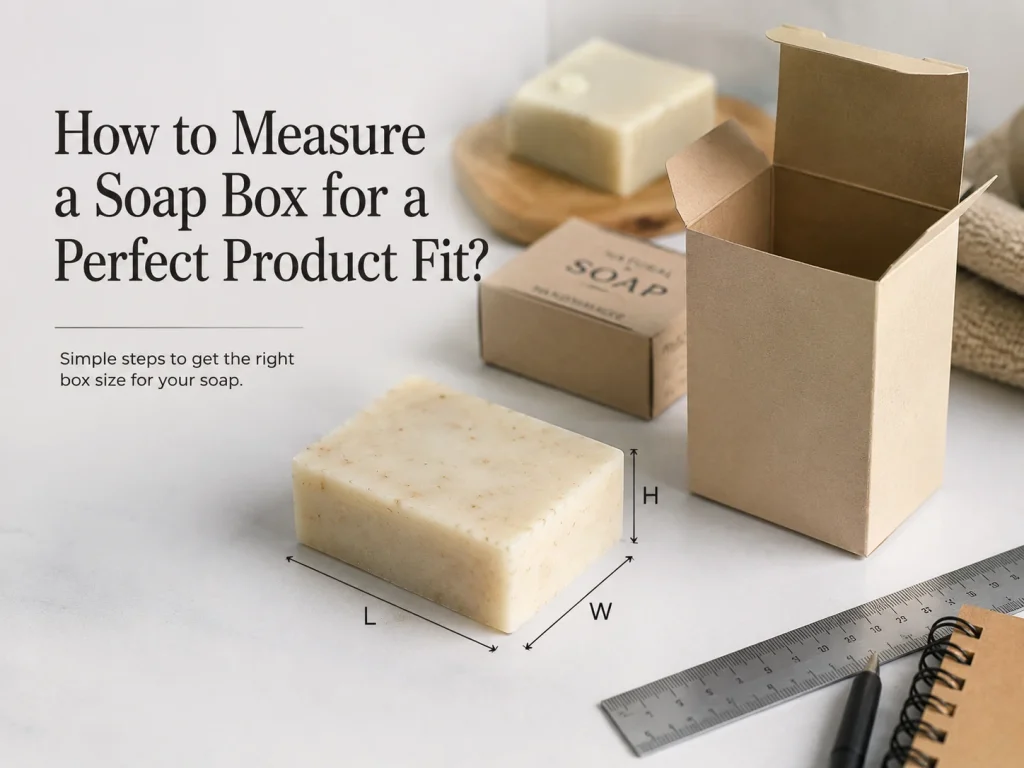
Soap packaging has a direct impact on product protection, shelf presentation, storage, and shipping. A paperboard soap box that fits the soap bar correctly helps reduce movement inside the package and gives customers a better unboxing experience. A box that is too large can let the soap shift around. A box that is too small may damage the paperboard or make packing slow. Getting the right measurement is a very simple step, yet many brand overlook it during product development.
This guide explain how to measure a soap box correctly, what tools you need, common sizing mistakes, and why accurate dimensions matter for paperboard packaging.
Why Soap Box Measurement Matter
A soap box is more than a container. It protect the soap during storage, shipping, and retail display. Good measurements help packaging suppliers produce boxes that fold properly and hold the product without unnecessary empty space.
Correct measurements offer several benefits.
- Better product protection during shipping
- Less movement inside the box
- Lower packaging waste
- Faster packing process
- Better appearance on retail shelves
- Easier stacking inside shipping cartons
Many companies use paperboard materials such as SBS paperboard, Kraft paperboard, and coated cardstock for soap packaging. Every material has a small thickness that should be considered before final production.
Tools Needed Before Measuring
You do not need expensive equipment for this job. A few basic tools can provide very accurate results.
- Digital caliper for detailed measurements
- Steel ruler with inch and millimeter markings
- Measuring tape for larger packaging
- Notebook or spreadsheet for recording dimensions
- Sample soap bar
Some packaging supplier use digital measuring systems, though manual measurements still work very well for paperboard packaging.
Measure the Soap Before Measuring the Box
Never begin with the box. Start with the soap bar itself.
Place the soap on a flat surface. Measure three dimensions.
- Length: Length is the longest side of the soap.
- Width: Width is the shorter side across the front.
- Height: Height is the thickness of the soap from top to bottom.
Record every measurement in inches or millimeters. Do not switch units in the middle of your notes, it can really create confusion later.
How to Measure the Soap Box
Paperboard packaging follows the standard order of dimensions.
Length × Width × Height
Length refers to the longest opening of the box.
Width refers to the shorter opening.
Height refers to the distance from the opening to the bottom panel.
Measure from the inside of the assembled box instead of measuring the outside walls. Inside dimensions determine whether the soap actually fit inside the package.
Leave Enough Product Clearance
A soap should never fit so tightly that customers struggle to remove it.
Most packaging manufacturers leave a small amount of extra space around the soap.
Typical clearance includes:
- Around 1 to 3 millimeters for handmade soap
- Around 2 to 4 millimeters for machine produced soap
- Slightly more space for wrapped soap bars
Too much extra room can make the product move around, and that may affect presentation during shipping.
Consider the Paperboard Thickness
Paperboard has its own thickness, often called caliper. This affects the final box dimensions.
A thicker paperboard increases the outside size while the inside space stays slightly smaller.
Common paperboard choices include:
- SBS paperboard
- Kraft paperboard
- Recycled paperboard
- Coated paperboard
The packaging manufacture should know the board thickness before creating production dielines.
Measuring Special Soap Shapes
Not every soap bar has a perfect rectangle shape.
Round soaps should be measured across the widest diameter and the tallest point.
Oval soaps need the widest length, widest width, and highest point.
Handmade soaps often have uneven edges. Measure several areas and use the largest number. Some people measure only the center, but that can create fitting issue later.
Common Measurement Mistakes
Many packaging problems start from very small measuring errors.
Avoid these mistakes.
- Measuring the outside of existing box instead of the inside
- Forgetting paper wrappers or labels
- Ignoring paperboard thickness
- Mixing inches with millimeters
- Recording numbers too quickly and getting them wrong
- Measuring only one soap from a handmade batch
One small mistake can lead to hundreds of boxes that do not fit the product very well.
Packaging Design and Box Fit
A correct measurement helps more than product protection.
It support printing quality, folding performance, and shelf appearance. Printing elements such as logos, ingredient panels, barcode, QR code, and product information need enough panel space.
A folding carton with accurate dimensions can reduce wrinkles during assembly. That sound simple, but it save time during packaging operations.
Many brands use tuck end boxes, reverse tuck end boxes, straight tuck end boxes, and sleeve style soap boxes. Every design follows the same measurement sequence, though the dieline changes slightly.
Shipping and Storage Benefits
Well measured soap boxes make shipping more efficient.
Boxes with consistent dimensions stack better inside corrugated shipping cartons. Warehouses can organize inventory more easily, and retail displays look more uniform. This may sound repetitive, though consistent sizing really help several parts of the supply chain at same time.
Final Thoughts
Measuring a soap box correctly starts with measuring the soap itself, recording accurate Length, Width, and Height, and allowing a little extra room for easy packing. Paperboard thickness, product wrapping, box style, and shipping requirements all influence the final dimensions. A properly measured soap box protects the product, reduces wasted material, supports better printing, and creates a more consistent customer experience from packaging line to retail shelf.
Frequently Asked Questions
What is the standard way to measure a soap box?
Measure the inside dimensions in the order of Length, Width, and Height.
Should I measure the soap with its wrapper?
Yes. Measure the product exactly as customers will receive it. Include paper wrap, shrink film, labels, or sleeves.
Why are inside dimensions more important?
Inside measurements determine whether the soap fits comfortably without damaging the paperboard box.
Does paperboard thickness affect box size?
Yes. Thicker paperboard slightly changes the outside dimensions and should be included during packaging planning.
How much extra space should a soap box have?
A small clearance of about 1 to 4 millimeters works for most paperboard soap packaging, depending on the soap style and wrapping method.
Source URL:
https://zeepackaging.com/blog/how-to-measure-boxes
https://www.expertcustomboxes.com/blog/soap-box-dimensions
