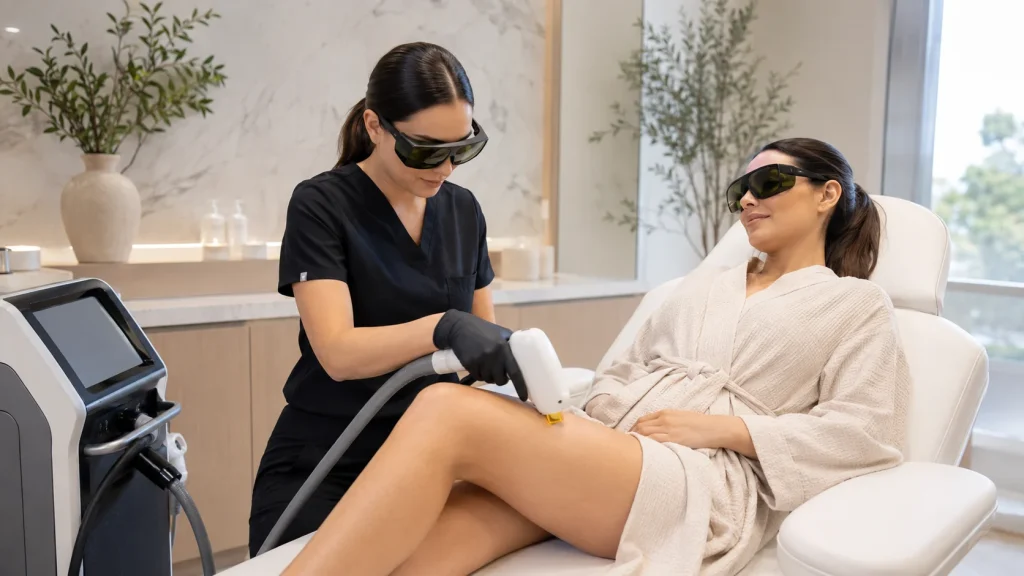
This blog goes beyond the typical laser hair removal pitch and addresses the real reason many people finally book their first appointment: chronic ingrown hairs that shaving, waxing, and every topical product have failed to fix. It covers the biology of why in growns keep coming back, the skin damage they cause if left unchecked, why laser is the only approach that addresses the root cause, and what to look for in a provider when you are ready to stop managing symptoms and actually solve the problem.
The Routine That Never Actually Works
Most people who deal with chronic ingrown hairs have already tried everything. A sharper blade, a different shaving direction, exfoliating scrubs, etc.. The frustration is real, and the reason nothing sticks is straightforward: every one of those approaches removes the hair above the surface while leaving the follicle completely intact. The same follicle grows back the same hair, with the same curl, into the same skin.
For people who have reached that point, laser hair removal in Brentwood offers something none of those methods can: treatment at the follicle level rather than the surface. No active follicle means no regrowth and nothing to curl back into the skin.
What Is Happening Under the Skin
An ingrown hair forms when a cut or pulled hair shaft curls sideways or back into the skin rather than growing straight out. The body treats it as a foreign object, triggering an inflammatory response that produces the familiar red, tender bump. For people with coarse or tightly curled hair, the natural angle of the follicle makes this significantly more likely with every shave or wax.
The clinical term for chronic ingrown hairs from shaving is pseudofolliculitis barbae. It affects the bikini line, underarms, legs, and anywhere coarse hair meets repeated hair removal. Left unaddressed over time, the repeated inflammation moves beyond cosmetic.
Chronic irritation from ingrown hairs can produce post-inflammatory hyperpigmentation, hypertrophic scarring, and in more severe cases, keloid formation. Those dark spots that linger long after a bump resolves are the skin’s record of repeated injury, they accumulate with every hair removal cycle and topical treatments can only do so much to reverse what keeps getting recreated.
Why Waxing Does Not Actually Help
Waxing pulls hair from the root, which sounds like it should reduce ingrown hairs. For some people it helps initially. But when the follicle is irritated or inflamed from the pulling process, the new hair emerging does not always grow straight out. It regrows from a disrupted follicle with more tendency to curl, and the skin surface left behind from waxing can trap new growth before it clears. Many people who switch from shaving specifically to avoid in growns end up dealing with deeper, more inflamed bumps than they had before.
Chemical exfoliants like salicylic acid help manage the situation by keeping dead skin from blocking follicle openings, but they do not change the underlying biology. The follicle is still producing the same hair with the same structure.
How Laser Actually Breaks the Cycle
Laser hair removal directs concentrated light energy at the melanin in the hair follicle. That energy converts to heat, which damages the follicle enough to significantly reduce or stop its ability to produce hair. The surrounding skin is not affected. Over a series of sessions, fewer and fewer follicles remain active, and any hairs that do grow back tend to come in finer and lighter, far less likely to curl back into the skin.
Because laser only targets follicles in the active growth phase, multiple sessions are necessary. Most people see a meaningful reduction in ingrown hairs by the third or fourth session, with a full course typically running six to eight.
For patients who have accumulated post-inflammatory hyperpigmentation from repeated ingrown cycles, that texture and tone improvement is often what they notice first.
The Part Most Providers Do Not Talk About Up Front
Ingrown hairs and the scarring they leave behind are significantly more common in people with coarser hair texture and deeper skin tones. Those same patients also require the most careful provider selection before starting laser, because certain laser wavelengths are not appropriate for deeper complexions.
At a Cosmetic Dermatology & Laser Center in Los Angeles with physician oversight at every visit, the laser type, wavelength, and settings are matched to your Fitzpatrick skin type before any treatment begins. That assessment process requires real dermatological knowledge, not a standard protocol applied to every patient regardless of skin.
FAQ
Can laser hair removal help with the dark spots ingrown hairs have already left behind?
Laser hair removal stops new ingrown hairs from forming, which ends the cycle of inflammation creating new dark spots. Existing hyperpigmentation does not disappear from the hair removal process itself, but once the ingrown cycle is under control a dermatologist can address those marks with targeted treatments.
Will laser work on very coarse or tightly curled hair?
Coarse, dark hair actually responds particularly well to laser treatment because it contains a higher concentration of melanin for the laser to target. Curly hair texture is often the primary driver of chronic ingrown hairs in the first place, which makes laser one of the most effective interventions for this group specifically.
Does getting laser over already-damaged or hyperpigmented skin cause more discoloration?
When performed correctly with the appropriate laser and settings for your skin type, the treatment should not worsen existing hyperpigmentation. The risk of worsening pigmentation comes from using the wrong device or settings, which is why the provider assessment matters so much.
How many sessions before ingrown hairs actually stop?
Most patients notice a meaningful reduction by sessions three and four. By the end of a full treatment course, the majority report near-complete elimination of chronic ingrown hairs in treated areas. Hormonal areas like the bikini line or chin may require more sessions or occasional maintenance, since hormonal shifts can stimulate new follicular activity over time.
Can I still shave between laser sessions?
Yes, and it is actually the preferred method of hair management between appointments. Waxing, plucking, and threading remove the hair shaft from the follicle, which removes what the laser needs to target at the next session.
