A front porch has to perform several jobs at once. It welcomes visitors, provides shelter, connects the home to the walkway and creates the first impression people receive after arriving. Once daylight fades, lighting determines whether this area feels comfortable and easy to navigate or dark and uncertain.
Many homeowners try to solve the problem with one powerful fixture. While that may create plenty of brightness, it can also produce glare, hard shadows and an entrance that feels less inviting than expected. A more effective approach is to layer overhead and wall-mounted lights so that each fixture handles a particular part of the space.
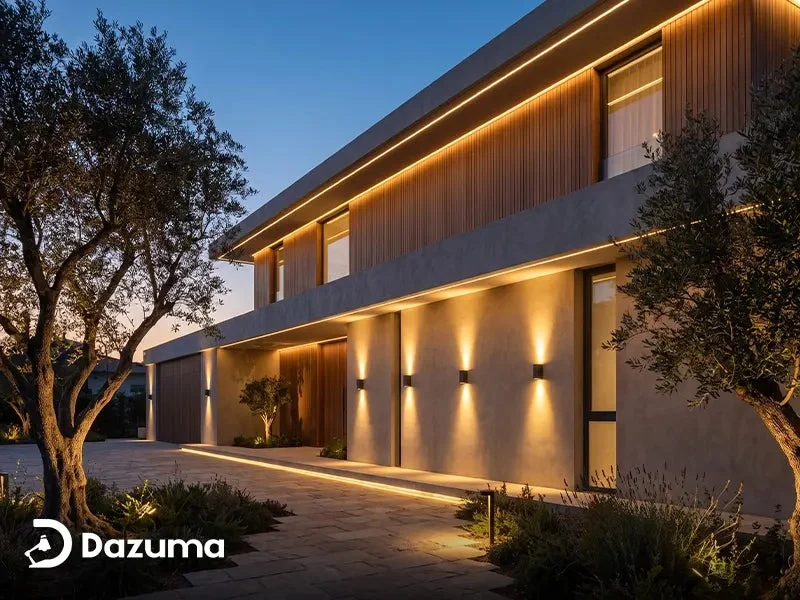
Layered porch lighting can improve visibility around doors and steps while also highlighting the architecture of the home. The following considerations can help homeowners combine fixtures without making a small entrance feel crowded or excessively bright.
Begin With the Practical Needs of the Entrance
Before selecting a style, identify what the lighting must accomplish. Visitors should be able to find the front door, read the house number and see changes in floor level. Residents need enough light to use keys, keypads or smart locks without holding a phone flashlight. Packages left near the entrance should also remain visible.
Inspect the porch after dark from the direction a guest normally approaches. Notice whether columns, railings or plants create shadows across the walkway. Check the view from inside the house as well, particularly if the porch is monitored by a camera or video doorbell.
This inspection establishes which areas require functional light and which areas need only a decorative glow. It also prevents fixtures from being chosen solely because they look attractive in a product image.
Use a Hanging Fixture to Define the Center
A ceiling-mounted pendant or lantern can visually anchor a covered porch. Because it hangs within the space rather than sitting against a wall, it naturally draws attention and helps establish the center of the entrance. This works particularly well with tall ceilings, symmetrical architecture and porches large enough to include seating.
Dazuma’s Outdoor Hanging Lights illustrate several approaches, including globe-shaped pendants, framed lanterns and more decorative designs. The appropriate option depends on ceiling height, exposure and the architectural character of the home.
An overhead fixture should not hang so low that tall visitors must avoid it or so high that it appears disconnected from the porch. Consider door movement, sightlines from the street and the position of any furniture. In windy locations, the stability and suspension method also deserve attention.
Add Wall-Mounted Light Where Tasks Happen
Although an overhead light establishes atmosphere, it may cast a person’s face or the door hardware into shadow. Wall-mounted fixtures can fill those gaps by placing illumination closer to eye level and beside the area where people interact with the entrance.
Homeowners comparing shapes and finishes can also review Dazuma’s Outdoor Wall Sconces for examples of traditional lantern forms, streamlined modern fixtures and designs that direct light upward, downward or in both directions.
A pair of fixtures on either side of the door often produces balanced illumination and supports a formal, symmetrical appearance. However, two lights are not always necessary. A narrow entrance may work better with one appropriately sized fixture positioned on the side that provides the clearest light around the handle and lock.
Make the Two Layers Work Together
The hanging and wall-mounted fixtures should complement each other without appearing like competing focal points. If the overhead light is large and highly decorative, the wall fixtures can be simpler. If the pendant is understated, the sconces may carry more of the visual character.
Matching every detail is not essential, but the fixtures should share at least one design connection. This might be the finish, glass type, geometric shape or general architectural period. A black
