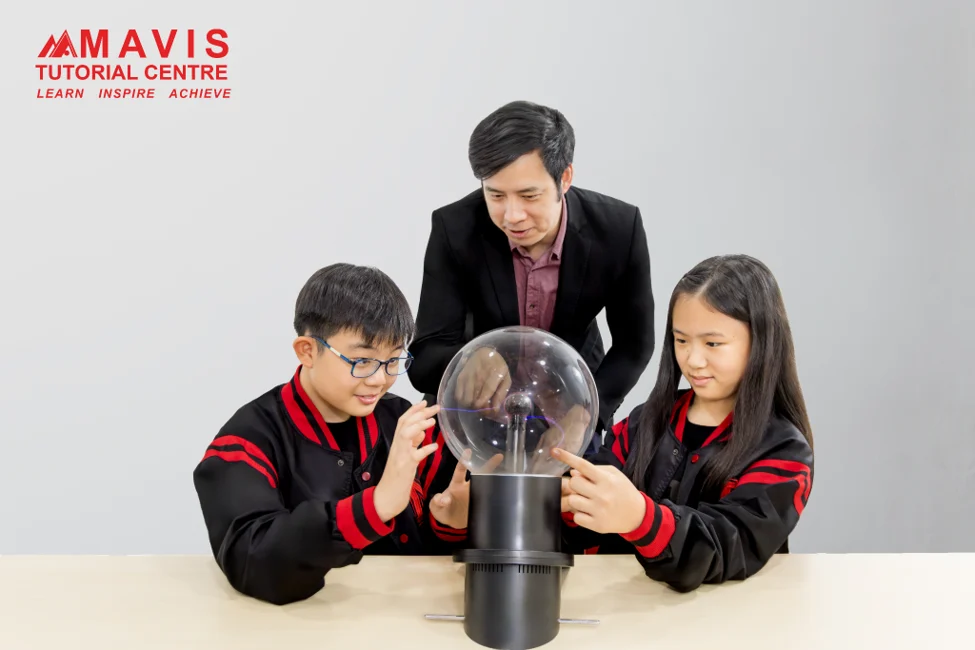
For many students in Singapore, the O-Level Physics practical examination can feel more intimidating than the theory paper. While written exams test knowledge and understanding of scientific concepts, practical examinations require students to apply these concepts in a laboratory environment under timed conditions. Students must perform experiments, handle scientific equipment accurately, collect reliable data, analyse results, and present findings clearly.
Success in the practical paper depends on much more than memorising formulas. It requires precision, observation skills, confidence, and familiarity with laboratory procedures. Even academically strong students may lose marks due to inaccurate measurements, poor graph plotting, incomplete data recording, or ineffective time management.
This is why many students seek support through Physics Tuition programmes. Structured practice, guided experiments, and exam-focused training help students become more comfortable with laboratory work while improving the accuracy and confidence needed to perform well during the O-Level Physics practical examination.
Why the O-Level Physics Practical Exam Matters
The practical component plays an important role in assessing a student’s scientific skills. Examiners want to see whether students can apply theoretical concepts in real-world situations.
Students are typically assessed on their ability to:
- Set up and use experimental apparatus correctly
- Take accurate measurements
- Record observations systematically
- Analyse experimental results
- Draw appropriate conclusions
- Evaluate experimental limitations
- Suggest improvements to investigations
Unlike multiple-choice or structured theory questions, practical exams require students to demonstrate skills directly. This means preparation and hands-on experience are essential.
Skills Tested During the Practical Examination
| Skill Area | What Examiners Look For |
| Observation | Accurate recording of readings and changes |
| Measurement | Correct use of instruments and units |
| Data Analysis | Ability to identify patterns and trends |
| Graph Skills | Accurate plotting and interpretation |
| Scientific Reasoning | Logical explanations and conclusions |
| Evaluation | Identification of errors and improvements |
Many students underestimate the importance of these skills until they begin attempting practical papers under exam conditions.
Common Challenges Faced by Students
Physics practical examinations can be challenging for several reasons.
Limited Hands-On Experience
Some students only perform a limited number of experiments during school lessons. As a result, they may feel unfamiliar with laboratory equipment when sitting for the examination.
Common issues include:
- Difficulty setting up apparatus
- Lack of confidence handling equipment
- Uncertainty about measurement techniques
- Slow experimental execution
Difficulty Reading Instruments
Many marks are lost because students read instruments incorrectly.
Examples include:
- Vernier calipers
- Micrometer screw gauges
- Ammeters
- Voltmeters
- Thermometers
- Measuring cylinders
Small reading errors can affect calculations and final answers.
Weak Data Interpretation Skills
Some students can collect data successfully but struggle when required to:
- Identify patterns
- Explain relationships
- Draw conclusions
- Analyse graphs
These higher-order thinking skills are heavily tested in practical examinations.
Time Management Problems
Students often spend too much time collecting readings and then rush through graph plotting and analysis questions.
Effective time management is therefore a critical examination skill.
How Physics Tuition Helps Students Excel in Practical Exams
One of the greatest advantages of Physics Tuition is the opportunity for structured and repeated practice.
Instead of encountering experiments only occasionally, students receive continuous exposure to practical techniques and exam-style questions.
Benefits of Physics Tuition for Practical Preparation
Students can:
- Practise common O-Level experiments regularly
- Receive immediate feedback on mistakes
- Learn proper experimental techniques
- Improve measurement accuracy
- Develop stronger graph interpretation skills
- Build confidence under timed conditions
Through repeated practice, students become more familiar with laboratory procedures and less likely to panic during examinations.
Essential Physics Practical Exam Tips Every Student Should Know
Read the Entire Question Before Touching the Apparatus
One of the most common mistakes is rushing into the experiment immediately.
Before beginning:
- Read every instruction carefully
- Understand the objective
- Identify required measurements
- Note any specific instructions
Taking two minutes to understand the task can prevent costly errors later.
Understand the Variables
Every experiment involves variables.
Students should identify:
| Variable Type | Description |
| Independent Variable | The factor being changed |
| Dependent Variable | The factor being measured |
| Controlled Variables | Factors kept constant |
Understanding variables helps students answer planning and evaluation questions more accurately.
Practise Common Experimental Setups
Certain experiments appear frequently in Physics practical papers.
Examples include:
- Current and voltage investigations
- Resistance experiments
- Heat transfer investigations
- Density measurements
- Motion and acceleration experiments
- Light and optics experiments
Students should become comfortable with these common setups before the examination.
Take Multiple Readings
Reliable results are obtained through repetition.
Whenever possible:
- Take at least two or three readings
- Compare results
- Identify anomalies
- Calculate averages if necessary
This improves data reliability and demonstrates good scientific practice.
Watch Out for Parallax Errors
Parallax errors occur when readings are taken from the wrong viewing angle.
To avoid this:
- Position your eyes directly in line with the scale
- Avoid reading from above or below
- Check measurements carefully before recording
This simple habit can improve accuracy significantly.
Mastering Graph Questions
Graph plotting is one area where many students lose easy marks.
A well-drawn graph can contribute several marks towards the final score.
Graph Drawing Checklist
Before submitting your graph, ensure that:
✓ Axes are labelled clearly
✓ Units are included
✓ Appropriate scales are used
✓ Data points are plotted accurately
✓ Best-fit line is drawn neatly
✓ Graph occupies most of the graph paper
Common Graph Mistakes
Avoid:
- Uneven scales
- Missing units
- Joining points dot-to-dot unnecessarily
- Plotting inaccuracies
- Crooked lines
Regular graph practice through Physics Tuition helps students develop these skills efficiently.
Accuracy Matters More Than Speed
Many students assume they must work as quickly as possible.
In reality, accuracy should always come first.
Prioritise:
- Correct measurements
- Clear tables
- Accurate calculations
- Proper units
- Careful graph plotting
A rushed answer containing mistakes often scores lower than a carefully completed response.
Practical Exam Study Tips That Work
Beyond laboratory sessions, students can improve their practical skills through focused revision.
Study Tip 1: Create an Experiment Summary Book
For every experiment learned, record:
- Objective
- Apparatus used
- Procedure
- Variables
- Common sources of error
- Improvement suggestions
This becomes a valuable revision resource before examinations.
Study Tip 2: Memorise Common Sources of Error
Frequently tested errors include:
- Parallax error
- Heat loss to surroundings
- Frictional effects
- Instrument calibration errors
- Human reaction time
Understanding these concepts helps students answer evaluation questions more confidently.
Study Tip 3: Practise Data Analysis Regularly
Students should regularly:
- Interpret graphs
- Identify trends
- Calculate gradients
- Analyse tables
These skills are essential in practical papers.
Study Tip 4: Review Past Practical Papers
Past-year papers help students:
- Understand common question patterns
- Improve familiarity with experimental setups
- Develop time management skills
Many high-performing students make past practical papers a regular part of their revision.
Building Confidence Before the Exam
Confidence often determines whether students perform at their best.
Students who are familiar with experimental procedures generally:
- Work more efficiently
- Make fewer careless mistakes
- Interpret data more effectively
- Remain calm under pressure
One of the biggest benefits of Physics Tuition is that students repeatedly practise under guided conditions until techniques become second nature.
Common Mistakes That Cost Marks
Even capable students sometimes lose marks through avoidable errors.
Frequently Seen Mistakes
- Forgetting units
- Recording readings inaccurately
- Drawing poor-quality graphs
- Using incorrect significant figures
- Failing to label diagrams
- Missing anomalies in data
- Leaving analysis questions incomplete
Awareness of these mistakes helps students avoid repeating them.
Long-Term Benefits Beyond O-Level Physics
The skills developed through practical Physics extend beyond examinations.
Students learn:
- Analytical thinking
- Problem-solving
- Data interpretation
- Precision and accuracy
- Scientific reasoning
These abilities remain valuable in future studies, especially in fields such as:
- Engineering
- Medicine
- Computer Science
- Technology
- Scientific Research
The habits developed through practical training often contribute to success across multiple disciplines.
Final Thoughts
The O-Level Physics practical examination is not simply a test of scientific knowledge. It is a test of accuracy, observation, analysis, and confidence. Students who prepare strategically and practise consistently often find that practical exams become far less intimidating.
Through structured Physics Tuition, students gain valuable hands-on experience, improve their measurement techniques, strengthen data analysis skills, and learn how to approach practical tasks systematically. These skills not only improve examination performance but also build a stronger foundation for future science education.
With regular practice, effective revision strategies, and proper guidance, students can enter the Physics practical examination feeling prepared, confident, and capable of achieving their best results.
For students seeking additional support, structured programmes at mavistutorial.com provide guided practice, expert instruction, and exam-focused preparation designed to strengthen both theoretical understanding and practical Physics skills.
