Why a bathroom plan should begin with questions, not products
“Which movement feels hardest?” That question can reveal more than a product catalogue. Someone may struggle to lift one leg over the bath. Another person may need support while turning towards the taps. Wet floors, poor grip, or low light can add further strain. These needs cannot be solved with one standard layout. The person’s strength, balance, reach, habits, and care support all shape the right plan. That is why a useful assessment starts with listening.
This guide explains how occupational therapists assess bathroom use before work begins. It covers bath access, fall risks, project scope, and likely cost factors. Planning guided by occupational therapist bathroom modifications in Sydney can connect clinical needs with practical building choices. You can learn which movements require review and why measurements matter. We will also explore how focused bath changes may preserve more of the existing room. A thoughtful plan can support independence without making the bathroom feel unfamiliar. Better questions lead to changes that suit the person, not just the property.
How occupational therapist bathroom modifications Sydney are planned
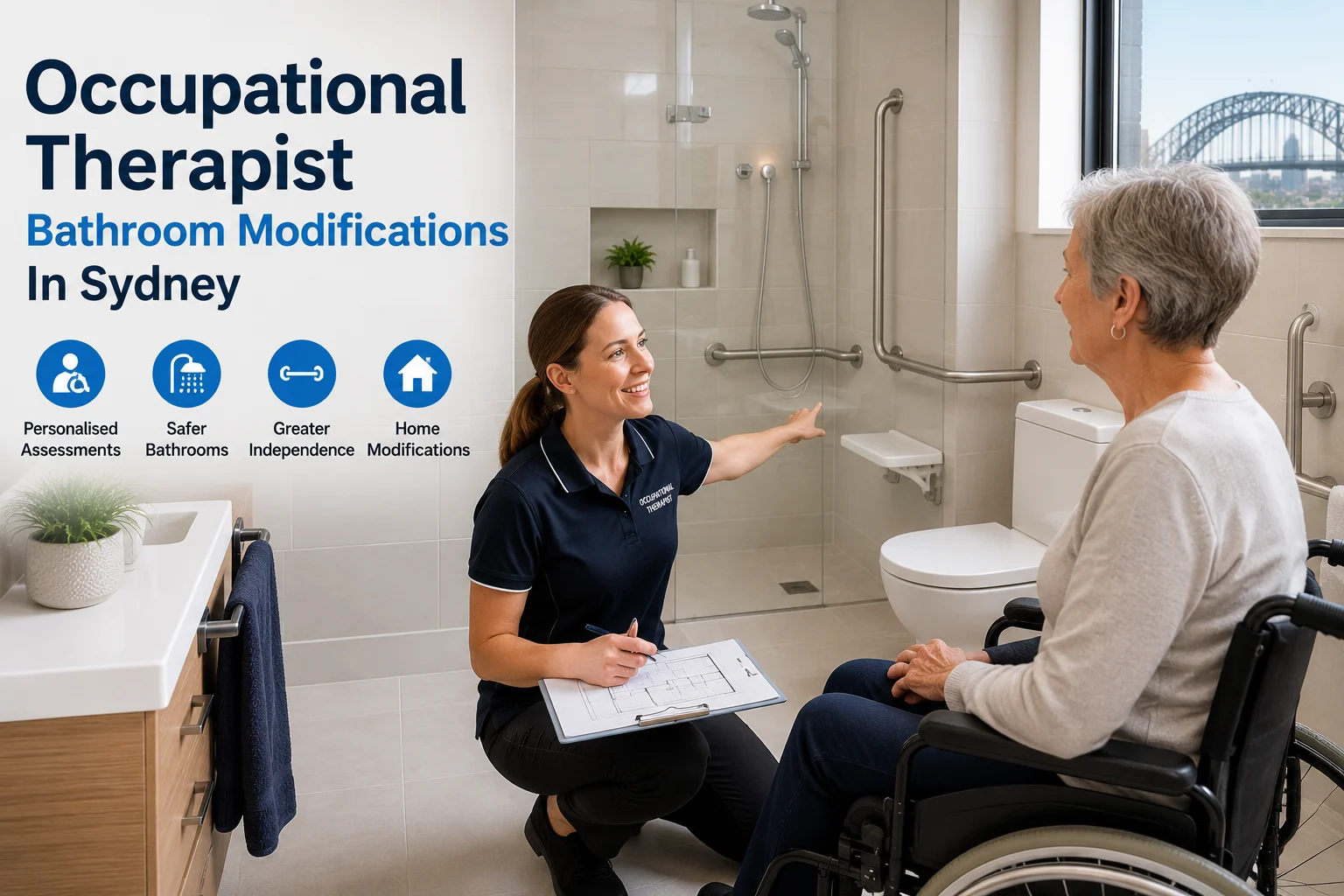
An occupational therapist studies how daily tasks meet personal ability. The assessment may include entering the room, reaching taps, turning, sitting, and drying. It can also consider pain, vision, balance, and walking aids. Carer access may affect the layout as well. Occupational therapist bathroom modifications Sydney plans should translate these findings into clear work instructions. This reduces the risk of installing rails or openings in unhelpful positions.
According to the Australian Bureau of Statistics, 4.4 million Australians were aged 65 or older in 2022. About 95.9 per cent lived in private households. Nearly 1.7 million older people living at home needed help with an everyday activity. That need rose from 28.2 per cent among people aged 65 to 74, to 77.2 per cent among those aged 85 and over.
A useful assessment should record:
- The user’s stronger and weaker side
- Safe standing and turning space
- Suitable rail height and direction
- Access for mobility aids
- Expected changes in care needs
These details give installers a practical and personal brief.
What helps prevent bathroom falls for elderly Sydney residents
Measures that help prevent bathroom falls for elderly Sydney residents must cover more than the bath. The route often begins in a bedroom or hallway. Night lighting, door clearance, footwear, and floor changes can affect safety before bathing starts.
1. Before entering the wet area
Check whether the doorway is easy to open and cross. Remove loose mats or clutter near the route. Provide enough light for night-time bathroom visits.
2. While crossing the bath
The user should have stable support before lifting a foot. A lower opening can reduce the effort needed to enter. Rails should support the movement assessed by the therapist.
3. During washing and turning
Taps, soap, and towels need to be within comfortable reach. Twisting or leaning across wet surfaces can affect balance. A seat may help some users, but it must suit their ability.
4. When leaving the bath
The exit area should remain clear and dry. Towels must be reachable before the user walks away. Safe movement continues until the person leaves the room.
A full sequence check catches risks that a quick product choice may miss.
How aged care bathroom modifications in Sydney shape project cost
Aged care bathroom modifications in Sydney can range from focused work to a wider room update. The existing bath material, wall structure, plumbing, waterproofing, and access all affect the scope. Rail reinforcement may also be required. Custom doors or screens can change labour and material needs. Therefore, a bathtub modification cost in Sydney cannot be judged by the opening alone. A site inspection should confirm what must be altered and what can remain.
Recent guidance from the Better Health Channel states that falls account for nearly two-thirds of injury-related emergency presentations. They also cause more than three-quarters of injury-related hospital admissions. About half of reported falls occur at home. The guidance recommends home reviews by occupational therapists, suitable grab rails, better lighting, and slip-resistant wet areas.
A bath conversion for the elderly in Sydney may offer a focused option when the wider bathroom remains suitable. Before accepting a quote, ask for:
- The full work scope
- Waterproofing and sealing details
- Rail fixing requirements
- Expected installation time
- Warranty and aftercare terms
A clear quote should explain the result, not merely name the parts.
Choose a bathroom change that respects the person using it
A safe bathroom should still feel like part of the home. We believe the best plans join personal assessment with careful installation. Begin with the movements that cause strain, doubt, or loss of balance. Then match each change to a clear need. An occupational therapist can help confirm whether bath access, rails, seating, or wider work is appropriate. Families should also discuss future care before finalising the scope. If daily bathing has become difficult, arrange an assessment while choices remain open. The right conversation can turn an uncertain routine into one that feels calmer, safer, and more dignified.
