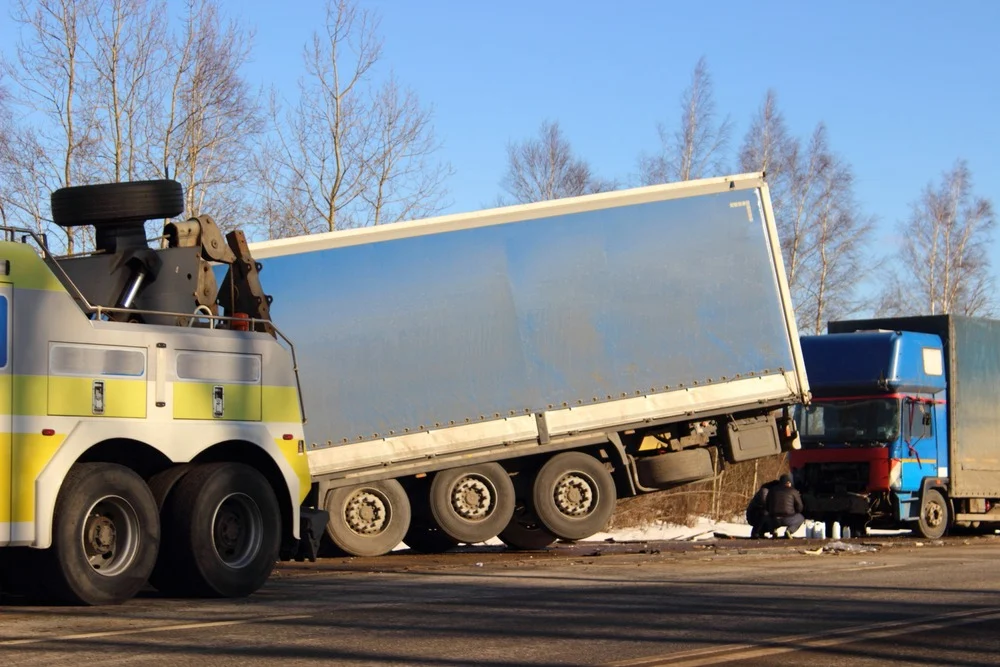
The person driving the truck may be the first name people think about after a crash, but responsibility can sometimes reach beyond the driver’s actions. Company practices, vehicle maintenance, cargo loading, and other circumstances may also deserve attention.
Anyone considering whether to hire a truck accident lawyer may need to know how these different factors can affect a claim involving shared fault. The responsibility of each party depends on the facts, and the applicable state law determines how shared fault may affect the claim.
How Multiple Parties Can Share Responsibility
Truck accidents can involve several people or businesses. The truck driver may have been speeding, distracted, or too tired to drive safely. A trucking company may have issues involving hiring, training, scheduling, or supervision.
Other parties may also have a connection to the accident. A maintenance company could have performed poor repairs, while a cargo company could have loaded the truck incorrectly. A vehicle owner or leasing company may also become part of the review.
The important point is that responsibility depends on the facts. A party is not automatically responsible simply because it was connected to the truck.
How Shared Fault Is Determined
Determining shared fault usually involves examining what each party did and how those actions may have contributed to the accident. Investigators may compare different records and accounts to create a clearer picture of the events.
Information may include:
- Police and crash reports
- Driver records and logs
- Truck inspection records
- Maintenance documents
- Company training records
- Witness statements
- Photos or available video
- Cargo and loading information
No single record necessarily answers every question. Different sources may need to be reviewed together, especially if the parties disagree about what happened or provide conflicting accounts of the crash.
How Shared Fault Can Affect a Claim
Shared fault can affect how a truck accident claim is evaluated. States use different rules for comparative or shared fault, so there is no single rule that applies everywhere.
In some states, a person’s recovery may be reduced based on their percentage of fault. Other states use different systems, including rules that may limit recovery after a certain level of responsibility is assigned.
For example, suppose a claim is valued at $100,000, and a person is found to be 20 percent responsible under a system that reduces recovery according to that percentage. The result could be different from a state that uses another approach. This example is only meant to show how percentages can matter, not to predict an actual claim result.
Why the Percentage of Fault Matters
A shared fault finding can involve several percentages. One party could carry a larger share of responsibility while another carries a smaller share. The way those percentages affect a claim depends on the law of the state where the case is handled.
This makes accurate information important. A person’s actions may be examined alongside the actions of other involved parties rather than viewed separately. Details about speed, vehicle condition, driver conduct, loading, and company practices may all become relevant.
What Information Can Help Clarify Responsibility
Records can help show what happened before, during, and after a truck accident. They may also help connect certain actions to the circumstances that led to the crash.
Useful information may include:
- Crash reports and photographs
- Driver logs and employment records
- Truck inspection and maintenance records
- Training and scheduling documents
- Cargo or loading records
- Witness contact information
- Available surveillance or dash camera footage
- Medical records related to injuries
Reviewing the Parties Involved
A truck accident may involve the driver, trucking company, truck owner, leasing company, maintenance provider, cargo handler, or another party. Being connected to a truck does not automatically establish fault.
The review usually focuses on conduct and circumstances. A maintenance provider may be examined if a mechanical problem is linked to its work. A company may be examined if its actions contributed to the accident.
Shared Responsibility Requires Careful Review
Multiple parties can share responsibility for a truck accident, but the effect of that shared fault depends on state law and the facts of the claim. Records, witness accounts, vehicle information, and company documents can help explain how different actions may have contributed to the accident.
For someone deciding whether to hire a truck accident Lawyer, reviewing the circumstances with a qualified legal professional can provide information about the applicable fault rules and the parties involved. A careful review can keep the focus on documented facts and the specific law that applies to the claim.
