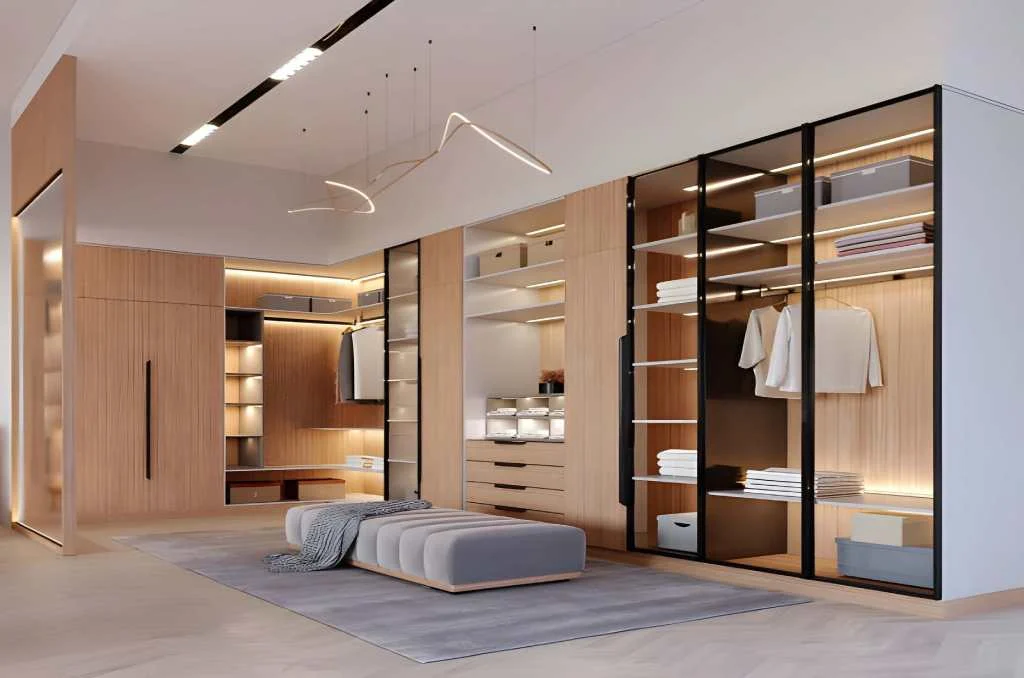
Finding the right wardrobe means matching your available floor space to your personal clothing collection. By measuring your room carefully and choosing the right style, such as sliding doors for tight spaces or walk-ins for large rooms, you can maximize storage without crowding your home.
Have you ever tried to squeeze a massive piece of furniture into a tiny bedroom? It feels a lot like trying to put a square peg in a round hole.
You end up bumping your shins on the bed frame, and your room feels more like a crowded storage locker than a cozy place to sleep.
Picking the right wardrobe is a big deal. It is usually the second-biggest piece of furniture in your bedroom. If it is too big, it eats up all your space. If it is too small, your clothes end up piled high on “the chair” (we all have that one chair, right?)
Let’s walk through how to choose the perfect fit for your home, step by step.
How Do You Measure Your Bedroom for a Wardrobe?
To measure your bedroom for a new closet, find the total length, width, and height of the wall space using a tape measure. Be sure to subtract at least two to three inches from your final numbers to leave breathing room for easy installation.
Before you even look at a catalog, grab a tape measure. You need to know exactly what you are working with. Think of your bedroom like a puzzle. You cannot buy a new puzzle piece if you do not know how big the empty slot is!
Here are the three measurements you must take:
- The Height: Measure from the floor to the ceiling. If you want a tall closet, make sure it won’t hit any light fixtures or ceiling fans.
- The Width: Measure the wall where the closet will sit. Leave a little space on the sides so it does not feel jammed into the corner.
- The Depth: This is how far the closet sticks out into the room. A standard clothes hanger needs about 24 inches of depth so your coats and shirts do not get squished.
Do not forget to check the swing space! Open your bedroom door all the way. Now open your windows. Your new furniture should not block any of them.
Which Wardrobe Style Fits Your Specific Room Size?
Small rooms do best with sliding doors or built-in closets that save floor space, while medium rooms can handle standard freestanding units with hinged doors.
Large bedrooms can easily accommodate grand wardrobes, open-closet systems, or full walk-in setups.
Every bedroom size needs a different strategy. Let’s break down the best options for your layout.
Small Bedrooms (Under 100 Square Feet)
When space is tight, every inch counts. Traditional swinging doors are your worst enemy here because they block the walking path. Instead, look for sliding doors. They slide side-to-side on a track, meaning you can place your bed right next to them without any trouble. Another great trick is adding mirrors to the doors. Mirrors bounce light around, making a tiny room feel twice as big.
Medium Bedrooms (100 to 150 Square Feet)
If you have a medium-sized room, you have more choices. You can go with a classic freestanding unit. These are great because you can move them to a different wall if you decide to rearrange your room later. Just make sure you have about three feet of open space in front of the unit so you can open the doors completely and step back to look at your outfits.
Large Bedrooms (Over 150 Square Feet)
If you have a huge bedroom, the world is your oyster! You can choose a massive three-door or four-door setup. Some people even prefer open-closet systems, which have no doors at all. This turns your clothing into a display, like in a boutique.
How Much Storage Space Do You Actually Need?
To figure out your storage needs, group your clothes into three categories: hanging items, folded clothes, and small accessories. This tells you whether you need a wardrobe with more hanging rods, deep shelves, or pull-out drawers.
We all use our closets differently. A businessman who wears suits every day needs a very different setup than a fitness coach who owns 50 pairs of sweatpants and t-shirts.
To find your perfect match, open your current closet and take a quick look. Are most of your clothes on hangers? You will need a unit with plenty of space for vertical hanging rails. Do you fold all your sweaters and jeans? You will want to look for deep shelves instead.
Comparing Your Wardrobe Options
To help you visualize your options, let’s look at this simple breakdown of the three most popular styles:
| Wardrobe Type | Best Room Size | Door Type | Pros | Cons |
| Sliding Door | Small to Medium | Slides Side-to-Side | Saves a ton of floor space; looks very modern | You can only see half your clothes at one time |
| Hinged Door | Medium to Large | Swings Outward | Let’s you see everything at once; hooks on doors | Needs lots of empty space in front of it |
| Freestanding | Any Size | Varies | Easy to move; cheaper; tons of style options | Can leave awkward gaps at the top and sides |
Simple Steps to Choose Your Wardrobe Today
Ready to make a choice? Follow this quick checklist to get it right on the very first try:
- Clean out your current closet: Donate the clothes you have not worn in the last year. Don’t buy a closet to store clutter!
- Write down your magic numbers: Keep your room width, height, and depth measurements on your phone.
- Pick your door style: Choose sliding doors for tight spots or hinged doors for easy access.
- Check the inside layout: Ensure the mix of drawers, shelves, and rods matches your specific clothing collection.
Conclusion
Choosing the perfect storage setup does not have to be a headache.
Once you know your room’s measurements and your personal storage style, the right choice becomes crystal clear. A good closet keeps your room tidy, protects your favorite clothes, and makes getting ready in the morning a total breeze.
What is your biggest struggle when it comes to organizing your clothes?
