Chicken lovers have more choices than ever when it comes to flavor and heat. From mild seasoning to fiery spice blends, every restaurant has its own way of delivering heat. Understanding chicken spice levels helps you choose a meal that matches your taste and tolerance while avoiding unpleasant surprises.
Whether you’re trying hot chicken for the first time or you’re a fan of intense flavors, this guide explains how spice levels work, what affects heat intensity, and how to build your tolerance over time.
What Are Chicken Spice Levels?
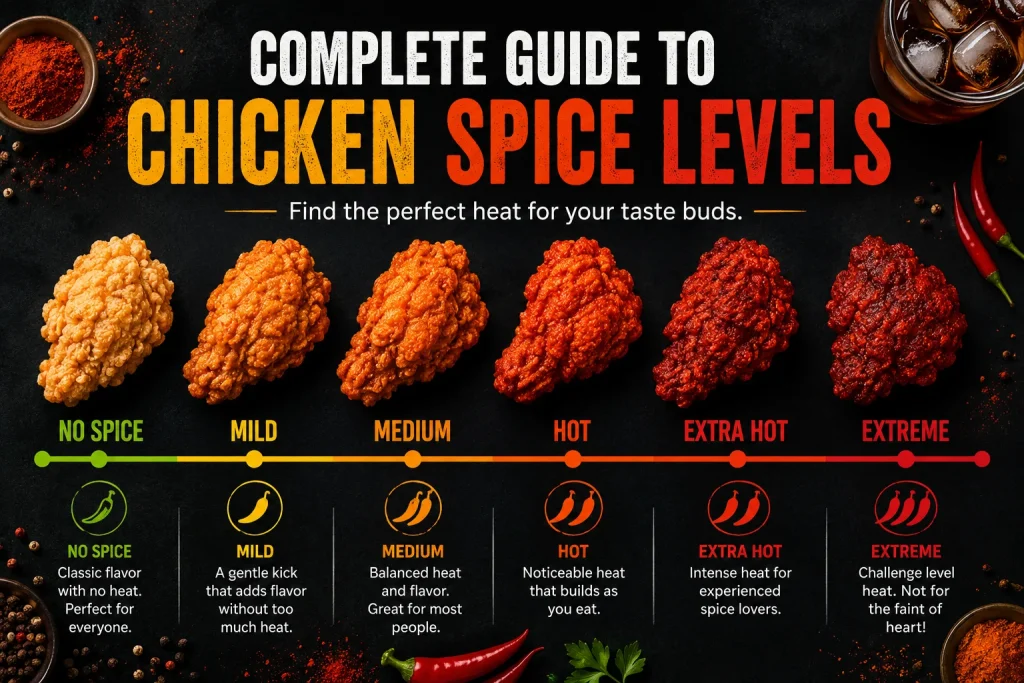
Chicken spice levels refer to the amount of heat added through peppers, seasonings, sauces, and spice blends. Restaurants typically offer multiple heat options so customers can choose a comfortable level.
Although names vary by restaurant, most spice scales follow a similar pattern:
- No Spice
- Mild
- Medium
- Hot
- Extra Hot
- Extreme or Challenge Level
The higher the level, the greater the concentration of chili peppers and spicy ingredients.
What Determines the Heat?
Several factors influence how spicy chicken tastes.
Type of Chili Pepper
Different peppers contain different amounts of capsaicin, the compound responsible for heat. Jalapeños provide mild warmth, while habaneros and ghost peppers create a much stronger burning sensation.
Dry Rubs vs. Sauces
Dry spice coatings often produce a slow-building heat that lingers after each bite. Sauces may create a quicker burst of spice, depending on the ingredients used.
Cooking Method
Fried chicken tends to hold spice coatings well, while grilled chicken allows the seasoning to penetrate differently, changing the overall flavor experience.
Common Chicken Spice Levels Explained
No Spice
Perfect for children or anyone who prefers traditional seasoned chicken without noticeable heat.
Mild
A gentle kick that adds flavor without overwhelming the palate. This level is ideal for beginners.
Medium
Medium spice balances heat and flavor. Most diners can comfortably enjoy this level while still experiencing the unique taste of the seasoning blend.
Hot
Hot spice delivers noticeable heat that builds as you continue eating. Many spicy food enthusiasts consider this their favorite option.
Extra Hot
This level is designed for experienced spice lovers. The heat becomes intense, and drinking water often won’t provide much relief.
Extreme Heat
Challenge-level chicken is not meant for everyone. It often uses highly concentrated pepper blends that can create significant burning sensations and lingering heat.
Choosing the Right Spice Level
Selecting the right spice level depends on several factors.
- Your previous experience with spicy foods
- Whether you’re eating on an empty stomach
- Your tolerance to chili peppers
- Whether you’re pairing the meal with cooling side dishes
If you’re unsure, starting with medium is usually the safest option.
Foods That Help Reduce Spiciness
If your meal becomes too spicy, certain foods help cool the burn more effectively than water.
Some of the best options include:
- Milk
- Yogurt
- Ice cream
- Bread
- Rice
- Mashed potatoes
These foods help reduce the effects of capsaicin and provide temporary relief.
Building Your Spice Tolerance
Many people gradually develop a higher tolerance for spicy foods.
You can improve your tolerance by:
- Increasing spice levels slowly
- Eating spicy foods regularly
- Pairing spicy meals with dairy products
- Staying hydrated before eating
Over time, foods that once seemed extremely hot may become much easier to enjoy.
Popular Hot Chicken Restaurants
Many restaurants have become famous for offering multiple spice levels that appeal to different customers.
If you’re interested in comparing menu options and understanding how each heat level differs, exploring dave’s hot chicken spice levels can help you decide which option best matches your spice tolerance before placing an order.
Every restaurant has its own recipe, so a “Hot” rating at one location may feel very different from another.
Balancing Flavor and Heat
The best spicy chicken isn’t simply the hottest. Great recipes combine flavorful herbs, garlic, paprika, pepper, and seasonings alongside chili peppers to create a balanced taste.
Excessive heat without flavor often overwhelms the meal. The most memorable chicken dishes maintain both rich seasoning and enjoyable spice.
Finding Your Favorite Style
Some people prefer dry-rub Nashville-style chicken, while others enjoy spicy glazed chicken or buffalo-inspired flavors. Trying different recipes and restaurants allows you to discover which style best suits your preferences.
If you’re planning to explore one of the most recognized hot chicken chains, Dave’s Hot Chicken offers a wide range of spice options designed for both beginners and experienced heat seekers.
Final Thoughts
Chicken spice levels are about much more than simply adding heat. They create different flavor experiences, allowing everyone to enjoy spicy chicken at a level that’s comfortable for them.
Whether you enjoy a mild kick or seek the hottest challenge available, understanding spice levels helps you make better choices and enjoy every meal with confidence.
Frequently Asked Questions
What is the best spice level for beginners?
Mild or medium spice is usually the best starting point for people who are new to spicy chicken.
Does fried chicken taste spicier than grilled chicken?
Not necessarily. The seasoning blend matters more than the cooking method, although fried coatings often hold spices more effectively.
Can I increase my spice tolerance?
Yes. Eating spicy foods regularly and gradually increasing heat levels can improve your tolerance over time.
What drink helps with spicy chicken?
Milk and other dairy-based drinks work much better than water because they help neutralize capsaicin.
Is extremely spicy chicken safe?
Most healthy adults can safely enjoy spicy foods in moderation. However, people with digestive conditions or low spice tolerance should choose milder options.
