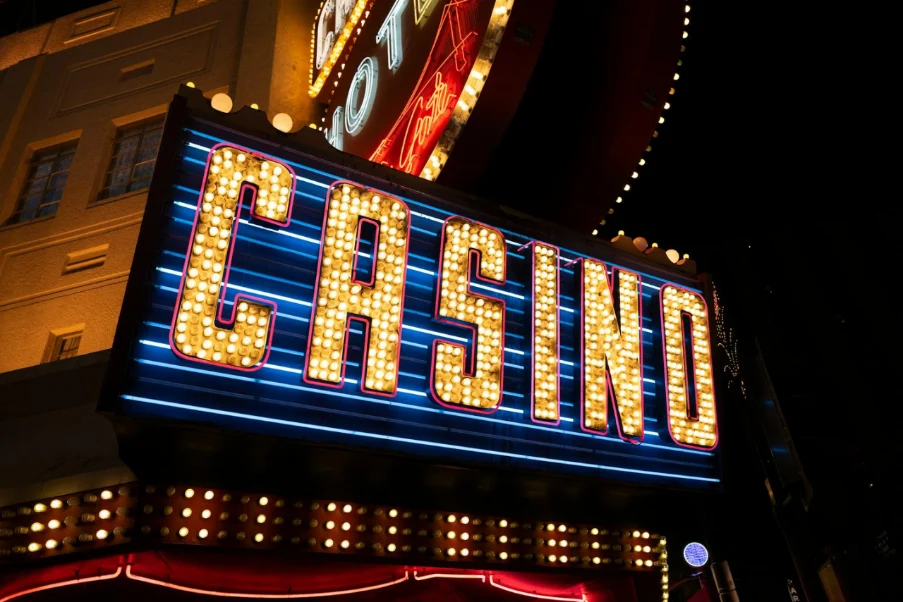
Casino language has travelled remarkably far from the rooms and tables where many of its expressions originated. People who have never played poker may still go “all in” on an idea, while someone who receives an unexpected promotion might say they have “hit the jackpot”. A company can “up the ante”, a manager can “hold all the cards”, and a friend may advise you to “play your cards right”.
These expressions survive because they communicate complicated ideas in a vivid and economical way. Risk, uncertainty, confidence and sudden success are difficult concepts to describe with a single image, but casino vocabulary provides familiar metaphors for all of them. Over time, many terms have acquired figurative meanings that are now as common as their original definitions.
Understanding where these phrases came from makes them easier to use correctly. It also reveals how English constantly borrows specialist language and adapts it to entirely new situations.
Hitting the Jackpot Is No Longer Just About a Game
Today, “hit the jackpot” means achieving an unusually fortunate or valuable result. Someone might use it after finding an ideal apartment, hiring an excellent employee or discovering that an inexpensive purchase is worth far more than expected.
The word “jackpot” began with a much more specific meaning. It is linked to a form of draw poker in which a player needed a pair of jacks or better to open the betting. When no one could open, the money in the pot remained and continued to grow. The accumulating prize became known as a jackpot.
The expression gradually moved beyond card games. A jackpot could refer to a large prize in slots, bingo and other casino formats, while “hitting the jackpot” developed into a general metaphor for unexpected success.
Context determines whether the meaning is literal or figurative. “She hit the jackpot on a slot” describes a casino outcome, while “the company hit the jackpot with its new designer” means that the appointment proved exceptionally successful. The second example involves no gambling at all.
Going All In Expresses Complete Commitment
“All in” belongs most directly to poker. A player who goes all in commits all the chips available to them at the table. The decision creates a clear moment of commitment because the player cannot increase the stake any further during that hand.
Outside poker, the phrase describes wholehearted dedication to a plan, belief or project. An entrepreneur may go all in on a new business, while a sports team can appear all in on winning a championship. In these examples, the expression emphasises commitment rather than a literal financial wager.
The phrase is effective because it suggests that hesitation has ended. Saying that someone is “interested” in a project sounds cautious. Saying that they are “all in” indicates that they have accepted the demands of the decision and intend to pursue it seriously.
Writers should still consider tone. “All in” works naturally in conversation, journalism and informal business writing. A formal legal or academic document may require more precise alternatives, including “fully committed” or “entirely invested”.
Original Casino Meanings Remain Important
Figurative meanings may be widespread, but casino words continue to serve practical purposes in their original setting. Terms including dealer, stake, jackpot, spin and cash out describe specific people, actions or features. Understanding them helps users read game rules and distinguish one format from another.
A modern platform can bring several types of casino vocabulary into the same digital lobby. Mr Q online casino offers slots, jackpots, blackjack, roulette, Slingo, live dealer titles and online bingo. A visitor might therefore encounter terms connected with reels and paylines in one part of the platform, then see language involving cards, tables or bingo tickets elsewhere.
Mr Q is licensed and regulated in Great Britain by the Gambling Commission. It also provides safer gambling controls, including deposit limits, reality checks and time-out options. Language plays an important role here as well. Instructions, game rules and account controls need to be clear because an ambiguous phrase can affect how someone understands a feature or condition.
The literal and figurative meanings should not be confused. Going “all in” on a career ambition may communicate enthusiasm, but committing every available financial resource to casino play would be an entirely different and risky decision. The metaphor has become positive in many everyday contexts, while the original action still requires an understanding of its consequences.
Up the Ante Has Expanded Beyond Poker
An ante is the amount a player contributes before a poker hand begins. It creates an initial pot and gives every participating player something at stake. To “up the ante” originally meant increasing that required contribution.
In ordinary English, the phrase now means increasing the pressure, expectations, difficulty or resources involved in a situation. A competitor may up the ante by launching a more advanced product. A television series can up the ante by giving its characters a more serious challenge, while an employer may do the same by improving an offer to attract a sought-after candidate.
The word has a long linguistic history. Ante comes from Latin and means “before”. That connection remains visible in English words including antenatal and antecedent, both of which refer to something preceding another event or condition.
The figurative phrase is common, but the object being increased should be understandable from context. “The new deadline upped the ante” suggests that the situation became more demanding. Without enough surrounding information, however, the reader may not know whether the change involves cost, risk, pressure or expectations.
Dictionaries Preserve the Journey of Casino Language
Language authorities help trace the point at which specialist terminology becomes part of general English. Merriam-Webster has documented several gambling words that developed broader meanings, including jackpot, penny ante and aboveboard. Its history of “jackpot” connects the term with draw poker before explaining its movement into wider use.
“Aboveboard” offers another interesting example. The word now means open, honest or free from deception. Its likely connection with card playing comes from the idea that actions performed above the table were visible, making concealed cheating more difficult.
Someone describing a business arrangement as “completely aboveboard” is therefore using a word with a possible link to the gaming table, even though the sentence may have nothing to do with cards. The original physical image has faded, but the association with visible and honest conduct remains.
This is a common pattern in language development. A term begins with a narrow technical function, becomes useful as a metaphor and eventually feels so ordinary that speakers stop noticing its origin.
Playing Your Cards Right Is About Using an Opportunity Well
“To play your cards right” means handling a situation intelligently in order to achieve a favourable result. A manager might tell an employee that a promotion is possible if they play their cards right. A traveller could use the phrase when explaining how careful planning helped secure a better deal.
The expression draws on card games, where a player must decide how to use the hand they have received. It does not mean that the person controls every condition. Instead, it emphasises making thoughtful choices within existing limitations.
This is one reason the phrase works so well in everyday English. People cannot select every opportunity or challenge they encounter, but they can influence how they respond. The cards represent circumstances, while playing them represents decision-making.
The phrase should not be confused with “show your hand”, which means revealing intentions or information that had previously been concealed. Nor does it mean the same as “hold all the cards”, an expression indicating that someone has a strong or controlling position.
The Cards Metaphor Has Produced an Entire Family of Expressions
English contains many card-related idioms because card games offer simple images of information, control and uncertainty. To “put your cards on the table” means to speak honestly about intentions. The image suggests turning concealed cards face up so that everyone can see them.
Keeping something “close to your chest” has the opposite implication. It means protecting plans or information rather than revealing them. A football manager may keep team selection close to their chest, while a business may do the same with an unreleased product.
Being “dealt a bad hand” describes receiving difficult circumstances through no choice of one’s own. The expression can apply to health, employment or almost any situation involving an unfortunate starting point. It focuses on what a person has received rather than how they respond.
“Holding all the cards” indicates control or a significant advantage. If one company owns a vital technology needed by several competitors, it may be said to hold all the cards during negotiations. Unlike “playing your cards right”, this phrase describes the strength of the position rather than the quality of the decisions made from it.
Bluff Has Become a Word for Everyday Deception
A bluff in poker is an attempt to make opponents believe that a hand is stronger than it really is. The player’s goal is not to change the cards but to influence how other people interpret them.
The word now applies far beyond poker. A threat may be described as a bluff if the person making it has no intention or ability to carry it out. Someone can also “call a bluff”, meaning they challenge the claim and force the other person to prove it.
“Bluff” can function as both a noun and a verb. In “his warning was a bluff”, it is a noun naming the deceptive action. In “she was bluffing about resigning”, it is a verb describing what the person was doing.
The term usually carries an element of deliberate misrepresentation. It should not be used simply because someone was mistaken or overly confident. A person who genuinely believes an incorrect claim is not necessarily bluffing.
Cash Out Has Become a Flexible Phrasal Verb
In a casino, to cash out means converting chips, a balance or credits into money. The phrase indicates that the person is ending or reducing their participation and taking the value currently available.
Its broader use is particularly common in business. An investor may cash out by selling an ownership stake, while the founder of a successful company might do so when the business is acquired. In both cases, an asset is converted into accessible money.
The expression can occasionally carry a critical tone. If someone is accused of “cashing out early”, the speaker may be suggesting that they prioritised immediate personal benefit over the future of a project. Context determines whether the phrase is neutral, positive or disapproving.
Learners should also distinguish “cash out” from “cash in on”. To cash in on something means to benefit from an opportunity, trend or situation. A company may cash in on interest in a popular film by producing related merchandise. It does not necessarily mean that the company is leaving the market.
Raise the Stakes Describes Greater Consequences
A stake is something placed at risk, usually money in the casino context. In wider English, “the stakes” are the potential consequences of an action or event. When the stakes are high, the possible gains or losses are considered especially important.
To “raise the stakes” means making a situation more consequential. A difficult exam can raise the stakes for a student’s academic plans, while a major investment may do the same for a company’s future. The phrase is close to “up the ante”, but they are not always interchangeable.
“Up the ante” often emphasises an increase in demands, effort or pressure. “Raise the stakes” places greater emphasis on what can be gained or lost. In many informal sentences either expression will sound natural, but recognising the subtle distinction can make writing more precise.
Casino Language Continues to Enrich English
Casino expressions remain popular because they turn abstract ideas into memorable pictures. “Hit the jackpot” captures unexpected success, “all in” conveys complete commitment, and “play your cards right” describes the intelligent use of an opportunity. Each phrase carries part of its original gaming context into a new area of life.
Their movement into everyday English also shows that language does not remain inside neat categories. Specialist vocabulary travels through conversation, journalism, films, sport and business until its figurative meaning becomes widely understood.
Learning these origins is more than an exercise in trivia. It helps writers choose the right phrase, recognise differences between related expressions and avoid confusing a metaphor with its literal meaning. Casino words may have started at tables and game rooms, but many now belong to everyone who speaks English.
