Every storm season, the same failure plays out across cities nationwide: the power grid goes down, and every grid-tied streetlight goes with it. Roads that emergency responders depend on go dark. Parks become unsafe. Pedestrian pathways disappear entirely. The problem is not the storm itself; it is the infrastructure that was never built to survive one. Solar Power Outdoor Lighting solves this at the source. These systems generate and store their own energy using solar panels and high-capacity batteries, operating completely independent of the utility grid, so when the grid fails, the lights stay on.
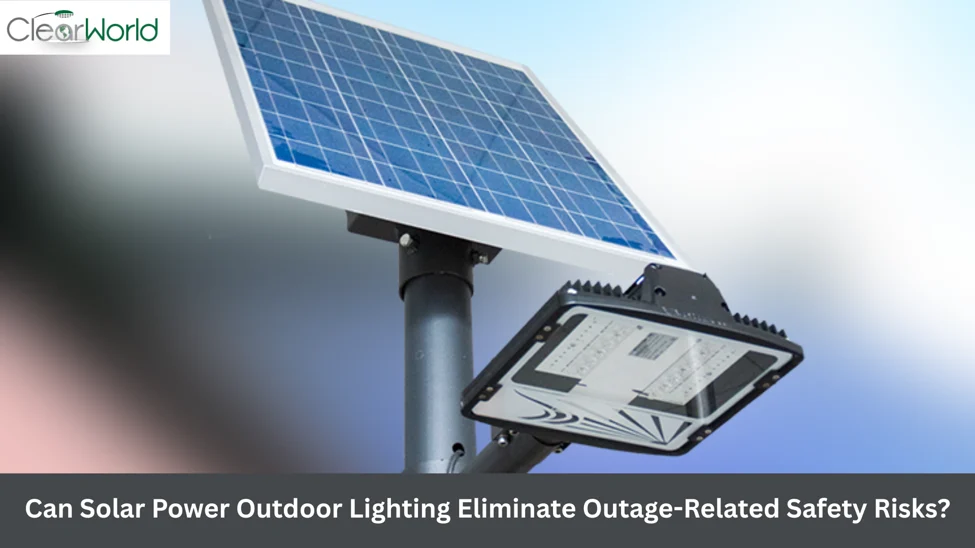
Outdoor lighting is an outdoor LED lighting solution that runs entirely on solar energy. Panels collect sunlight during the day, batteries store that energy, and LED fixtures release it after dark with no utility connection, no underground wiring, and no dependence on centralized power infrastructure. Cities, municipalities, campuses, and public facility managers across the U.S. are making this transition because the advantages go well beyond storm resilience: lower operating costs, zero electricity bills, and simpler installation in locations the grid cannot reach.
How Does Solar Power Outdoor Lighting Actually Protect Public Spaces?
When severe weather hits, grid-connected outdoor lighting fails because it was designed to depend on centralized infrastructure that storms routinely destroy. Transformers blow, power lines snap, and the entire system goes dark sometimes for days or weeks. Solar power outdoor lighting is built around a fundamentally different operating model. Each unit is a self-contained system. The panels charge the batteries, the batteries power the lights, and none of it requires a live utility connection to function.
Here is what that independence means in practice:
Grid Failure Does Not Affect Solar-Powered Systems
Solar outdoor lighting units operate on stored energy, not live grid current. When a hurricane or severe thunderstorm knocks out utility power across an entire region, solar-powered streetlights, pathway lights, and parking lot fixtures continue running without interruption. Emergency access routes stay visible. Evacuation roads stay navigable. Communities stay safer during the hours when darkness creates the most risk.
No Underground Wiring Eliminates Flood Damage Risk
Conventional outdoor lighting runs on buried electrical conduit that is directly vulnerable to flooding, moisture intrusion, and soil shifts. Solar systems carry no underground wiring at all. That structural difference removes one of the most common causes of storm-related lighting failure, making solar outdoor lighting inherently more durable in flood-prone, coastal, and high-storm-risk environments.
Modern Battery Storage Handles Days of Low Sunlight
The concern about solar lighting and overcast weather is outdated. Today’s lithium battery storage systems are engineered to sustain full illumination through several consecutive cloudy or stormy days without recharging to full capacity. These systems are specifically designed to perform during the extended low-sunlight conditions that accompany the severe weather events when reliable outdoor lighting is most critical.
Solar Units Can Be Deployed Rapidly After Storm Damage
Restoring grid-tied lighting after storm damage can take weeks. Utility crews, electrical permitting, and infrastructure repair all have to happen in sequence. Solar-powered outdoor lighting units are self-contained and require no grid reconnection. Municipalities and emergency management teams can deploy them quickly in areas where conventional lighting infrastructure has been compromised, restoring safety far faster.
Remote Monitoring Prevents Unplanned Outages
Commercial-grade solar outdoor lighting systems include IoT-based remote monitoring as standard. Battery levels and fixture performance are visible in real time, and maintenance teams receive alerts before performance drops to failure, not after a light has already gone dark.
Why Does Solar Outdoor Lighting Make Financial Sense Over the Long Term?
The storm-resilience argument alone is strong enough for many cities to make the switch. But the financial case for solar outdoor lighting holds up equally well under scrutiny, and over a 10 to 15-year horizon, the cost advantages compound significantly.
Zero Ongoing Electricity Costs
Solar outdoor lighting generates its own power. There is no electricity bill for operating these fixtures after installation. For a municipality managing hundreds or thousands of lights, eliminating that recurring cost translates into substantial annual savings that can be redirected toward other public infrastructure needs.
Significantly Lower Maintenance Overhead
LED-based solar lighting systems outlast conventional fixtures by a wide margin. Fewer bulb replacements, no conduit repairs after flooding, and fewer service calls all lower the total cost of ownership across the system’s lifespan.
No Grid Extension Required for New Installations
Adding conventional lighting to a new location requires trenching, permitting, and electrical installation, a costly and time-consuming process. Solar outdoor lighting systems can be installed anywhere without modifying existing electrical infrastructure. That makes expanding public lighting to new parks, rural roads, or remote facilities genuinely cost-effective.
Direct Support for Sustainability and Emissions Goals
Municipalities under pressure to meet carbon reduction commitments get immediate, measurable progress by transitioning outdoor lighting to solar. The reduction in grid energy consumption is real and quantifiable, a straightforward win for sustainability reporting and community accountability.
Access to Federal and State Incentive Programs
Solar infrastructure projects regularly qualify for federal grants, state rebates, and green energy funding programs that can meaningfully reduce upfront costs and accelerate the payback period for municipalities working within tight budgets.
Where Is Solar Power Outdoor Lighting Already in Use?
Solar-powered outdoor lighting is actively deployed across the U.S. in demanding real-world environments, not in testing phases, but in full operation.
Municipalities in hurricane corridors have equipped emergency evacuation routes with solar streetlights that stay on when the grid fails. Public parks now maintain safe, lit pathways for residents even during extended outages. Hospitals and universities rely on solar parking lot lighting for security that no utility failure can interrupt. Military installations and secure facilities depend on it for perimeter lighting that requires absolute energy independence. In rural communities where grid extension is too expensive to justify, solar-powered outdoor lighting is bringing reliable illumination to roads and public spaces that previously had none.
Conclusion
Public safety infrastructure cannot be conditional on grid availability. Solar Power Outdoor Lighting gives cities, municipalities, and facility operators lighting that functions independently through storms, outages, and any condition that takes the grid offline. The combination of operational resilience, zero electricity costs, and straightforward installation makes solar outdoor lighting one of the most practical infrastructure investments available to public space managers today.
