Maintaining fresh turkey isn’t just about placing it in the fridge and hoping for the best. All of these factors- air, moisture loss, temperature variations, odors, and possible cross-contamination threaten quality. The food-grade turkey bag adds a beneficial protective layer, which helps to protect texture and flavour, prevent dirtiness and freshness over time.
Turkey bags are most effective when paired with either safe refrigeration or freezing. They would not by themselves halt bacterial growth, nor could they save meat stored at unsafe temperatures. But if done right and kept cold enough, they can make for a much cleaner, easier, more controlled approach to storing turkey.
Freshness Starts Before the Bag Is Closed
A turkey bag will protect food only if the turkey is still fresh at the moment of storage. If the turkey has been stored for too long at room temperature, sealing the bag will not reverse the process of spoilage. Consider the container as protection and not an emergency reset button for aged food items.
While packaging is obviously important, temperature matters too. The FDA recommends that refrigerators be kept at 40°F (4°C) or below and freezers maintained at 0°F. (-18 degrees Celsius). The cold temperature slows the bacteria, so every one of the air and spills and food that could be contaminating surrounding foods reaches into the turkey bag.
Turkey Bags Reduce Exposure to Air
After the turkey is left exposed, the air around it begins to influence the surface. The meat will slowly become dry, absorb the smells of refrigerators and lose its attractive texture. A properly sealed turkey bag prevents direct exposure and creates more stable conditions within the meat.
This barrier is particularly useful in large turkey portions that can’t fit well inside rigid containers. It is possible to wrap the bag tightly around the turkey, take out any air that is not needed and close the opening. A lesser amount of air contact typically results in better quality storage.
They Help Hold Natural Moisture
Moisture makes turkey soft and delicious to consume. Sadly, uncooked poultry may lose moisture on the surface inside the refrigerator due to cold circulation; air promotes drying. A turkey bag can reduce the loss of moisture by protecting the meat and limiting the direct airflow around its surface.
It is important to protect your turkey when cooking too. Turkey leftovers are often dry when they are stored loosely in foil or on an unprotected plate. Placing the cooled turkey in a clean, food-grade bag helps to retain moisture, making the reheated turkey less slick and much more palatable.
Turkey Bags Create a Cleaner Storage Barrier
The turkey juices that are left in the raw can spill out and transfer bacteria onto containers, shelves, or even nearby food items. A well-constructed, tightly sealed turkey bag helps to contain the liquids. To ensure extra security, put the turkey in the bag on the tray or in a shallow container within the refrigerator.
This barrier can also help keep raw poultry separate from ready-to-eat meals like desserts, salads or leftovers from cooking. The FDA suggests that raw poultry and meat be kept separately from food items that are consumed without cooking. Good bags support that essential food safety habit.
Turkey Bags Can Help Limit Freezer Burn
Freezer burn occurs when frozen food is dehydrated and begins to develop dry patches that are discolored. It doesn’t mean that food is dangerous, but it could cause a loss of texture and taste. Reducing the air exposure around the turkey prior to freezing can help to protect the meat from dehydration.
For best results, push out as much air as you can before sealing the bag. If you plan to freeze turkey for a long time, make sure you have double protection using appropriate freezer packaging. The idea is to stop cold air from constantly touching the meat’s surface.
They Help Control Odors Inside the Fridge
Turkey can pick up strong refrigerator odors, especially if it is stored near onions and sauces or smoking foods in the home. Additionally, even raw poultry can emit its own odors within the refrigerator. A sealed turkey bag keeps those undesirable scents from wafting in and out between foods.
Organizing your refrigerator is easier with a better odor control system. The trick is to wrap the turkey loosely with foil on a plate, which makes it much easier. The storage bag needs to be marked with a date, which will help clarify things — especially after an extravagant holiday dinner.
Raw and Cooked Turkey Need Different Handling
Uncooked turkey must be put into the cold storage at once, and should be kept clear of cooked meal products. According to USDA guidelines, fresh turkey including whole turkeys and parts of a fresh turkey should stay inside the fridge for roughly one or two days. Freezing is better if you don’t want to cook it shortly after.
Cooked turkey typically lasts longer. Remember, the USDA recommends that cooked turkeys, refrigerated properly, will last an additional three or four days. Rather than putting a steaming whole turkey in one bag share smaller portions of the meat once it has cooled down enough to be put safely into refrigeration.
Turkey Bags Make Freezing More Practical
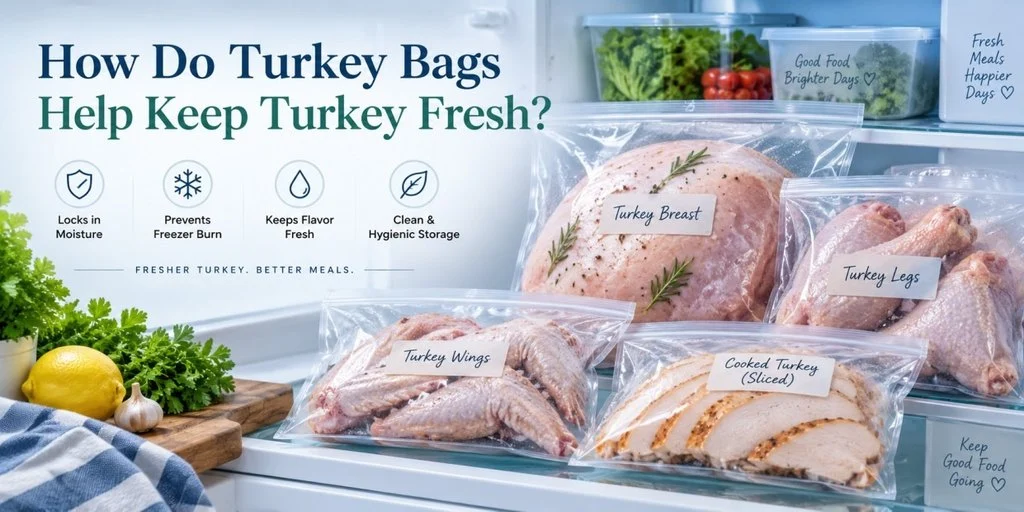
Large turkeys and large portions can be difficult to pack. Flexible turkey bags can conform to different shapes more easily than rigid containers. This makes them ideal for freezing wings, legs, breasts, carved meat, or even a large cooked bird. You can also explore Turkey Bag options to find a suitable size for your storage needs.
However, the freshness of freezers is dependent on the bag’s quality and closure. Use bags specifically designed for storage of food items and freezing when appropriate. Secure the opening with care and avoid punctures caused by bones and leave enough material around sharp points to ensure the package doesn’t break while moving.
Refrigerator Storage
Put turkey in a bag on the bottom shelf of your fridge. It should preferably rest in a tray of ice which will contain any leaks quite effectively. Maintain refrigerator temperature at 40degF or lower. Shelves should not be overcrowded; cold air requires room to circulate and maintain temperature around food items.
The Right Bagging Method Improves Freshness
Begin by washing your hands and tidying your work surface. The turkey should be placed inside the bag without letting the exterior of the bag contact the utensils or cutting boards that are contaminated. Release any air gently, after which you can twist, tie, clip, or seal the opening in accordance with the bag’s style.
Next, add a simple date label. This simple step can prevent the discovery of archaeology in the refrigerator later. You’ll know precisely when the turkey was placed in storage and if it is within the recommended time limit. Particularly for raw poultry, the proper labeling eliminates uncertainty and makes it easier to make better decisions.
Turkey Bags Don’t Replace Safe Food Handling
Bags at least limit the mess and exposure, but they can not kill pathogenic bacteria. Raw turkey needs to be handled properly, chilled safely, thawed appropriately and cooked completely. According to USDA guidelines, no one knows true and tested turkey right at home better than a thermometer; it is best if the meat has cooked to an internal temperature of 165 degrees Fahrenheit.
Also, don’t rely only on the appearance or smell to determine if turkey is safe. The presence of harmful bacteria could be without any obvious warning indicators. If your turkey has been exposed for too long to unsafe temperatures, take it out of the bag instead of believing that a sealed bag would have kept it safe.
Why Turkey Bags Are Worth Using
For something as simple a turkey bag can solve numerous storage problems that are commonplace in one go. It reduces direct exposure to air and reduces moisture loss. It also keeps juices in, helps eliminate the smell, and makes large birds easier to arrange. This makes turkey more appealing during proper storage in refrigerated or frozen conditions.
The most significant benefit is the result of using the bag properly. Combine food-grade packaging with safe temperatures and clean handling, sensible storage timings, and careful sealing. If you do this consistently, your turkey has a better chance of remaining fresh, delicious, neat and available whenever you require it.
