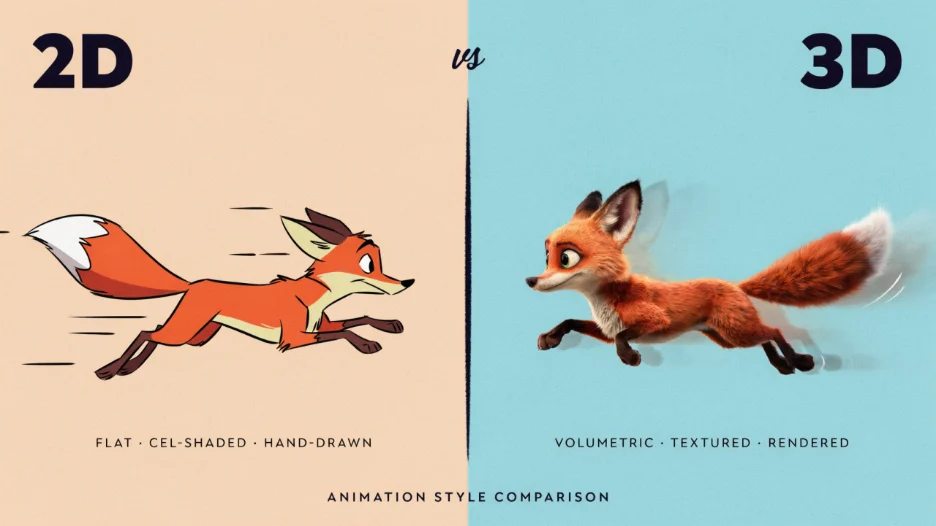
Animation works best when the style matches the message.
That sounds simple, but many brands get it wrong. They choose 3D because it looks premium. They choose 2D because it feels cheaper or faster. They choose a style because a competitor used it. Then the final video looks fine, but the message does not land.
The real question is not, “Which animation style looks better?”
The better question is, “What does the audience need to understand?”
A software product may need a clean visual walkthrough. A medical device may need realistic depth. A service brand may need a simple story. A technical product may need internal parts, movement, and accurate scale.
The right animation style makes the message easier to follow. The wrong one makes the viewer work harder.
Start With the Message, Not the Visual Style
A good animated video starts with the point.
What should the viewer understand by the end? What problem are they facing? What should they believe, remember, or do next?
Once that answer is clear, the visual style becomes easier to choose.
If the goal is to explain a simple process, flat visuals may be enough. If the goal is to show a physical product, hidden mechanism, or realistic environment, 3D may make more sense.
The style should support the explanation. It should not take over the video.
A polished video that fails to explain the idea is still a weak video.
2D Animation Works Well for Clear, Simple Explainers
Some messages need simplicity more than depth.
A SaaS platform, insurance service, healthcare process, finance app, or educational concept may not need realistic visuals. It may need clean icons, characters, motion graphics, and a strong script.
This is where working with a 2D animation studio can help brands turn abstract ideas into simple visual stories.
2D works well when the message is about steps, benefits, customer journeys, or service explanations. It can show a user moving from problem to solution without making the screen feel crowded.
It is also useful for brands that want a friendly, approachable tone.
The biggest strength of 2D animation is focus. It removes visual clutter and keeps the viewer locked on the idea.
3D Animation Helps When Detail Matters
Some products need realism.
A medical device, machine, electronic component, architectural project, industrial tool, or consumer product may need to be shown from different angles. The audience may need to understand scale, texture, internal parts, or movement.
A 3D animation studio can create visuals that show those details with more control than live footage.
The product can rotate. Layers can become transparent. Internal parts can be highlighted. A motion can slow down so the viewer understands each stage.
This is especially helpful when the product is difficult to film, not yet manufactured, too small, too large, or too complex for standard video.
3D gives brands control over what the audience sees and how they see it.
Service Brands Should Not Overcomplicate the Video
Service-based brands often assume they need something visually big to look credible.
That is not always true.
A consulting firm, agency, software provider, coaching business, logistics company, or healthcare service may benefit more from a simple animated story than from heavy 3D visuals.
The viewer does not need a complex scene. They need to understand the problem, the process, and the outcome.
For many service brands, 2D animation or motion graphics can explain the offer faster. It can show a messy workflow becoming organized, a customer getting support, or a team moving through a better process.
The goal is clarity, not decoration.
Product Brands Need Strong Visual Proof
Product brands have a different challenge.
Buyers often want to see how the product works before they trust the claim. A written feature list may not be enough. Photos may show the design, but not the function.
Animation can turn product claims into visual proof.
A video can show airflow, safety features, internal movement, material layers, product assembly, or real-world use. It can also compare the old way with the better way.
This helps buyers understand the value faster.
For technical or high-ticket products, that clarity can reduce hesitation and make sales conversations more productive.
Budget and Timeline Matter Too
Animation style affects budget and timeline.
A simple 2D explainer may be faster to produce than a detailed 3D product video. A realistic product animation may need modeling, materials, lighting, rigging, rendering, and more review time. A character-heavy video may need extra work for expressions, movement, and voice pacing.
Brands should be honest about what they need.
If the goal is a quick awareness video, a simpler style may work. If the goal is to explain a complex product for sales or launch, a more detailed production may be worth the time.
Cutting the wrong corners can make the final video less useful.
A cheap video that does not explain the message properly becomes expensive in the long run.
Audience Expectations Should Shape the Choice
Different audiences expect different levels of detail.
Patients may need calm, simple visuals. Engineers may want technical accuracy. Investors may need a clear market story. Consumers may need quick product value. Internal teams may need step-by-step training.
The animation style should match those expectations.
A playful character style may work for an education brand but feel wrong for a medical device launch. A realistic 3D product video may work for engineers but feel too heavy for a general social media ad.
The audience decides how much detail is useful.
Too little detail creates doubt. Too much detail creates fatigue.
A Strong Script Holds Everything Together
The animation style matters, but the script matters more.
A weak script can ruin any visual direction. If the message is unclear, the viewer will still leave confused.
A strong script keeps the video focused. It gives the animation team a clear path and stops the brand from adding too much.
The best animated videos usually answer five questions:
What is the problem?
Who is facing it?
What is the solution?
How does it work?
What should the viewer do next?
Once those answers are clear, the visuals can do their job.
The Best Animation Feels Purposeful
Good animation does not feel random.
Every scene, movement, transition, label, and camera angle should help the viewer understand something. If a visual element does not support the message, it should not be there.
That is true for both 2D and 3D.
The best animation is not always the flashiest. It is the one that makes the idea easier to understand, remember, and trust.
A brand video should leave the viewer with a clear thought: “I get it now.”
That is the real win.
Conclusion
Choosing between 2D and 3D animation is not about which style looks more impressive. It is about which style explains the message best. 2D animation is strong for simple stories, service explainers, and abstract ideas. 3D animation is better for products, technical details, realism, and hidden movement. When brands choose based on audience needs, message clarity, budget, and use case, the final video becomes more than a creative asset. It becomes a practical tool for communication, sales, and trust.
Frequently Asked Questions
How Do Brands Choose Between 2D and 3D Animation?
Brands should choose based on the message, audience, product complexity, budget, and the level of visual detail needed.
Is 2D Animation Good for Business Videos?
Yes. 2D animation works well for explainers, service videos, process walkthroughs, education, and brand storytelling.
When Should a Brand Use 3D Animation?
A brand should use 3D animation when it needs to show realistic products, internal parts, movement, scale, or technical details.
Can One Video Use Both 2D and 3D Animation?
Yes. Some videos combine 2D graphics with 3D product shots to explain both the story and the technical details clearly.
How Long Should an Animated Brand Video Be?
Most animated brand videos work best between 60 and 120 seconds, depending on the message, platform, and audience.
