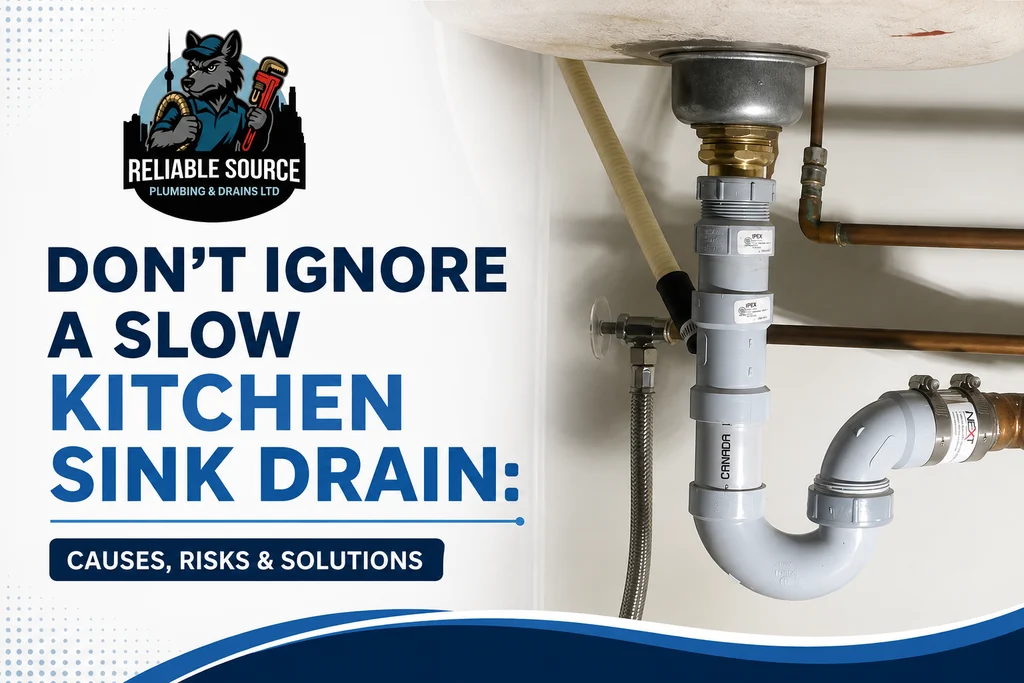
A slow kitchen sink may first seem like a minor inconvenience, but it can often indicate underlying major plumbing issues. Stubborn clogs, unpleasant odour, and water damage issues not only disrupt your daily routine but, when ignored for long, can lead to costly repairs.
To understand the underlying issues and treat the plumbing problems properly, it is recommended to call professional plumbing services that save you time, money, and unnecessary stress. Drain snaking and hydrojetting are effective drain cleaning services that will help you get a clog-free kitchen drain.
Let’s see the possible and common causes of slow and clogged drains in the kitchen.
Causes of a Slow Kitchen Sink
● Grease and Oil Build-up in the Pipe
Cooking oil is one of the most common causes of grease and oil build-up in the pipe. This cooking oil and fat may go down the pipe but slowly settle on the surface, restricting flow.
● Soap and Sludge Accumulation in the Pipe
Soap and detergent can easily combine with oil, grease, food particles and minerals to form a sticky sludge. This build-up in the drain pipe will disrupt the smooth flow of water in drains and pipes.
● Trapped Food Items or Scrap
Vegetables, fruit peels, and leftover food items washed into the kitchen sink can collect in the drain, especially when a sink strainer isn’t used.
● Mineral Scale and Hard Water
Water hardness is one of the most common causes of plumbing issues. The limescale deposit reduces the pipe’s diameter. Affects the water flow. It also leaves stains on the plumbing fixture and affects appliances too.
● Heavy Debris and Foreign Material
Dense items like coffee beans, food paste, fibrous peels and flour paste swell and deposit in the pipe. These cause stubborn clogs and may accelerate corrosion.
● Cracks in Pipes and Joints
Cracks in older pipes or in the joints lead to leaks. Loose sealing and cracks in the p-trap and trap arm slow down water flow in the system.
Risk of Slow Kitchen Sink Drain
A slow kitchen sink will lead to foul smells in the pipes, clog the drains, and stagnant water that may create an environment where bacteria and other microorganisms can grow.
● Complete Drain Blockage
When slow drains are ignored for a long time, it can turn into complete drain blockage due to continuous clogging and leaks.
● Unpleasant Odours
Stagnated water leads to foul smells in the drains and pipes. Food particles, when trapped inside the kitchen pipe, gradually degrade and cause unpleasant smells.
● Water Backflow
When soap, scum, grease and food items get stuck and clog the pipe, backwater also comes in the reverse direction and may cause contamination.
● Bacterial Growth
Standing water and organic waste inside the drain can create an environment where bacteria and mold may grow.
● Expensive Repairs
All these plumbing issues need professional help and, if not done properly, may lead to expensive repairs.
Solutions For Slow Kitchen Drains
One of the prominent plumbing issues can be resolved through professional drain cleaning services. Following some preventive measures can help to reduce the chance of clogging.
● Drain Cleaning Services
Drain cleaning services from a reliable plumbing service can help remove blockages and restore proper water flow safely. There are two common and effective drain cleaning methods used for unclogging drains: snaking and hydrojetting.
Drain Snaking
It is a drain cleaning service that uses a long metal auger to unclog the debris and waste stuck inside the pipe. Drain snaking is recommended to call a reliable plumbing service to perform this method for its greater effectiveness.
Hydrojetting
It is another effective method that uses high-pressure water to remove grease, sludge, and other buildup from suitable pipes.
Both of these methods are effective and give lasting results when performed by professionals.
● Preventive Measure for Kitchen Sink
- Keep a drain strainer in the sink that prevents kitchen waste from going into the pipe.
- Scrape food items off the utensils before washing in the sink.
- Avoid using harsh chemicals for cleaning in the kitchen drain.
- Avoid pouring oil and butter directly into the drain.
- Schedule regular maintenance or drain cleaning service once a year.
Final Thoughts
For kitchen plumbing issues, slow drains, foul odour, leaky pipes or backwater flow, it is advised to call reliable plumbing services. Drain snaking and hydrojetting are common drain cleaning services that unclog drains and prevent future plumbing issues.
If you are looking for drain snaking Toronto services, you can reach Reliable Source Plumbing and Drain Limited for emergency plumbing services.
