Many English learners search for “where or were” because these two short words look almost the same but have very different meanings. E
ven native speakers mix them up when typing fast, writing emails, posting on social media, or creating school assignments.
This confusion happens because English spelling is tricky, and a single letter can change the meaning of a whole sentence.
In this guide, you will learn the quick difference, the origin of each word, and how spelling rules change between British and American English.
You will also see real examples, common mistakes, and Google Trends data to understand how people use these words around the world.
If you want clear answers, simple rules, and examples you can use right away, this article will help you avoid errors and write with confidence.
By the end, you will know exactly when to use “where” and when to use “were,” no matter what you are writing.
Where or Were: Quick Answer
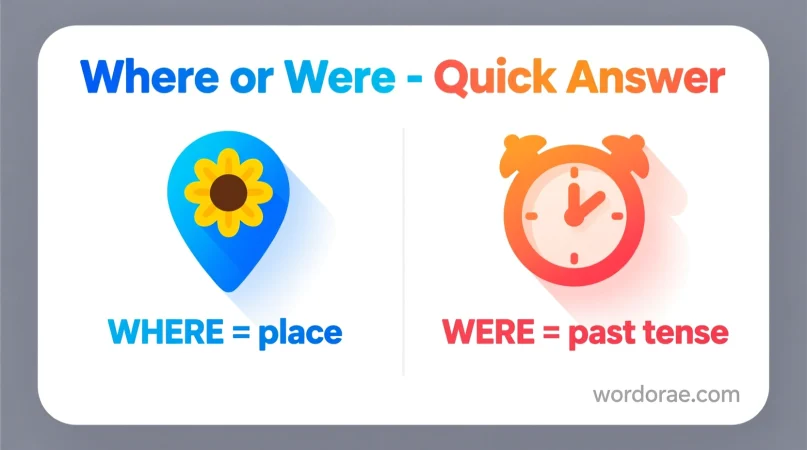
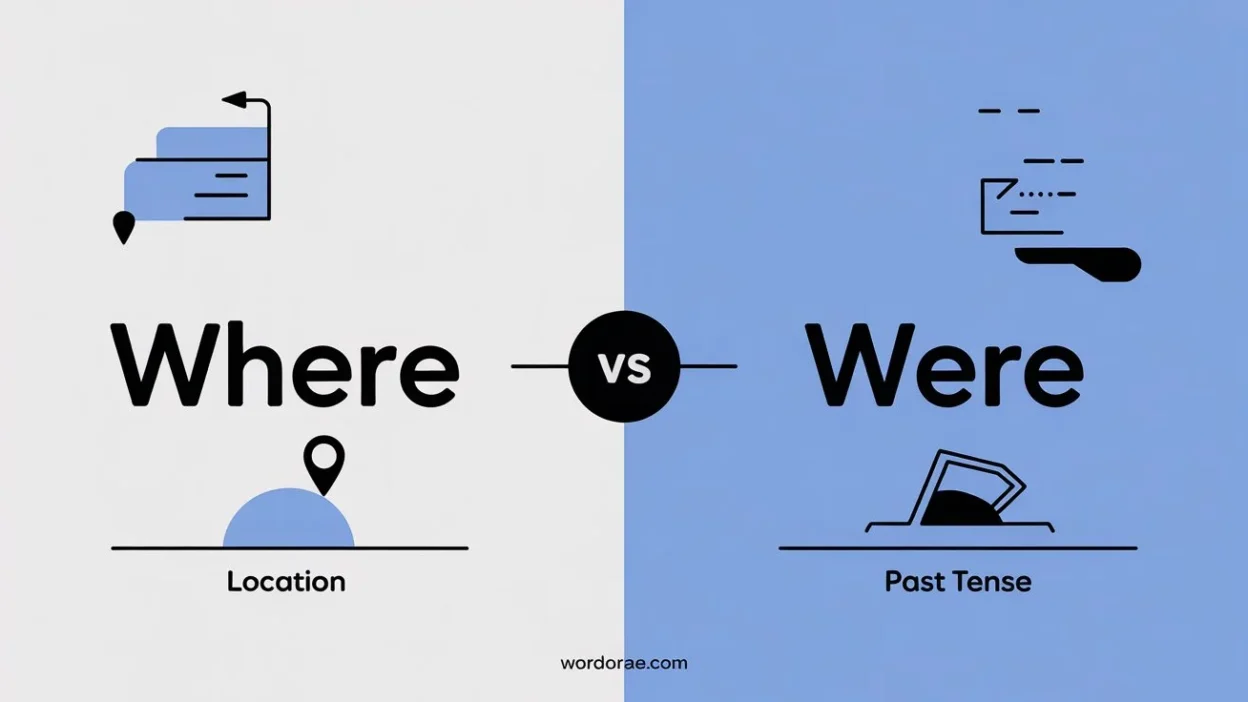
Where = shows a place or location.
Were = is the past tense of are (verb “to be”).
Examples
- Where are you going? (place)
- They were happy yesterday. (past tense)
The Origin of “Where” and “Were”
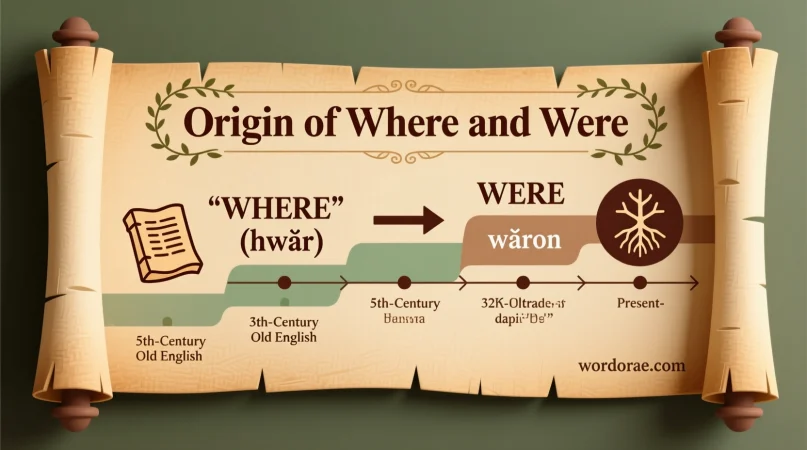
Both words come from Old English, but they had different roots:
- Where comes from hwǣr, meaning “at what place.”
- Were comes from wǣron, the old past tense of the verb “to be.”
The spelling looks similar today because English took words from Germanic, Latin, and Norse languages.
Over time, spellings changed, but pronunciation stayed different, which still causes confusion.
British English vs American English Spelling
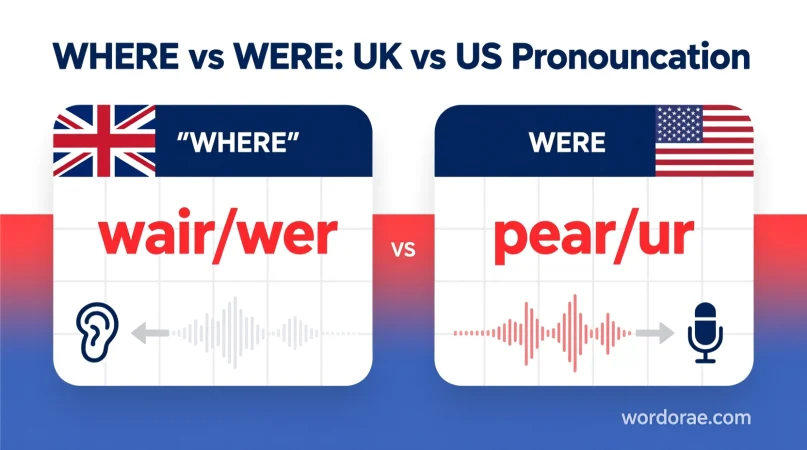
Both dialects spell “where” and “were” the same.
The difference is mainly in pronunciation:
- British English
- “Where” → sounds like wear
- “Were” → sounds like wur
- “Where” → sounds like wear
- American English
- “Where” → sounds like wair
- “Were” → sounds like wer
- “Where” → sounds like wair
Comparison Table
| Word | Meaning | British Pronunciation | American Pronunciation | Example |
| Where | Place/location | wear | wair | Where is my phone? |
| Were | Past tense of are | wur | wer | They were late. |
Which Spelling Should You Use?
Your spelling does not change between regions.
But your audience may read the words differently:
- US readers → prefer simpler pronunciation rules.
- UK/Commonwealth readers → may expect British-style pronunciation.
- Global readers → keep usage simple; focus on meaning, not sound.
Use “where” for place. Use “were” for past tense.
This rule is universal everywhere.
Common Mistakes with “Where” and “Were”
| Mistake | Why It’s Wrong | Correct Form |
| Where you at the party? | Asking about past tense, not location | Were you at the party? |
| They where running. | Not talking about place | They were running. |
| Were is your bag? | Asking about location, not past tense | Where is your bag? |
| I don’t know were he went. | Needs place | I don’t know where he went. |
“Where” or “Were” in Everyday Examples
Emails
- “Please tell me where the files are stored.”
- “We were waiting for your confirmation.”
News
- “Police are checking where the call came from.”
- “There were reports of heavy rain.”
Social Media
- “Where are my coffee lovers at?”
- “If only we were still on vacation!”
Formal Writing
- “The study shows where changes are needed.”
- “There were three key findings.”
Where or Were : Trends & Usage Data
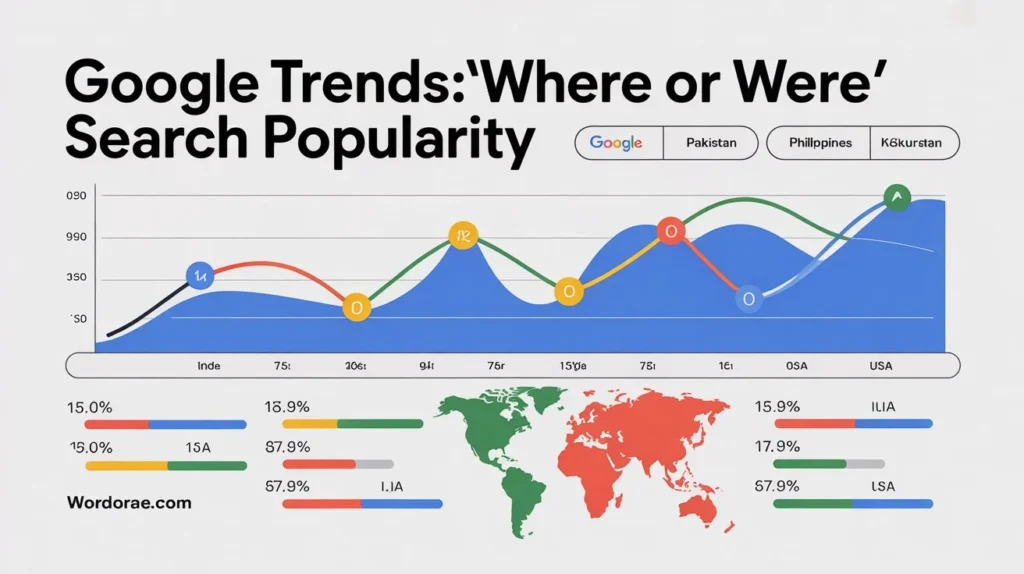
Google Trends shows that “where or were” is searched most in:
- India
- Pakistan
- Philippines
- United States
People search this keyword when writing:
- school homework
- emails
- job applications
- essays
- social media captions
Most searches happen because users want a fast rule to remember which word is correct.
Comparison Table (Keyword Variations)
| Form | Type | Usage | Example |
| Where | Question word | Place/location | Where did she go? |
| Were | Verb (past tense) | Past of “are” | They were excited. |
| We’re | Contraction | “We are” | We’re going now. |
| Wear | Verb | Put on clothes | Wear your jacket. |
FAQs
1. What is the difference between “where” and “were”?
“Where” shows a place. “Were” is a past tense verb.
2. How do I remember the difference?
If it’s about location, use where. If it’s past tense, use were.
3. Is the spelling same in British and American English?
Yes, both spell them the same.
4. Why do these words confuse people?
They look similar but sound different, and English spelling is inconsistent.
5. Can “were” be used for questions?
Yes: “Were you there?”
6. Does “where” always need a question mark?
No. Example: “This is the place where we met.”
7. Is “were” ever used for place?
Never.
Conclusion
The words “where” and “were” may look almost the same, but they do very different jobs in English.
“Where” helps you ask about a place, direction, or position, while “were” is simply the past tense of “are.”
Once you understand this short rule, writing becomes easier, cleaner, and more confident. No matter if you write emails, essays, or social posts, the right choice will help your message stay clear.
Both British and American English use the same spelling, so you do not need to change anything for regional readers. The only thing that changes is pronunciation.
Most mistakes happen because people type fast or rely on sound instead of meaning.
With the examples, tables, and explanations in this guide, you now have everything you need to avoid confusion.
Use “where” for place.
Use “were” for past tense.
Follow this and you will never mix them again.

I’m David Miller, a grammar expert and author at Wordorae.com, specializing in clear, simple explanations of confusing English grammar and word usage.
I help readers write with confidence by turning complex grammar rules into easy, practical guidance.