I remember pausing mid-sentence and thinking, “Is it wether or whether?” I had seen wether used so often online that it almost looked right. A quick grammar check saved me from a common mistake.
If you’re searching for wether or whether, you’re not alone. These words sound alike, but their meanings are very different. Whether shows a choice, weather relates to climate, and wether refers to a sheep.
This confusion matters. Using the wrong word can hurt clarity and credibility. In this guide, I’ll explain the difference clearly and help you use the correct word with confidence.
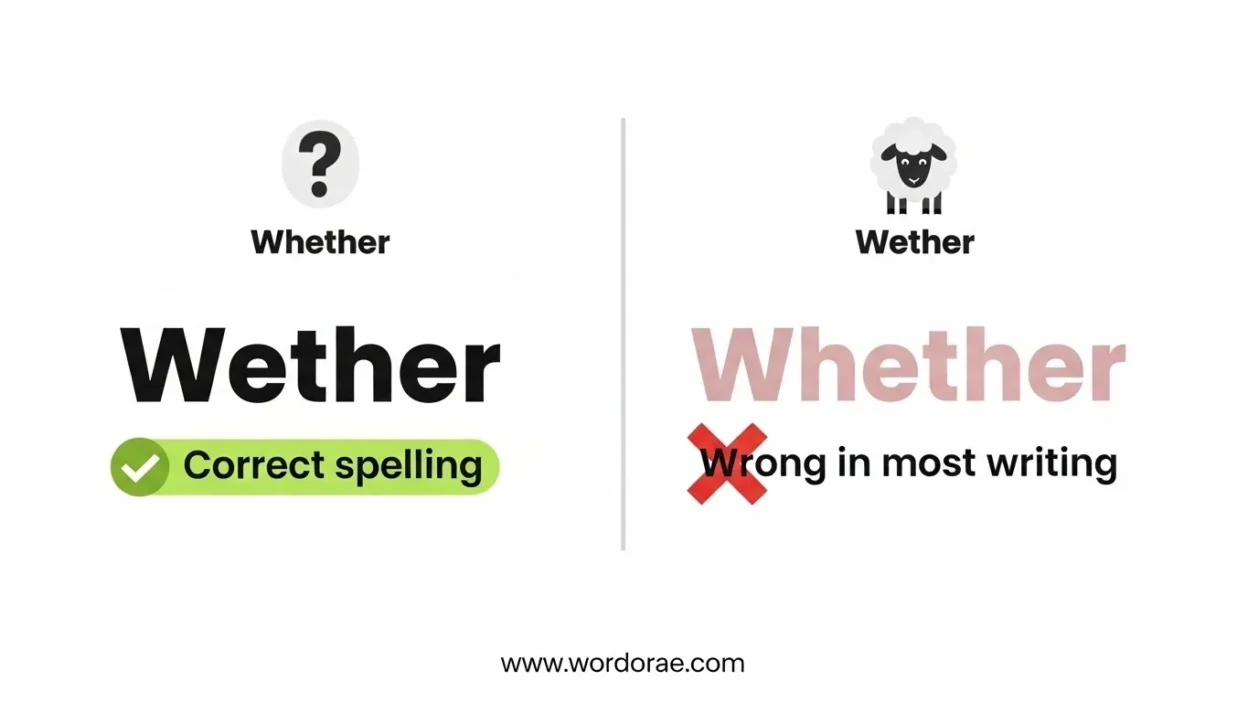
Wether or Whether: Quick Answer
- Correct in writing: whether
- Incorrect (in most cases): wether
Examples:
✅ I don’t know whether it will rain today.
❌ I don’t know wether it will rain today.
According to standard English grammar rules and dictionary definitions, “whether” is the correct form in writing when you are expressing a choice or condition.
The Origin of Wether or Whether
The confusion comes from word history.
- Whether comes from Old English hwæther, meaning “which of the two.”
- Wether comes from Old English wether, meaning a castrated male sheep.
Over time, pronunciation stayed similar, but meanings stayed separate. That’s why wether exists but it almost never belongs in normal sentences.
British English vs American English Spelling
There is no spelling difference between British and American English for this word.
| Version | Correct Word |
| American English | whether |
| British English | whether |
| Australian English | whether |
| Canadian English | whether |
Wether means a sheep everywhere.
Which Spelling Should You Use?
Use whether when:
- You are talking about choices
- You are expressing uncertainty
- You are using “whether or not”
Examples:
- I’m not sure whether to go.
- She asked whether or not it was true.
Use wether only when writing about sheep or farming.
Common Mistakes with Wether or Whether
❌ I don’t know wether he will come.
✅ I don’t know whether he will come.
❌ She asked wether or not it was ready.
✅ She asked whether or not it was ready.
Mistake reason: confusing sound-alike words.
Wether or Whether in Everyday Examples
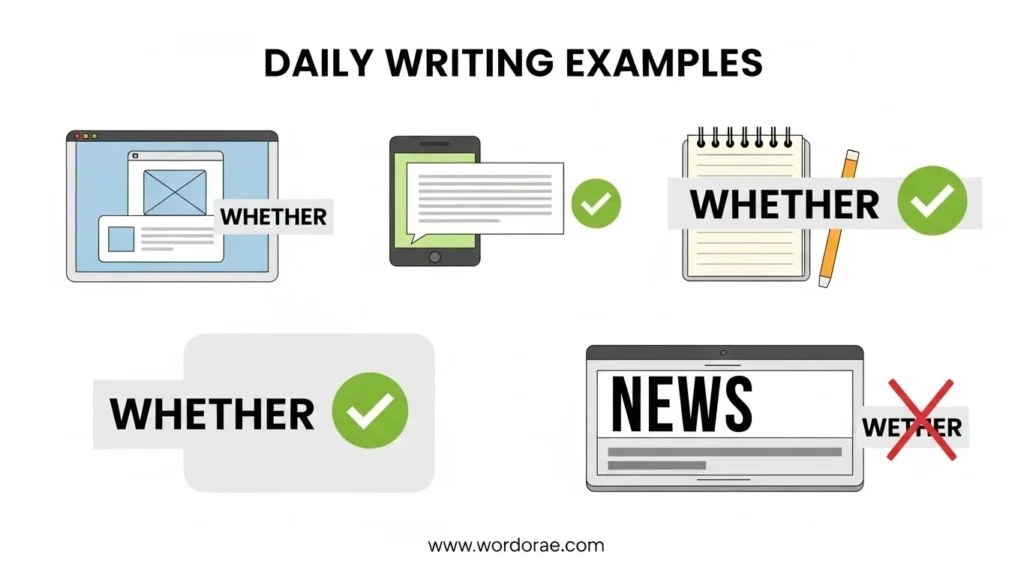
Emails:
Please let me know whether this works for you.
News:
Officials are deciding whether the policy will change.
Social Media:
Not sure whether to laugh or cry 😂
Formal Writing:
The study examines whether the results are consistent.
Wether or Whether: Trends & Usage Data
Search data shows:
- “Whether” dominates correct usage
- “Wether” spikes due to spelling confusion
- Searches often include:
- is it wether or whether
- when to use wether or whether
- wether or whether meaning
Google usually autocorrects wether to whether, showing strong preference for the correct form.
Comparison Table: Wether vs Whether
| Word | Meaning | Correct in Writing |
| whether | choice or condition | ✅ Yes |
| wether | male sheep | ❌ No (usually) |
FAQs
1. Is “wether” ever correct?
Yes, but only when referring to a sheep.
2. Is it wether or whether not?
Correct form is whether or not.
3. How do you spell wether or whether?
The correct spelling for choices is whether.
4. Does British English use wether differently?
No. The rules are the same.
5. Can using “wether” hurt SEO?
Yes. It reduces clarity and credibility.
6. Is wether related to weather?
No. They are different words with different meanings.
Conclusion
The confusion between wether or whether is common, but the rule is simple. Whether is the correct word when talking about choices, conditions, or uncertainty.
Wether is a real word but it refers to a sheep and rarely belongs in everyday writing.
Once you understand this difference, the mistake disappears. Clear word choices improve communication, professionalism, and trust with readers and search engines value that clarity too.
If you’re ever unsure, remember this rule:
If the sentence involves a choice, the answer is whether.
That one tip will keep your writing accurate every time.

I’m Sophia Larkins, a grammar-focused writer at Wordorae.com, where I break down common grammar mistakes and confusing words.
I specialize in clear, practical explanations that help readers write with confidence and accuracy.