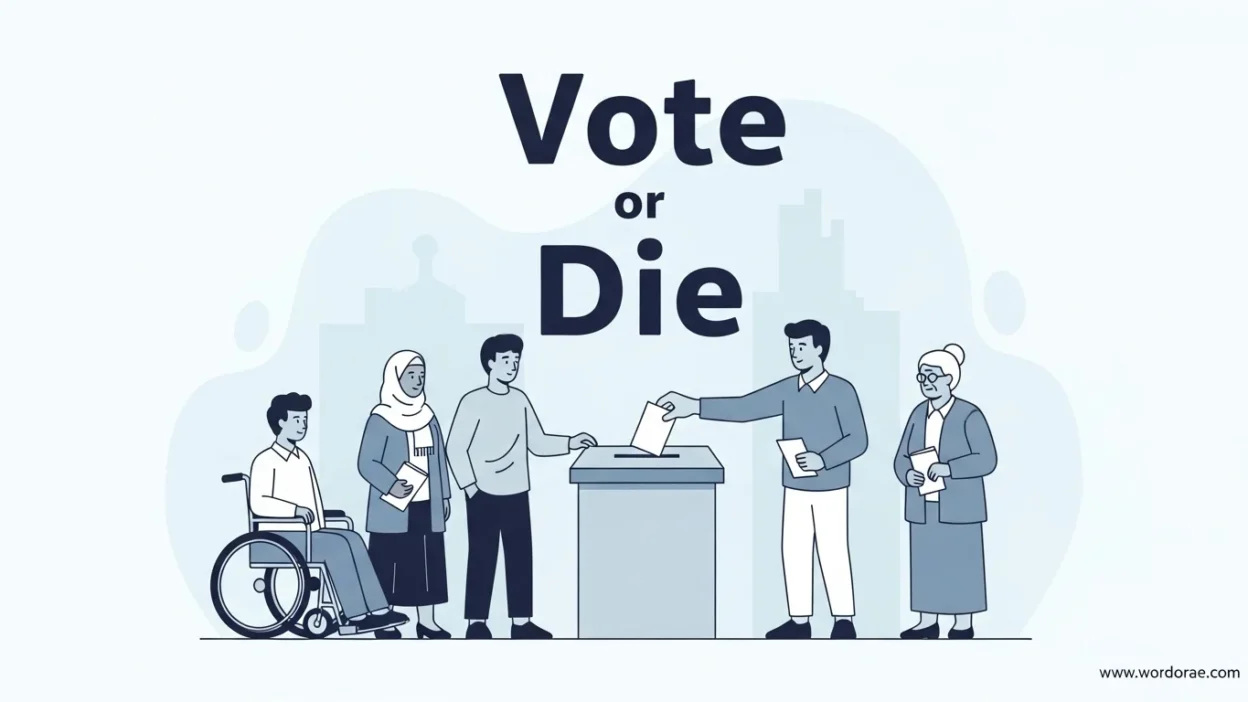
Quick answer: “Vote or die” is a figurative phrase, not a literal threat. It means voting is extremely important.
You may have seen the phrase vote or die on posters, social media, or in news headlines. At first glance, it sounds shocking. Some people even wonder if it’s meant to be taken literally.
That confusion is exactly why many people search this phrase online. The words are strong.
The message feels intense. But the meaning is not what it seems on the surface.
In this article, I’ll explain what vote or die actually means in simple language.
I’ll cover where the phrase came from, how it’s used today, and why it’s often misunderstood.
By the end, you’ll clearly understand whether this phrase is symbolic, serious, or just dramatic wording.
Vote or Die – Quick Answer
Vote or die is a figurative expression. It does not mean someone will literally die if they don’t vote.
Instead, it means:
- Voting is very important
- Voting affects your future
- Not voting can have serious consequences
The phrase uses strong language to grab attention and motivate action.
The Origin of “Vote or Die”
The phrase vote or die became widely known in the early 2000s. It was popularized during voter awareness campaigns, especially in the United States.
One of the most famous uses came from pop culture and media campaigns that aimed to encourage young people to vote.
The goal was simple. Make voting feel urgent. Make people care.
The phrase follows a common pattern in English. Strong, extreme wording is often used to create emotional impact, even when the meaning is symbolic rather than literal.
Literal Meaning vs Figurative Meaning
| Interpretation | Meaning |
|---|---|
| Literal | You will die if you don’t vote (not true) |
| Figurative | Voting strongly affects your life and rights |
English often uses exaggerated language to stress importance. Vote or die fits into this category.
Is “Vote or Die” a Threat?
No. Vote or die is not a threat.
It is a rhetorical phrase, meaning it is designed to provoke thought and attention. No law, rule, or authority enforces this phrase. It has no legal meaning.
People sometimes misunderstand it because the word die feels extreme.
But in communication, especially slogans, extreme words are often used symbolically.
Why the Phrase Sounds So Strong
The phrase works because it creates contrast:
- One action: vote
- One consequence: die
This sharp contrast makes the message memorable. It forces the reader to pause and think. That’s why it’s often used in slogans, headlines, and awareness campaigns.
Common Misunderstandings About “Vote or Die”
❌ Thinking it’s meant literally
✅ It is symbolic
❌ Believing it’s a legal requirement
✅ It has no legal force
❌ Assuming it promotes fear
✅ It promotes awareness and urgency
Understanding context is key when reading phrases like this.
Vote or Die in Everyday Usage
In News and Media
- Used as a headline to discuss voter participation
- Often quoted when talking about civic responsibility
On Social Media
- Shared as a slogan during election periods
- Used to express strong opinions about voting
In Education
- Discussed as an example of persuasive language
- Used to teach figurative speech
The phrase is rarely used in formal writing. It is more common in informal or attention-grabbing contexts.
When Should You Use This Phrase?
Use vote or die only when:
- Discussing the phrase itself
- Quoting a slogan
- Analyzing political language
Avoid using it in professional emails or academic writing unless you are explaining or referencing it.
FAQs About “Vote or Die”
1. Is “vote or die” meant literally?
No. It is a figurative expression.
2. Is “vote or die” a threat?
No. It has no legal or real-world enforcement.
3. Where did the phrase come from?
It became popular through voter awareness campaigns and pop culture.
4. Is “vote or die” political propaganda?
It is a slogan, not a policy or law.
5. Can someone get in trouble for not voting?
That depends on the country, not on this phrase.
6. Is this phrase still used today?
Yes, mainly during election seasons.
7. Why does the phrase use the word “die”?
To create urgency and emotional impact.
8. Is “vote or die” appropriate in formal writing?
No, unless you are explaining or analyzing it.
9. Does the phrase apply worldwide?
No. It is most common in U.S. political culture.
10. What is the safest way to understand the phrase?
As symbolic language encouraging civic participation.
Final Thoughts
The phrase vote or die may sound extreme, but its meaning is not literal. It is a symbolic expression designed to highlight the importance of voting.
Understanding phrases like this helps you read critically and avoid confusion. English often uses strong words to make a point, especially in slogans and campaigns.
When you see vote or die, remember this. It’s about urgency, not danger. It’s about attention, not threats. Once you understand the context, the phrase becomes much clearer and far less alarming.

I’m David Miller, a grammar expert and author at Wordorae.com, specializing in clear, simple explanations of confusing English grammar and word usage.
I help readers write with confidence by turning complex grammar rules into easy, practical guidance.