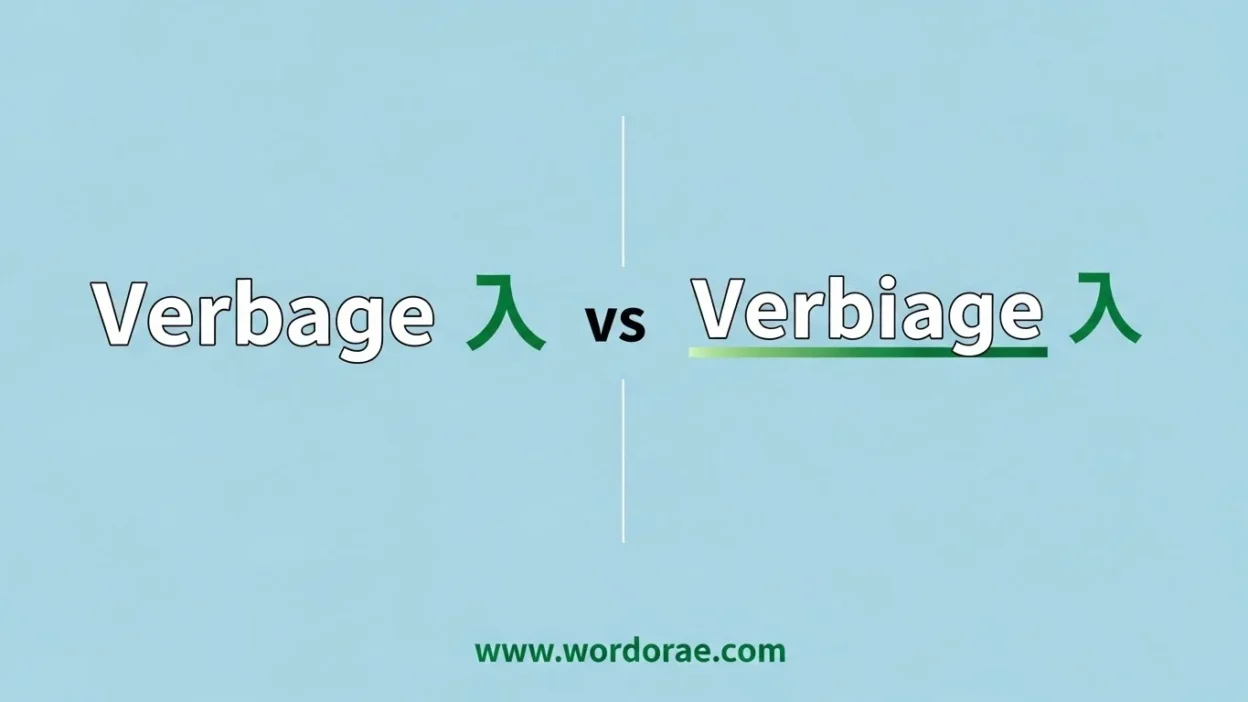
Quick answer: Verbiage is correct. Verbage is a common mistake.
If you’ve ever paused and asked yourself, Is it verbage or verbiage?, you’re not alone.
Many people get confused because the words sound the same, but only one is right in English.
People search is it verbage or verbiage, which is correct verbage or verbiage, or do you say verbage or verbiage to make sure they don’t look careless in emails, reports, or online writing.
In this guide, I’ll explain the verbage or verbiage meaning, give a simple definition,
show the correct spelling, and share easy examples so you can use it confidently every time.
Verbage or Verbiage: Quick Answer
Verbiage is the correct spelling.
Verbage is incorrect in standard English.
Examples:
- ✅ The editor asked me to cut unnecessary verbiage.
- ❌ The editor asked me to cut unnecessary verbage.
If you’re asking which is correct, verbage or verbiage?, the answer is always verbiage.
The Origin of Verbage or Verbiage
To properly define verbage or verbiage, it helps to look at where the word came from.
Verbiage entered English through French, from verbiage, which traces back to the Latin word verbum, meaning “word.”
From the beginning, it described speech or writing that used too many words.
The incorrect spelling verbage likely appeared because of pronunciation and its similarity to “verbal.”
Over time, people began writing what they heard but that version never became correct.
So the spelling difference exists because of spoken confusion, not because both forms are valid.
British English vs American English Spelling
This is one area where British and American English fully agree.
| Spelling | British English | American English |
| Verbiage | ✅ Correct | ✅ Correct |
| Verbage | ❌ Incorrect | ❌ Incorrect |
Whether you’re writing for the UK, the US, or anywhere else, verbiage is the only accepted spelling.
Which Spelling Should You Use?
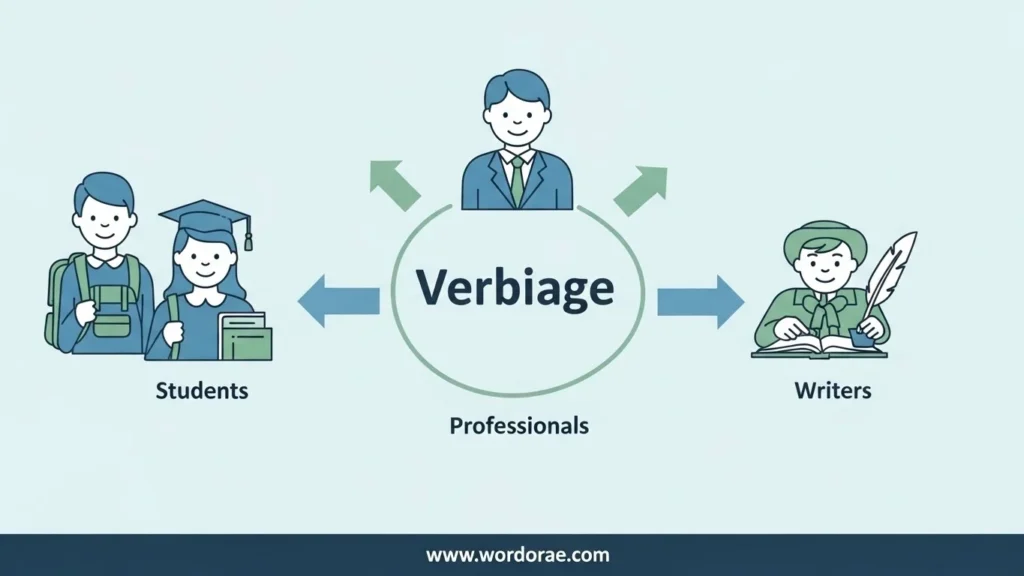
If you’re wondering do you say verbage or verbiage in professional writing, the rule is simple:
👉 Always use verbiage.
- Emails and workplace writing → Verbiage
- Academic or legal text → Verbiage
- Global or online audience → Verbiage
There is no context where verbage is preferred or recommended.
Common Mistakes with Verbage or Verbiage
Here’s why this mistake keeps happening:
- ❌ Writing verbage because it sounds natural
- ❌ Assuming verbage is informal but acceptable
- ❌ Confusing verbiage with “verbal”
If you’re unsure about verbage or verbiage spelling, remember this simple tip:
If it means too many words, it’s verbiage.
Verbage or Verbiage in Everyday Examples
Emails:
- Please reduce the verbiage in this email.
News:
- Critics complained about excessive legal verbiage.
Social Media:
- Too much marketing verbiage, not enough value.
Formal Writing:
- The policy was revised to remove unnecessary verbiage.
These examples reflect the real-world verbage or verbiage definition in action.
Comparison Table: Verbage vs Verbiage
| Word | Correct | Meaning | Usage |
| Verbiage | ✅ Yes | Excessive or unnecessary wording | Standard English |
| Verbage | ❌ No | Spelling error |
FAQs About Verbage or Verbiage
1. Is it verbage or verbiage?
Verbiage is correct.
2. Which is correct verbage or verbiage?
Verbiage.
3. Is the correct word verbage or verbiage?
The correct word is verbiage.
4. What does verbiage mean?
It means unnecessary or overly wordy language.
5. How do you pronounce verbiage?
Common pronunciations are VER-bee-ij and VER-buh-ij.
6. Is verbage ever correct?
No, it’s considered incorrect in standard English.
7. Should I use verbiage in formal writing?
Yes, especially when describing excessive wording.
Conclusion
Now you know: the correct word is always verbiage. Verbage might sound okay, but it’s wrong.
Using verbiage correctly in emails, reports, or formal writing shows attention to detail and makes your text clear and professional.
Next time you type it, just remember: too many words = verbiage. No more guessing, no more mistakes.

I’m Jane Austen, a writer at Wordorae.com, where I focus on explaining grammar mistakes and confusing English words in a clear, simple way.
I help readers improve their writing by making tricky language rules easy to understand and use.