Quick answer: Supposed to is correct. Suppose to is a common mistake.
If you’ve ever written suppose to and paused, wondering if it looks right, you’re definitely not alone.
I see this error everywhere texts, emails, blog posts, even professional writing.
You might hear people say suppose to out loud, so it feels natural to write it the same way. But grammar doesn’t always follow speech.
Here’s where the confusion comes from: when we speak quickly, supposed to often sounds like suppose to.
That missing -d quietly disappears in conversation, and before you know it, it disappears in writing too.
I get why it happens you’re not careless, English just plays tricks on you sometimes.
In this guide, I’ll explain the difference in plain English. You’ll learn why supposed to is correct, why suppose to is wrong, and how to avoid this mistake in everyday writing.
By the end, you won’t need to second-guess yourself again.
Suppose To or Supposed To – Quick Answer
- ✅ Supposed to → correct
Example: You’re supposed to finish the report today. - ❌ Suppose to → incorrect
Example: You’re suppose to finish the report today.
There is no situation where suppose to is grammatically correct.
The Origin of Suppose To or Supposed To
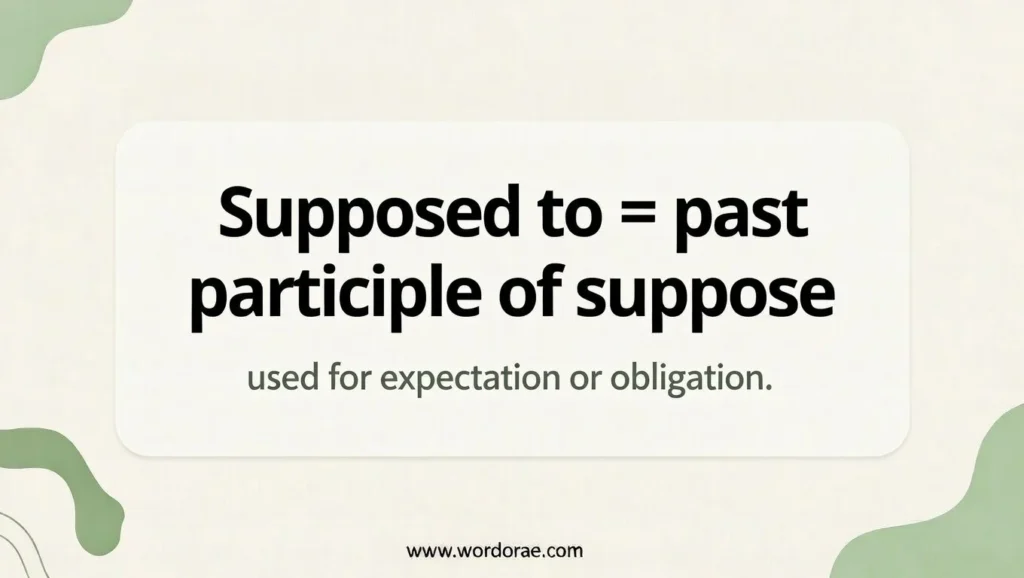
The phrase supposed to comes from the verb suppose, which means to assume or to believe.
Over time, supposed to developed a specific meaning: something that is expected, required, or intended.
Grammatically, supposed is a past participle. The -ed ending matters because it completes the verb phrase.
When people drop the -d in speech, it creates confusion in writing but the grammar rule never changed.
So even if it sounds like suppose to, the correct written form has always been supposed to.
British English vs American English Usage
| Usage | American English | British English |
| Correct form | supposed to | supposed to |
| Informal speech | “suppose to” (spoken) | “suppose to” (spoken) |
| Formal writing | supposed to | supposed to |
📌 Important: Both US and UK English agree only supposed to is correct in writing.
Which Form Should You Use?
This one is easy.
- ✔ Always use supposed to
- ❌ Never use suppose to in writing
Whether you’re writing:
- Emails
- Blog posts
- Academic work
- Social media
- Professional documents
Supposed to is the only acceptable option.
Common Mistakes with Suppose To or Supposed To
❌ I’m suppose to call her later
✅ I’m supposed to call her later
❌ You suppose to be here at 9
✅ You’re supposed to be here at 9
❌ They suppose to know better
✅ They’re supposed to know better
💡 Tip: If you can replace it with meant to, you need supposed to.
Suppose To or Supposed To in Everyday Examples
Emails:
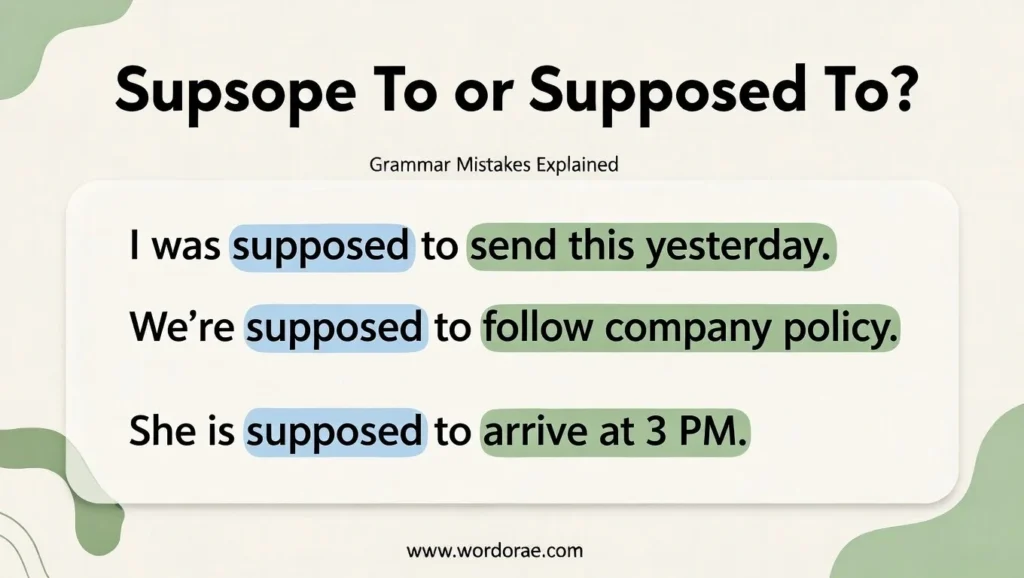
- I was supposed to send this yesterday sorry about that.
Workplace:
- We’re supposed to follow company policy.
Social media:
- I was supposed to start my diet today 😅
Formal writing:
- The device is supposed to operate under low temperatures.
Suppose To or Supposed To – Usage Trends
Usage data shows that supposed to overwhelmingly dominates written English. Grammar checkers, style guides, and search engines all flag suppose to as an error.
The incorrect form appears mostly in informal writing or learner content. In SEO and professional contexts, using suppose to can hurt credibility and trust.
If you want your writing to look polished and correct, supposed to is the only safe choice.
Comparison Table
| Phrase | Correct | Notes |
| supposed to | ✅ Yes | Always correct |
| suppose to | ❌ No | Common spelling error |
| suppose | ✅ Yes | Different meaning |
| supposed | ✅ Yes | Correct verb form |
FAQs
Is “suppose to” ever correct?
No. It’s always incorrect in writing.
Why do people say “suppose to”?
Because it is supposed to sound that way in fast speech.
Can I use “suppose” by itself?
Yes, but only when it means assume or guess.
Do British and American English differ here?
No. Both are supposed to.
Will Google penalize “suppose to”?
It won’t rank well and may hurt trust signals.
What’s an easy way to remember this?
If you mean meant to, use supposed to.
Conclusion
The choice between suppose to and supposed to is simple once you know the rule.
Supposed to is the correct and complete grammatical form, while suppose to is just a spelling mistake caused by how the phrase sounds in speech.
Even though many people say it without the -d, that sound doesn’t belong in writing.
In formal, professional, and SEO-focused content, using supposed to is essential. The incorrect version can make your writing look careless or unpolished, especially in emails, blogs, or academic work.
The good news is that this mistake is easy to fix once you’re aware of it.
If you ever hesitate, remember this trick: if meant to fit your sentence, supposed to is the right choice.
Stick with that rule, and you’ll never get this wrong again.

I’m Jane Austen, a writer at Wordorae.com, where I focus on explaining grammar mistakes and confusing English words in a clear, simple way.
I help readers improve their writing by making tricky language rules easy to understand and use.