Quick answer: Use a steamer for delicate fabrics and quick wrinkle removal, and an iron for sharp creases and heavier fabrics.
Have you ever stared at your wrinkled shirt in the morning, wondering: should I reach for the steamer or the iron?
I’ve been there, rushing to get ready for work or an important event. It’s confusing because both appliances smooth wrinkles, but each has its own advantages.
Knowing steamer or iron for clothes can save you time, protect your fabrics, and make your wardrobe look professionally pressed.
People often search questions like “is a steamer or iron better?” or “should I get a steamer or iron?” because the choice isn’t always obvious.
Some fabrics can be ruined by direct heat, while others need a sharp crease. Let’s clear the confusion and dive into which is better steamer or iron, with examples, pros, cons, and practical advice.
Steamer or Iron – Quick Answer
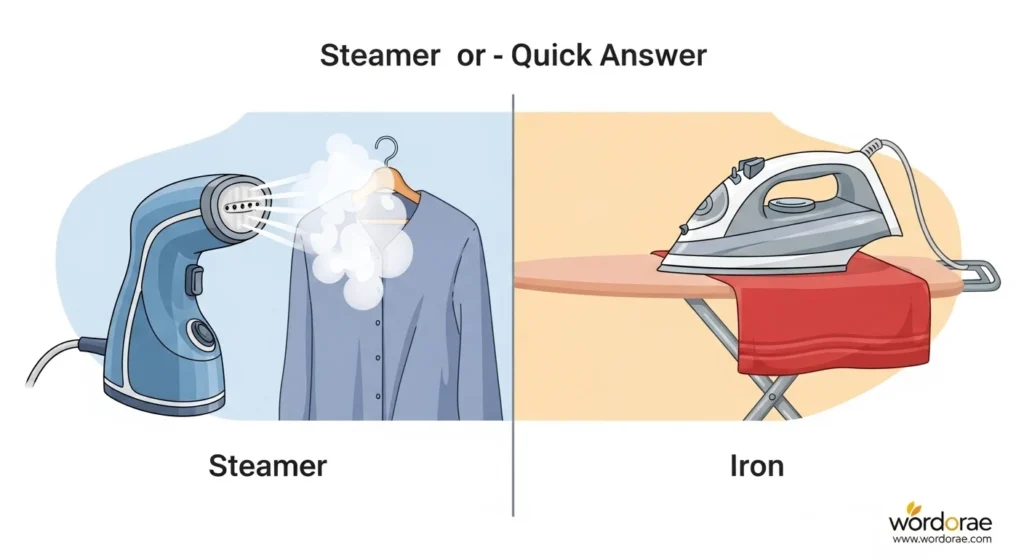
Here’s the short answer:
- Steamer: Ideal for delicate fabrics, curtains, hanging clothes, and quick wrinkle removal.
- Iron: Ideal for cotton, linen, dress shirts, pants, and any garment that needs crisp creases.
Examples:
- A silk blouse? Steamer or iron? Definitely a steamer.
- Cotton dress shirt? Use an iron for crisp collars and sleeves.
- Curtains or upholstery? A garment steamer works perfectly.
- Thick linen pants? An iron gives better precision.
Simply put, if you want speed and safety, go for a fabric steamer or iron combo for different tasks.
Is a Steamer or Iron Better for Wrinkles?
Many people ask: “is a steamer or iron better for wrinkles?” It depends on the type of wrinkles:
- Light, soft wrinkles → a steamer is faster and safer.
- Deep, stubborn wrinkles → an iron provides a crisp finish.
Think of it like this: a steamer relaxes the fibers, while an iron presses them into place. Often, combining both works best: steam first to loosen the wrinkle, then iron for a sharp, polished look.
The Origin of Steamers and Irons
Understanding their history gives insight into which is better steamer or iron:
- Irons: First appeared in ancient China, using hot metal to press clothes. They evolved into electric irons for precision.
- Steamers: Developed in the 20th century to remove wrinkles without damaging delicate fabrics.
Irons = precision and tradition.
Steamers = speed, portability, and fabric safety.
Steamer or Iron for Clothes: How They Work
| Feature | Steamer | Iron |
| Heat method | Hot steam relaxes fibers | Direct heated plate presses fibers |
| Best for | Delicate fabrics, hanging garments | Cotton, linen, thick fabrics |
| Time | Quick | Slower, requires board & setup |
| Creases | Soft, natural | Crisp, professional |
| Risk | Low | Can burn or shine fabric |
This shows that clothes steamer or iron depends on fabric type, wrinkle depth, and finish preference.
Which Is Better: Steamer or Iron?
People often search: “which is better, steamer or iron?”
Here’s a guide:
When to Use a Steamer
- Delicate fabrics (silk, chiffon, wool, polyester)
- Hanging clothes, curtains, or drapes
- Quick touch-ups before leaving home
- Portable travel needs
When to Use an Iron
- Thick fabrics (cotton, linen, denim)
- Dress shirts and trousers requiring sharp creases
- Formal or professional wear
- Any garment that benefits from precise pressing
Pro Tip: Sometimes the answer is both! Steam first, then iron for perfect results.
Common Mistakes With Steamers and Irons
- Using an iron on delicate fabrics → can scorch silk or polyester.
- Using a steamer for thick cotton shirts → wrinkles remain.
- Ignoring water type → tap water can clog steamers.
- Not checking temperature → each fabric type has safe heat limits.
- Skipping ironing boards → can cause shine marks or uneven pressure.
By avoiding these, you’ll see why garment steamer or iron choices matter.
Everyday Examples
Home Use
- Steamer: Smooth a silk blouse or curtain.
- Iron: Crisp cotton shirt for work.
Travel
- Steamer: Quick touch-ups on dresses and scarves.
- Iron: Small travel iron for trousers and shirts.
Business / Hospitality
- Hotels often rely on steamers for curtains and delicate fabrics.
- Formal attire is finished with irons for professional creases.
Steamer or Iron for Dress Shirts and Linen
- Dress shirts: An iron gives the sharpest collar and sleeve creases. Steamer is OK for casual touch-ups.
- Linen: Ironing is better for crisp edges, but a steamer or iron combo works to remove deep wrinkles safely.
Side-by-Side Comparison Table
| Aspect | Steamer | Iron |
| Heat delivery | Steam penetrates fabric | Direct contact with hot plate |
| Fabric safety | Very safe | Can scorch delicate fabrics |
| Setup time | Minimal | Needs board & prep |
| Portability | Highly portable | Less portable |
| Wrinkle finish | Soft, relaxed | Crisp, sharp |
FAQs About Steamer or Iron
1. Is a steamer or iron better?
Depends on fabric. Steamers are gentle, irons are precise.
2. What’s better: a steamer or iron for wrinkles?
Steamers handle light wrinkles; irons handle deep wrinkles.
3. Clothes steamer or iron — which one should I get?
Ideally, both for different tasks. Otherwise, choose based on your most common fabric.
4. Fabric steamer or iron — can a steamer replace an iron?
Only for delicate fabrics. For formal garments, an iron is essential.
5. Steamer or iron for dress shirts?
Iron is best for crisp collars and sleeves; steamer works for quick touch-ups.
6. Steamer or iron for linen?
Ironing gives a sharp finish; steaming is faster but less crisp.
7. Should I get a steamer or iron?
Depends on your wardrobe. Heavy cotton or linen → iron; delicate fabrics → steamer.
8. Steamer or iron — which is better for curtains?
Garment steamers are faster and safer for hanging fabrics.
9. What is better steamer or iron for travel?
A portable steamer is lighter and easier, but a small iron works for formal garments.
10. What’s better a steamer or iron for wrinkles?
For quick fixes → steamer. For deep, stubborn wrinkles → iron.
Conclusion
So, steamer or iron which is better? It depends on your wardrobe:
- Steamer: Fast, gentle, ideal for delicate fabrics, hanging garments, or travel.
- Iron: Precise, professional, ideal for cotton, linen, dress shirts, and formal attire.
I personally keep both. I steam silk blouses and delicate dresses, then iron shirts, pants, and linens. This combo saves time, protects fabrics, and ensures a polished appearance.
Next time you ask, “what is better steamer or iron?”, consider fabric type, wrinkle severity, and finish. That’s how you pick the right tool every time.

I’m Sophia Larkins, a grammar-focused writer at Wordorae.com, where I break down common grammar mistakes and confusing words.
I specialize in clear, practical explanations that help readers write with confidence and accuracy.