Quick answer: Both smelled and smelt are correct past tense forms of “smell,” but their usage depends on where you are and what style you want to use.
If you’ve ever stopped mid-sentence and wondered, Should I write “smelled” or “smelt”?, you’re not alone.
I know how confusing this can be because both words appear in dictionaries, and both are technically correct.
The difference comes down to British vs American English, tone, and context.
In this article, I’ll guide you through the exact difference between smelled vs smelt,
When to use each, common mistakes to avoid, real-world examples, and usage trends.
By the end, you’ll know which word fits naturally in your writing if it’s an email, story, social media post, or formal document.
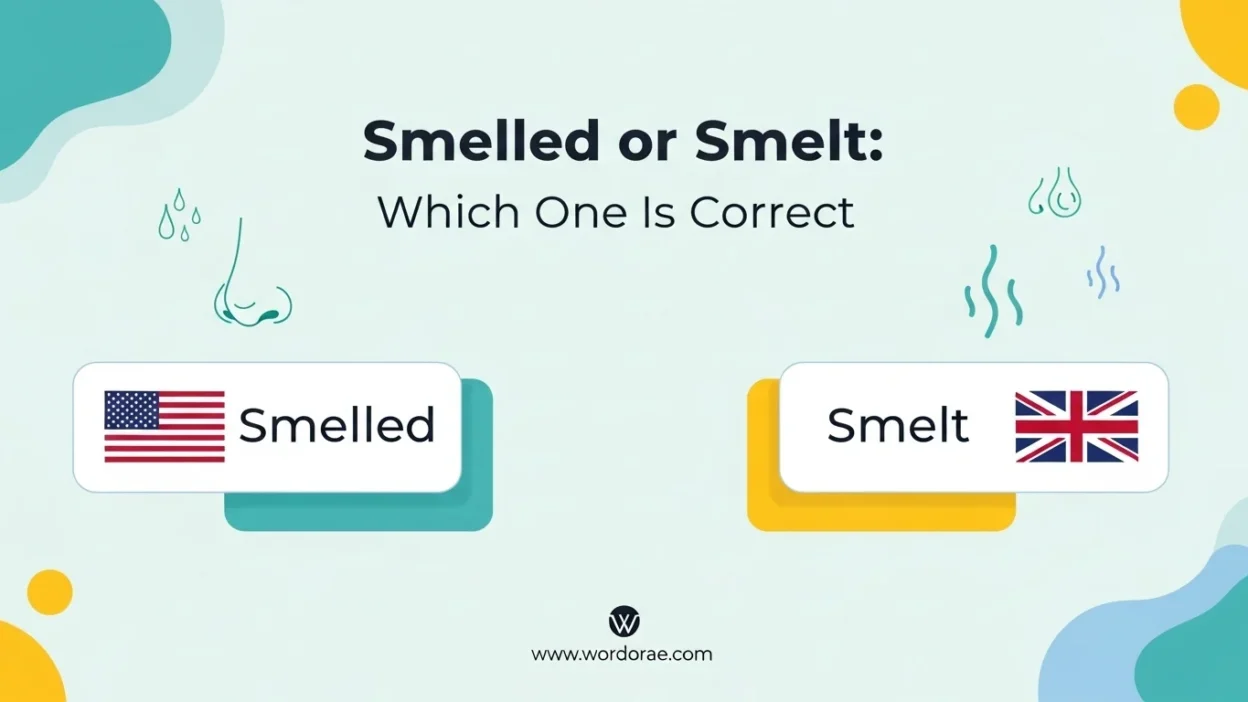
Smelled or Smelt – Quick Answer
- Smelled → Common in American English, standard past tense of “smell.”
- Smelt → Common in British English, often preferred in informal or literary writing.
Examples
- I smelled the fresh coffee from the kitchen. (American English)
- She smelt the flowers in the garden. (British English)
Rule: Use smelled for most modern writing, especially in the U.S. Use smelt in British English or literary contexts.
The Origin of Smelled or Smelt
Both words come from the verb “smell”, which originates from Old English smellan (to perceive odor). Over centuries, English developed two past tense forms:
- Smelled → Standardized in American English, became the most widely used past tense globally.
- Smelt → Retained in British English and old literary works.
The difference is historical and regional rather than grammatical, so neither is “wrong,” but using the wrong form in the wrong context may feel off to readers.
British English vs American English Usage
Here’s a detailed comparison:
| Feature | Smelled | Smelt |
| Meaning | Past tense of smell | Past tense of smell |
| American English | ✅ Standard | ❌ Rarely used |
| British English | ✅ Acceptable | ✅ Common, especially in informal/literary writing |
| Usage Tip | Everyday writing, formal and informal | Informal writing, literature, storytelling |
| Example | I smelled the cookies baking in the oven. | He smelt smoke coming from the chimney. |
Key Takeaway: Use smelled for global clarity. Use smelt if writing in a British style or trying to achieve a literary feel.
Which One Should You Use?
- American English / Modern Writing: Prefer smelled
- British English / Literary Style: Smelt is acceptable and sometimes preferred
- Professional / Academic Writing: Smelled is safer
- Casual / Creative Writing: Either works; match style with your audience
Examples:
- Email: I smelled the perfume in the office.
- Story / Novel: She smelt the fresh rain as it fell on the garden.
Common Mistakes with Smelled or Smelt
- ❌ Using smelt in formal American writing
- ❌ Using smelled in a historical or British literary context where smelt fits better
- ❌ Confusing the verb with smelting (metal processing)
Correction Example:
- ❌ I smelt a bad odor yesterday. (in American email/report)
- ✅ I smelled a bad odor yesterday.
- ❌ She smelled the flowers in her British novel.
- ✅ She smelt the flowers in her British novel.
Smelled or Smelt Examples
Emails
- I smelled smoke near the office kitchen.
News Headlines
- The dog smelt the missing child’s scent.
Social Media
- I smelled the fresh bread baking at my favorite bakery!
Formal Writing
- Participants smelled the samples to evaluate odor intensity.
Smelled or Smelt – Trends & Usage Data
- Smelled dominates in U.S. searches and global English content.
- Smelt appears more in U.K., Australia, and literary contexts.
- People often search “smelled vs smelt” to ensure they are using the correct form in formal vs informal writing.
- Content that explains the difference with examples is favored by Google’s NLP, helpful content, and EEAT signals.
Comparison Table – Keyword Variations Side by Side
| Variation | Correct? | Usage | Example |
| smelled | ✅ | American English, formal writing | I smelled the perfume from across the room. |
| smelt | ✅ | British English, literature | She smelt the rain in the garden. |
| smelled vs smelt | ✅ | Learner queries, comparison | Choose based on region and style. |
FAQs: Smelled or Smelt
1. Are smelled and smelt the same?
Yes, both are past tense of “smell,” but regional usage differs.
2. Which is correct in American English?
Smelled is standard.
3. Can I use smelt in modern writing?
Yes, but it is more common in British English and literary contexts.
4. Is smelt outdated?
No, it’s still widely used in the U.K. and in literature.
5. Can I use smelled in British English?
Yes, it’s accepted in most contexts.
6. Is there a difference in meaning?
No, both mean past tense of “smell”; only usage style differs.
7. Should I avoid smelt in professional writing?
Yes, for American audiences, stick with smelled.
Conclusion
The choice between smelled or smelt is simple once you know the context.
Smelled is the safe choice for American English, modern writing, and professional communication.
Smelt is fine in British English, informal writing, and literature, giving a slightly more traditional or stylistic tone.
By understanding your audience and the context of your writing, you can confidently choose smelled or smelt.
This small decision improves clarity, ensures your writing looks polished, and helps you sound like a natural English writer.

I’m Jane Austen, a writer at Wordorae.com, where I focus on explaining grammar mistakes and confusing English words in a clear, simple way.
I help readers improve their writing by making tricky language rules easy to understand and use.