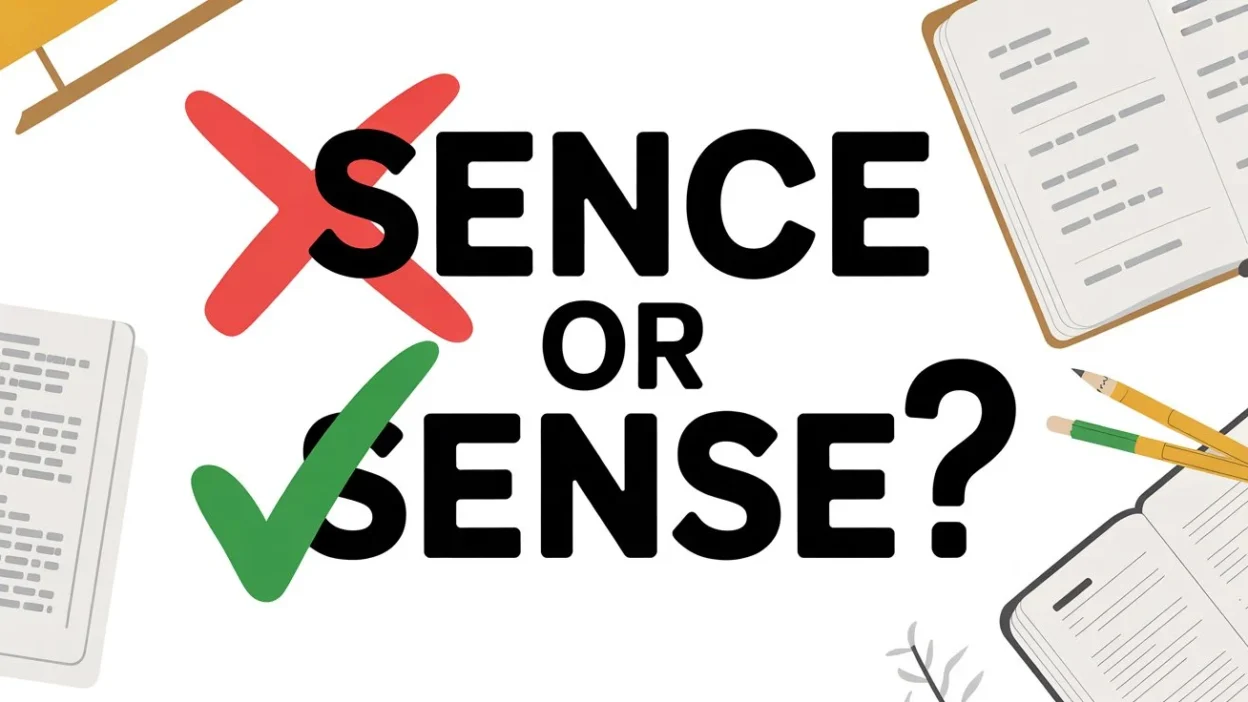
I remember stopping mid-sentence while writing an email and thinking, “Wait; is it sence or sense?” The sentence sounded right, but the spelling didn’t.
I had seen sence online so often that it started to look normal. Still, something felt off. Before sending the message, I searched it—and that one check saved me from a common spelling mistake.
If you’re here, you’re not bad at English. You’re just facing one of those confusing spelling traps where words sound the same but only one is correct.
This guide will show you the right spelling, explain the confusion, and help you use it with confidence.
Sence or Sense : Quick Answer
The correct spelling is “sense.”
“Sence” is incorrect in standard English.
Examples:
- ✅ This explanation makes sense.
- ❌ This explanation makes sence.
Sense is a real English word. Sence is simply a spelling error.
The Origin of Sence or Sense
The word sense comes from the Latin word sensus, which means feeling, understanding, or perception. It entered English through Old French and kept its original spelling.
Over time, sense developed multiple meanings:
- Logical meaning or understanding
- Awareness or judgment
- Physical senses like sight, hearing, and smell
The spelling sence has no historical background. It exists only because English pronunciation makes both spellings sound the same. Since English is not phonetic, many writers assume sence could be correct—but dictionaries do not recognize it as a real word.
British English vs American English Spelling
Some English words change spelling between regions, but sense is not one of them.
| English Variant | Correct Spelling |
| American English | sense |
| British English | sense |
| Canadian English | sense |
| Australian English | sense |
There is no version of English where sence is accepted.
Which Spelling Should You Use?
No matter your audience, the answer is the same:
- US audience: Use sense
- UK audience: Use sense
- Commonwealth or global audience: Use sense
If you want clear communication, correct grammar, professional writing, and strong SEO performance, sense is always the right choice.
Common Mistakes with Sence or Sense
Mistake 1: Writing sence because it sounds right
✔ Fix: Remember that only sense is a real word.
TheMistake 2: Thinking senceis a British spelling
✔ Fix: British English uses sense, not sence.
Mistake 3: Using sence in professional or academic writing
✔ Fix: Replace it with sense to maintain clarity and credibility.
Sence or Sense in Everyday Examples
Emails:
- “Your feedback makes a lot of sense.”
News:
- “The policy change makes economic sense.”
Social Media:
- “That doesn’t make sense to me.”
Formal Writing:
- “This approach makes logical sense in the long term.”
Sence or Sense: Google Trends & Usage Data
Search data clearly shows user behavior:
- “Sense” is widely searched and correctly used
- “Sence” appears mainly as a typo or spelling confusion
- Search engines often auto-correct sence to sense
People searching “sence or sense” are looking for confirmation. Content that clearly explains the difference aligns with user intent and performs better in search results.
Comparison Table: Sence vs Sense
| Word | Correct? | Usage |
| sense | ✅ Yes | Standard English |
| sence | ❌ No | Common misspelling |
FAQs
1. Is “sence” ever correct?
No. It is not recognized as a correct English word.
2. Why do people confuse sence and sense?
Because they sound the same when spoken.
3. Can sense be a verb?
Yes. Example: I sense a problem.
4. Is sense used only for logic?
No. It also refers to physical perception and intuition.
5. Does British English spell it differently?
No. British English also uses sense.
6. Can using sence hurt SEO?
Yes. Misspellings can reduce trust and readability.
Conclusion
The confusion around sence or sense is common, but the solution is simple. Sense is the correct spelling in every form of English. Sence is just a spelling mistake that exists because English words do not always look the way they sound.
If you write emails, blog posts, social captions, or professional content, choosing the correct spelling matters. One small error can change how your writing is perceived. I learned this by slowing down and double-checking—and that habit has improved my writing more than anything else.
If you ever hesitate between sence or sense again, remember this rule: only “sense” is correct. Use it with confidence, and your writing will immediately sound clearer, smarter, and more professional.

I’m Sophia Larkins, a grammar-focused writer at Wordorae.com, where I break down common grammar mistakes and confusing words.
I specialize in clear, practical explanations that help readers write with confidence and accuracy.