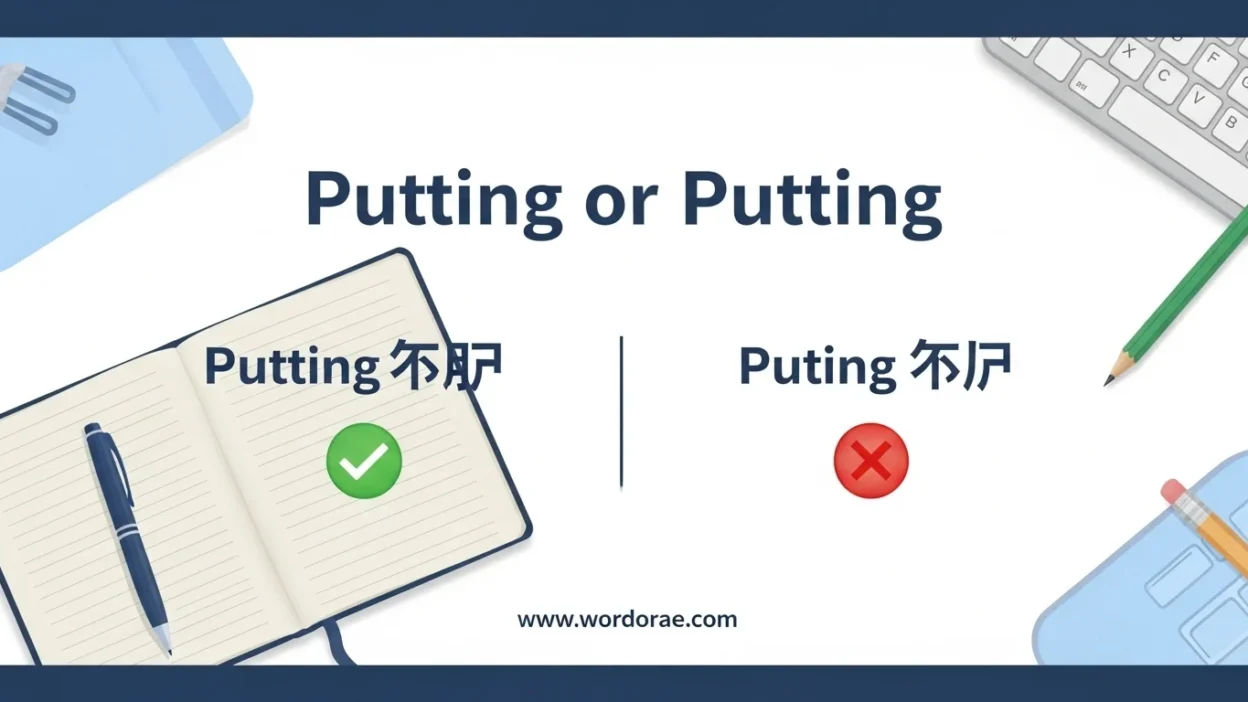
Quick answer: Putting is correct. Puting is a spelling mistake.
Many people type “puting” by accident, especially when writing fast in emails, assignments, or social media posts.
That’s why searches like “puting or putting,” “is it puting or putting?”, and “puting or putting spelling” are common. The confusion usually comes from how English handles verb endings when -ing is added.
At first glance, puting looks logical. After all, we don’t double letters in every word. But English spelling rules can be tricky, and this is one place where a small detail makes a big difference.
Using the wrong spelling can hurt clarity, credibility, and professionalism especially in academic or business writing.
This guide explains everything in plain English. You’ll learn why putting is correct, where the confusion comes from,
How British and American English treat it, and how to avoid common mistakes. By the end, you’ll never second-guess this word again.
Puting or Putting – Quick Answer
Putting is the correct spelling.
Puting is incorrect.
Correct examples:
- She is putting the keys on the table.
- He’s putting a lot of effort into this project.
- They are putting plans in place.
Incorrect example:
- ❌ She is puting the keys on the table.
If you’re asking “is it puting or putting?” the answer is always putting.
The Origin of Puting or Putting
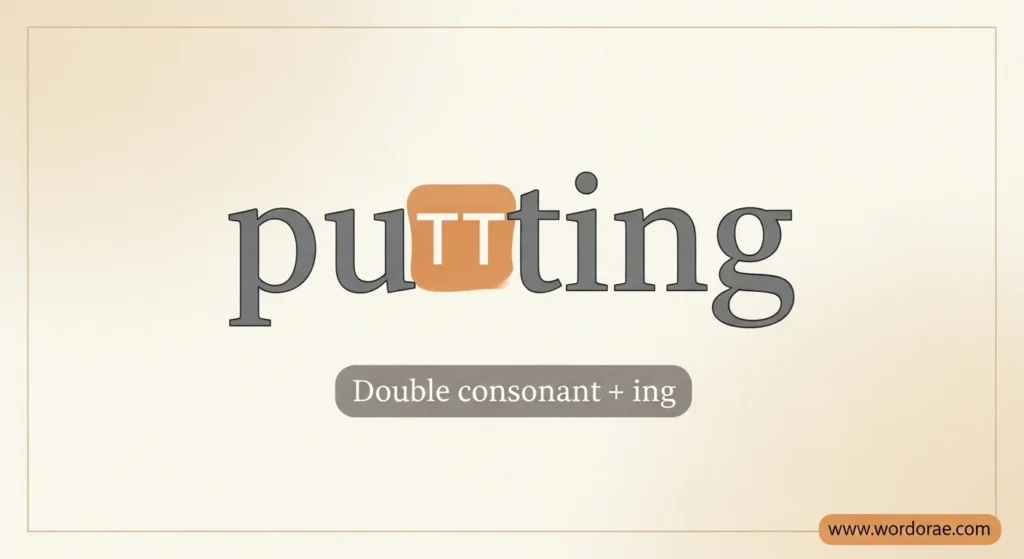
The verb put is a short, one-syllable word ending in a consonant. In English, when you add -ing to certain short verbs, you must double the final consonant.
This rule exists to preserve pronunciation. Without doubling the letter, the word could look or sound incorrect. That’s why put becomes putting, not puting.
This pattern is consistent across English and has been in place for centuries.
The mistake puting usually happens because people type quickly or assume the rule doesn’t apply.
British English vs American English Spelling
Unlike many spelling differences, this one is universal.
| Spelling | British English | American English |
| putting | ✅ Correct | ✅ Correct |
| puting | ❌ Incorrect | ❌ Incorrect |
Both UK and US English follow the same spelling rule here. There is no regional variation.
Which Spelling Should You Use?
The answer is simple: always use “putting.”
- US writing: Putting
- UK writing: Putting
- Academic work: Putting
- Professional emails: Putting
- Casual texts: Putting
There are no exceptions. If you want your writing to look correct and polished, putting is the only option.
Common Mistakes with Puting or Putting
Here are the most frequent errors people make:
- ❌ Writing puting instead of putting
- ❌ Forgetting to double the t
- ❌ Assuming put doesn’t follow the doubling rule
- ❌ Copying incorrect spelling from informal messages
Correct fix:
Remember this rule:
Short verb + vowel + consonant = double the consonant before -ing
Put → putting
Puting or Putting in Everyday Examples

Emails
- “I’m putting together the report today.”
Workplace Communication
- “We’re putting new systems in place.”
Academic Writing
- “The study focuses on putting theory into practice.”
Social Media
- “Just putting this out there…”
Formal Writing
- “The company is putting customer safety first.”
In every case, putting is the correct spelling.
Puting or Putting : Trends & Usage Data
Search trends show steady interest in “puting or putting”, especially among:
- Students
- Non-native English speakers
- Professional writers double-checking spelling
In published books, articles, and indexed content, putting appears overwhelmingly more often. Puting mostly appears in informal typing errors.
Google’s algorithm favors correct spelling, making putting essential for SEO-friendly content.
Comparison Table: Puting vs Putting
| Feature | Puting | Putting |
| Correct spelling | ❌ No | ✅ Yes |
| Dictionary accepted | ❌ No | ✅ Yes |
| British English | ❌ No | ✅ Yes |
| American English | ❌ No | ✅ Yes |
| Professional writing | ❌ No | ✅ Yes |
| SEO-friendly | ❌ No | ✅ Yes |
FAQs
1. Is it puting or putting?
Putting is correct.
2. Why is puting wrong?
Because the final consonant must be doubled before adding -ing.
3. Is putting the same in UK and US English?
Yes. Both use putting.
4. Does put follow the double-consonant rule?
Yes. Put → putting.
5. Can puting ever be correct?
No. It’s always incorrect.
6. Is putting a verb or noun?
It’s usually a verb, but can act as a gerund (noun form).
7. Is putting formal or informal?
It works in both formal and casual writing.
Conclusion
The confusion between puting or putting is small but important. While puting may look reasonable at first, it breaks a basic English spelling rule.
The correct form is putting, and it applies in every context academic, professional, and casual.
Once you remember the rule about doubling the final consonant, this mistake becomes easy to avoid.
Using putting improves clarity, accuracy, and trust in your writing. It’s a small detail, but one that makes a big difference.
Stick with putting, and you’ll always be right.

I’m Helena Marwick, a grammar-focused writer at Wordorae.com, where I help readers understand confusing English words and usage clearly.
I specialize in making grammar simple, accurate, and easy to apply in everyday writing.