Quick answer:
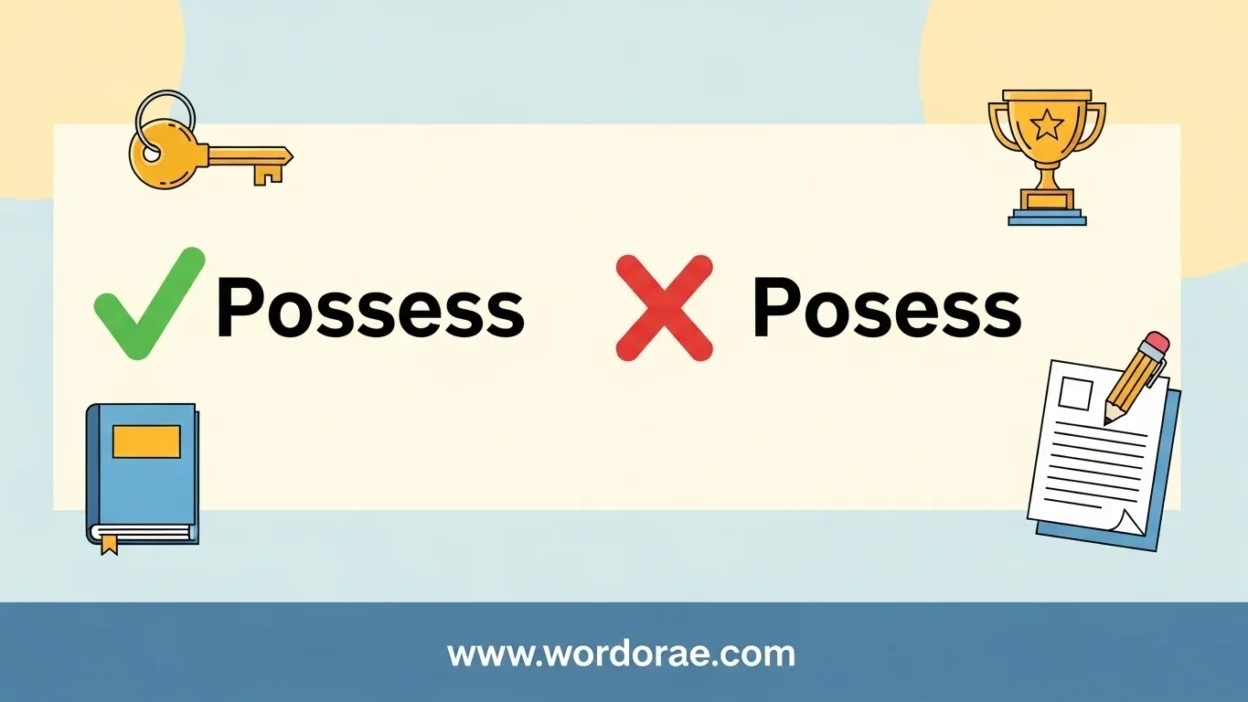
Possess is the correct spelling; posess is always wrong.
I know why you’re here. You’ve probably typed a sentence, paused, and wondered, “Is it possess or posess?”
I’ve been there too. It’s easy to get confused because the word sounds exactly like how you might spell it if you’re typing quickly.
You might see posess online, in emails, or even in text messages, and it can make you second-guess yourself.
That’s exactly why people search “possess or posess”. You want to write correctly and look professional without guessing.
In this article, I’ll break it down in a simple, clear way.
You’ll learn the correct spelling, see examples in everyday writing, and discover common mistakes to avoid.
By the end, you’ll feel confident using possess every single time.
Possess or Posess – Quick Answer
Possess is always correct.
Posess is a spelling mistake and should never be used in modern English.
Examples:
- I possess the skills needed for this job. ✅
- ❌ I posess the skills needed for this job. (incorrect)
The Meaning of Possess
The verb possess means:
- To own something
- To have control over something
- To hold a quality, skill, or attribute
Simple examples:
- She possesses a rare talent.
- He possesses a car and a bike.
- They possess the knowledge required for the project.
It’s one of those words you’ll see in work, school, legal documents, and everyday conversation.
Why People Misspell Possess
Many people spell it as posess because English has tricky double letters.
- For example: “address” has double d, “success” has double c.
- So people assume “possess” only needs one s in the middle.
Important: Always remember: possess has double s in the middle.
Origin of Possess
Possess comes from Latin possidere, meaning “to have or hold.”
It has been in English since the 15th century.
The spelling has stayed stable, with double s, which makes it easier once you remember the rule.
British English vs American English
Both British and American English use the same spelling: possess.
| Language | Correct | Incorrect |
|---|---|---|
| British English | possess | posess |
| American English | possess | posess |
| Australian English | possess | posess |
| Canadian English | possess | posess |
No matter where you are, possess is always right.
Which Form Should You Use?
Use possess in:
- Essays and assignments
- Emails
- Work reports
- Legal documents
- Daily writing
Avoid posess completely—it’s seen as a careless mistake.
Examples:
- I possess the necessary skills for this project. ✅
- ❌ I posess the necessary skills for this project.
Common Mistakes with Possess
Mistake 1: Single “s” in the middle
❌ I posess a certificate.
✅ I possess a certificate.
Mistake 2: Forgetting the double s at the end
❌ They possess the skills. ✅ (correct: already correct, just a reminder)
Mistake 3: Typing quickly in texts
❌ I posess a new idea.
✅ I possess a new idea.
Tip: Slow down when typing and remember the double s in the middle and end.
Possess in Everyday Examples
Emails:
- I possess the information you requested.
Social media:
- She possesses an amazing singing voice!
Professional writing:
- The company possesses intellectual property rights.
School writing:
- He possesses the qualities of a great leader.
Usage Comparison
| Sentence Context | Correct Usage | Incorrect Usage |
|---|---|---|
| Owning objects | I possess a car. | I posess a car. |
| Skills or talents | She possesses talent. | She posess talent. |
| Legal terms | The company possesses rights. | The company posess rights. |
| Everyday speech | He possesses patience. | He posess patience. |
FAQs
1. Is posess ever correct?
No, it is always incorrect.
2. Why do people write posess?
Because English words with double letters confuse many writers.
3. Is possess the same in British and American English?
Yes, the spelling is identical.
4. Can possess be used in informal writing?
Absolutely! It is correct in any context.
5. How do I remember the spelling?
Think: double s in the middle and end → possess.
6. Can possess be a noun?
No, it is only a verb.
7. Are there similar words that cause confusion?
Yes, words like “access” or “process” also have double letters, which can trick people.
8. Can “possess” be used with abstract ideas?
Yes. You can say, “She possesses wisdom,” or “He possesses patience.” It works for both tangible and intangible things.
9. Is “possess” formal or informal?
It’s neutral. You can use it in casual speech, professional writing, academic papers, and legal documents.
10. How can I quickly remember not to write “posess”?
Think: “Double s in the middle and end.” You can also associate it with similar double-letter words like access or process.
Conclusion
I know how tempting it is to type posess when you’re in a hurry, but trust me once you remember the rule, possess becomes second nature.
Whenever you want to show ownership, control, or a special quality, possess is the word you need.
It’s simple, clear, and accepted everywhere. You don’t need to experiment with “posess” it only looks like a mistake to readers.
I always tell my students and friends: when in doubt, slow down and remember the double s.
Once you do, your writing looks polished, professional, and confident. You’ll never second-guess yourself again.

I’m Sophia Larkins, a grammar-focused writer at Wordorae.com, where I break down common grammar mistakes and confusing words.
I specialize in clear, practical explanations that help readers write with confidence and accuracy.