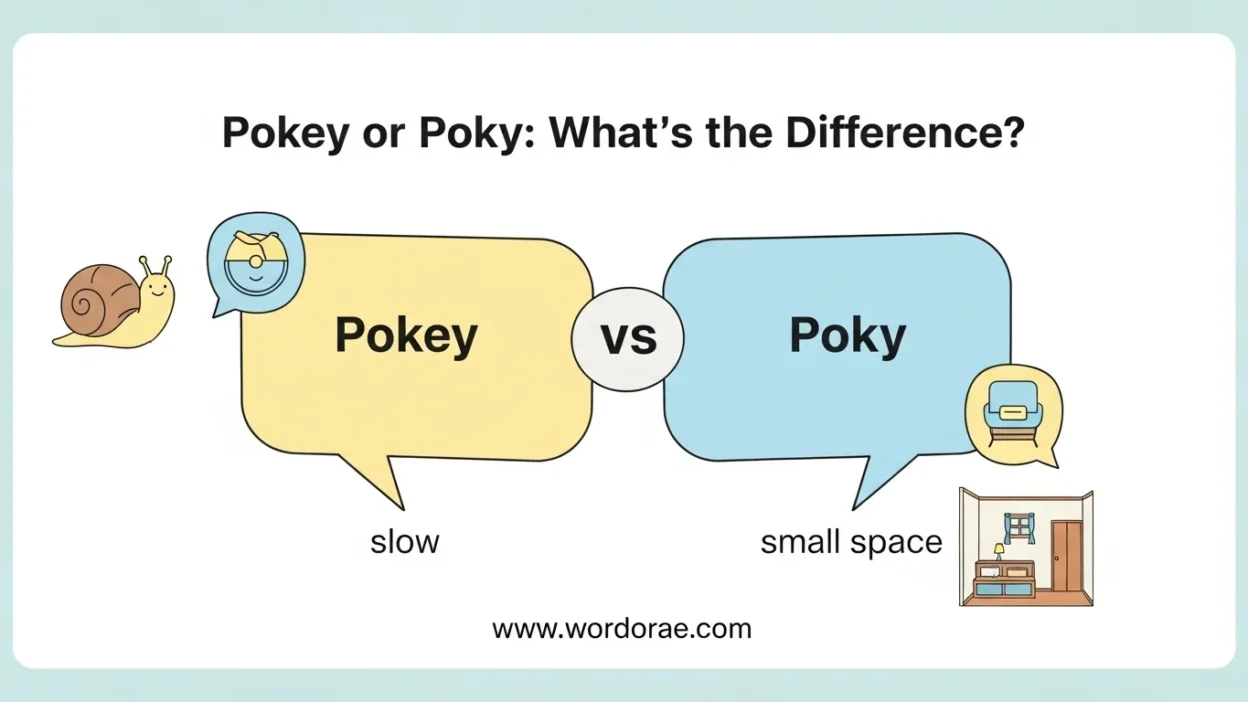
Quick answer: Poky is the standard spelling in American English, while pokey is a common informal variant—both can mean slow or small and cramped.
You might have typed “pokey or poky” after hearing someone say, “Stop being so pokey.” Or maybe you saw “pokey or pocky” and got even more confused. I get it. These words sound the same. But spelling changes meaning fast.
If you are wondering:
- pokey or poky meaning
- pokey or poky sharp
- pokey or pocky snake
- pokey or pocky meaning slang
- pokey or pocky slow
You are in the right place. I will explain it clearly. Short sentences. No fluff. Real examples.
Let’s break it down.
Table of Contents
- Pokey or Poky – Quick Answer
- The Origin of Poky and Pokey
- Is It Pokey or Poky?
- Pokey or Poky Meaning
- Pokey or Pocky: What’s the Difference?
- Key Differences with Examples
- Common Mistakes
- Pokey or Poky in Everyday Use
- Comparison Table
- FAQs
- Conclusion
Pokey or Poky – Quick Answer
Both poky and pokey are correct spellings.
However:
- Poky is more common in American dictionaries.
- Pokey is a casual spelling variation.
They usually mean:
- Slow
- Small and cramped
- Slightly sharp or sticking out
So if you ask is it pokey or poky? — both can be correct, but poky is more standard.
The Origin of Poky and Pokey
The word comes from “poke,” meaning to push or jab.
Over time, “poky” developed meanings like:
- moving slowly
- uncomfortable and cramped
- slightly sharp
American English often prefers shorter spellings. That is why poky appears more in dictionaries.
“Pokey” became a common alternative spelling in casual speech.
Is It Pokey or Poky?
If you are writing formally, use poky.
Example:
✔ The room felt small and poky.
✔ He was too poky to finish on time.
Pokey is not wrong. It just feels more informal.
Example:
✔ Stop being pokey.
✔ That stick is pokey.
So for professional writing, choose poky.
Pokey or Poky Meaning
Let’s break down the meanings.
1. Slow
Example:
- He is poky when getting ready.
- She walks in a pokey way.
People search pokey or pocky slow because they hear it spoken. The correct spelling here is poky or pokey — not pocky.
2. Small and Cramped
Example:
- The apartment felt poky.
- It was a pokey little room.
This meaning describes tight space.
3. Slightly Sharp
Example:
- That branch feels pokey.
- The cactus is poky.
People search pokey or poky sharp because they want the correct spelling in this context. Again, both work, but poky is more standard.
Pokey or Pocky: What’s the Difference?
Now let’s clear this up.
Poky / Pokey
Meaning: slow, cramped, slightly sharp.
Pocky
Pocky is not related.
It refers to a Japanese snack brand called
Pocky
So if someone searches pokey or pocky snake, they likely mean poky snake (a snake that pokes or moves slowly), not the snack.
If you search pokey or pocky meaning slang, remember:
- Pokey (slang) can mean jail in American slang.
- Pocky is a snack brand.
Very different meanings.
When Should You Use Poky or Pokey?
If you are still wondering pokey or poky meaning, the key is context and tone.
Use poky in formal or professional writing. It appears more often in dictionaries and style guides. For example:
- The office felt small and poky.
- The hallway was narrow and poky.
Use pokey in casual speech or dialogue. It sounds friendly and conversational.
- Stop being so pokey.
- This jacket feels pokey around the neck.
Now, about common search confusion like pokey or pocky slow — remember that pocky does not mean slow. It refers to a snack brand. The same applies to searches like pokey or pocky snake. If you are describing a slow-moving or slightly sharp snake, the correct spelling is poky or pokey.
So the rule is simple: choose poky for clarity and consistency, especially in professional writing.
Key Differences with Examples
1. Standard Spelling
Poky = dictionary standard
Pokey = informal variant
Example:
✔ The office was poky.
2. Formal Writing
Poky preferred
Pokey more casual
Example:
✔ The workspace felt poky.
3. Slang Use
Pokey can mean jail (slang).
Poky usually does not carry slang tone.
Example:
“He ended up in the pokey.”
4. Association with Brands
Poky = adjective
Pocky = snack brand
5. Pronunciation
Poky and pokey sound the same.
Pocky sounds different.
6. Meaning “Slow”
Both poky and pokey mean slow.
Pocky does not.
Example:
✔ He is poky today.
✖ He is pocky today.
7. Meaning “Sharp”
Both poky and pokey can describe something sharp.
Pocky cannot.
Example:
✔ That bush is poky.
Common Mistakes
1. Mixing Pokey and Pocky
❌ That cactus is pocky.
✔ That cactus is poky.
2. Overthinking the Spelling
Both poky and pokey are acceptable. Just stay consistent.
3. Using It in Formal Reports
In formal writing, prefer poky.
Everyday Examples
Emails:
- This office feels poky.
Conversation:
- Stop being so pokey.
Social Media:
- My room is small and poky.
News Writing:
- Residents complained about poky apartments.
Keep tone in mind. Match spelling to context.
Comparison Table
| Word | Meaning | Formal Use | Slang | Brand |
|---|---|---|---|---|
| Poky | Slow, cramped, sharp | Yes | Rare | No |
| Pokey | Same meanings | Casual | Yes (jail) | No |
| Pocky | Snack brand | N/A | No | Yes |
FAQs
Is it pokey or poky?
Both are correct. Poky is more standard.
Pokey or poky meaning?
Slow, cramped, or slightly sharp.
Pokey or pocky snake?
Correct spelling is poky or pokey. Pocky is a snack.
Pokey or pocky slow?
Poky or pokey means slow. Pocky does not.
Pokey or poky sharp?
Both can describe something sharp.
Is pokey slang?
Yes. It can mean jail.
Which spelling should I use?
Use poky in formal writing.
Conclusion
Now you know the difference between pokey or poky — and why pocky is something completely different.
If you are writing professionally, use poky. If you are speaking casually, pokey works fine. Just avoid mixing it with Pocky, the snack.
I know these small spelling differences can feel confusing. But once you understand the context, it becomes simple.
Choose the spelling that fits your audience. Stay consistent. And your writing will always feel clear and confident.

I’m David Miller, a grammar expert and author at Wordorae.com, specializing in clear, simple explanations of confusing English grammar and word usage.
I help readers write with confidence by turning complex grammar rules into easy, practical guidance.