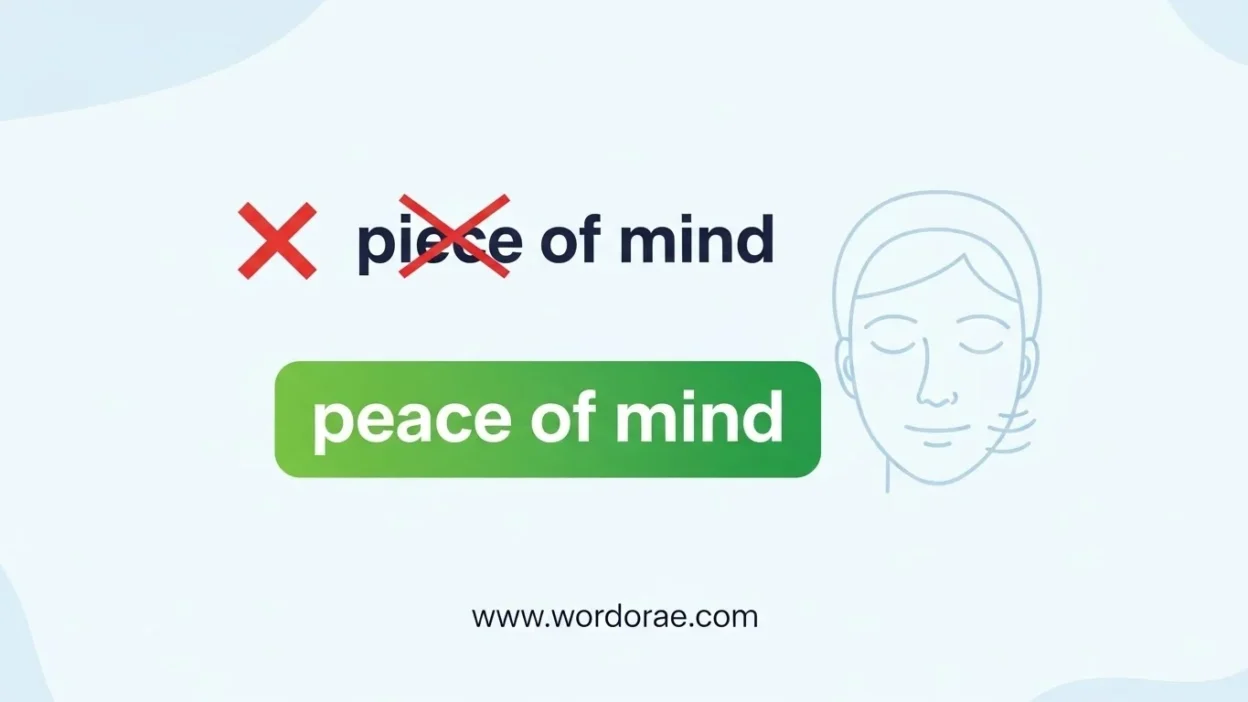
“Peace of mind” is correct. “Piece of mind” is wrong in standard English.
I learned this the awkward way.
I once typed piece of mind in a late-night message because I had seen it everywhere on social media, comments, even blogs so it looked right. Still, something felt off.
A quick grammar check showed I was repeating a very common mistake.
If you’re searching for piece of mind or peace of mind, you’re not alone. The confusion happens because piece and peace sound the same but mean very different things.
One means a part. The other means calm and mental comfort.
Using the wrong phrase can hurt clarity and credibility, especially in professional writing or SEO content. In this guide,
I’ll explain the difference simply and help you use the correct phrase with confidence.
Piece of Mind or Peace of Mind: Quick Answer
- Correct: peace of mind
- Incorrect: piece of mind
Examples:
✅ This insurance gives me peace of mind.
❌ This insurance gives me piece of mind.
Why?
- Peace means calm or mental comfort
- Piece means a part of something
According to standard English grammar rules and dictionary definitions, only peace of mind is correct.
The Origin of Piece of Mind or Peace of Mind
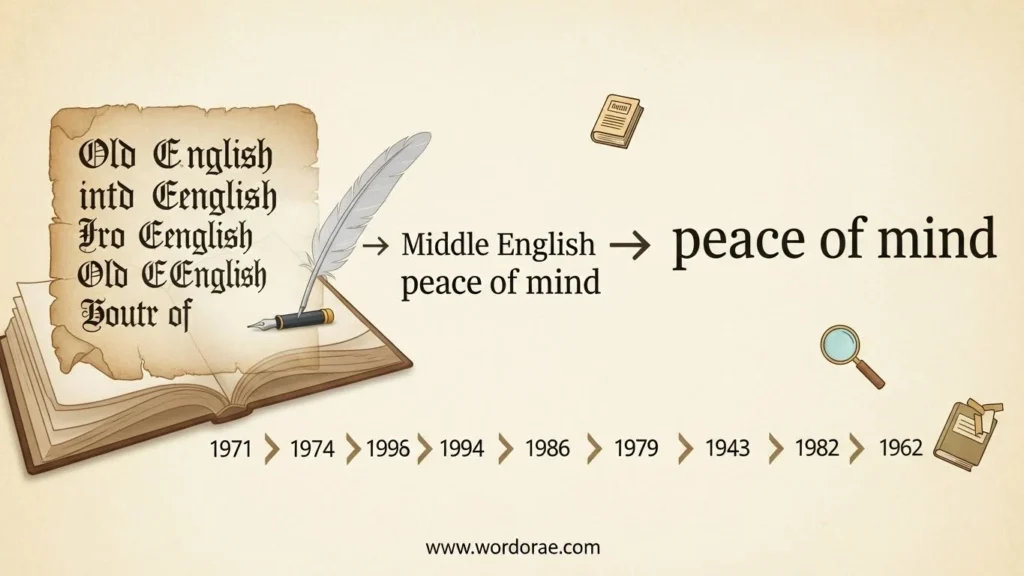
The confusion comes from sound, not meaning.
- Peace comes from Old French pais, meaning calm or freedom from worry.
- Piece comes from Old French piece, meaning a portion or part.
Over time, peace of mind became a fixed English idiom meaning emotional comfort.
Because both words sound the same, the spelling mistake piece of mind became common but it has never been grammatically correct.
British English vs American English Spelling
There is no spelling difference between British and American English.
| English Variant | Correct Phrase |
| American English | peace of mind |
| British English | peace of mind |
| Australian English | peace of mind |
| Canadian English | peace of mind |
Piece of mind is incorrect everywhere.
Which Spelling Should You Use?
Always choose based on meaning and audience:
- Use peace of mind when talking about calm, safety, or reassurance
This contract gives customers peace of mind. - Never use piece of mind unless you literally mean a “piece” of the brain which almost never makes sense.
For global audiences, professional writing, and SEO-friendly content, peace of mind is the only correct choice.
Common Mistakes with Piece of Mind or Peace of Mind
❌ This job gives me piece of mind.
✅ This job gives me peace of mind.
❌ I just want some piece of mind.
✅ I just want some peace of mind.
Mistake reason: confusing homophones words that sound the same but mean different things.
Piece of Mind or Peace of Mind in Everyday Examples

Emails:
Your confirmation email should give customers peace of mind.
News:
New safety laws aim to give residents peace of mind.
Social Media:
Travel insurance = peace of mind ✈️
Formal Writing:
The policy was designed to ensure long-term peace of mind.
Piece of Mind or Peace of Mind: Google Trends & Usage Data
Search trends show:
- Peace of mind is the dominant and correct phrase worldwide.
- Piece of mind appears mainly as a spelling error.
- Google often autocorrects piece of mind to peace of mind.
People search this keyword to confirm correctness. Clear, accurate usage improves readability, trust, and search performance.
Comparison Table: Piece of Mind vs Peace of Mind
| Phrase | Correct? | Meaning |
| peace of mind | ✅ Yes | Calm, reassurance |
| piece of mind | ❌ No | Grammar and meaning error |
FAQs
1. Is “piece of mind” ever correct?
No. It is always a mistake in standard English.
2. Why do people confuse piece and peace?
They are homophones and sound identical.
3. Is peace of mind an idiom?
Yes. It is a fixed English expression.
4. Does British English allow piece of mind?
No. Both British and American English use peace of mind.
5. Can grammar tools catch this mistake?
Most can, but not all manual knowledge helps.
6. Does using “piece of mind” affect SEO?
Yes. It can reduce credibility and clarity.
7. What’s the easiest way to remember the difference?
If you mean calm or relief, always use peace.
Conclusion
The confusion between piece of mind or peace of mind is common, but the rule is simple. Peace of mind is the correct phrase. Piece of mind is a spelling and meaning error.
Once I understood that peace refers to calm and piece refers to a part of something, the mistake disappeared.
Clear language builds trust with readers, and accuracy matters even more in professional and SEO writing.
If you ever pause again, remember this:
If you’re talking about feeling calm, safe, or reassured, the answer is always peace of mind.
That one rule will keep your writing clear every time.

I’m Helena Marwick, a grammar-focused writer at Wordorae.com, where I help readers understand confusing English words and usage clearly.
I specialize in making grammar simple, accurate, and easy to apply in everyday writing.