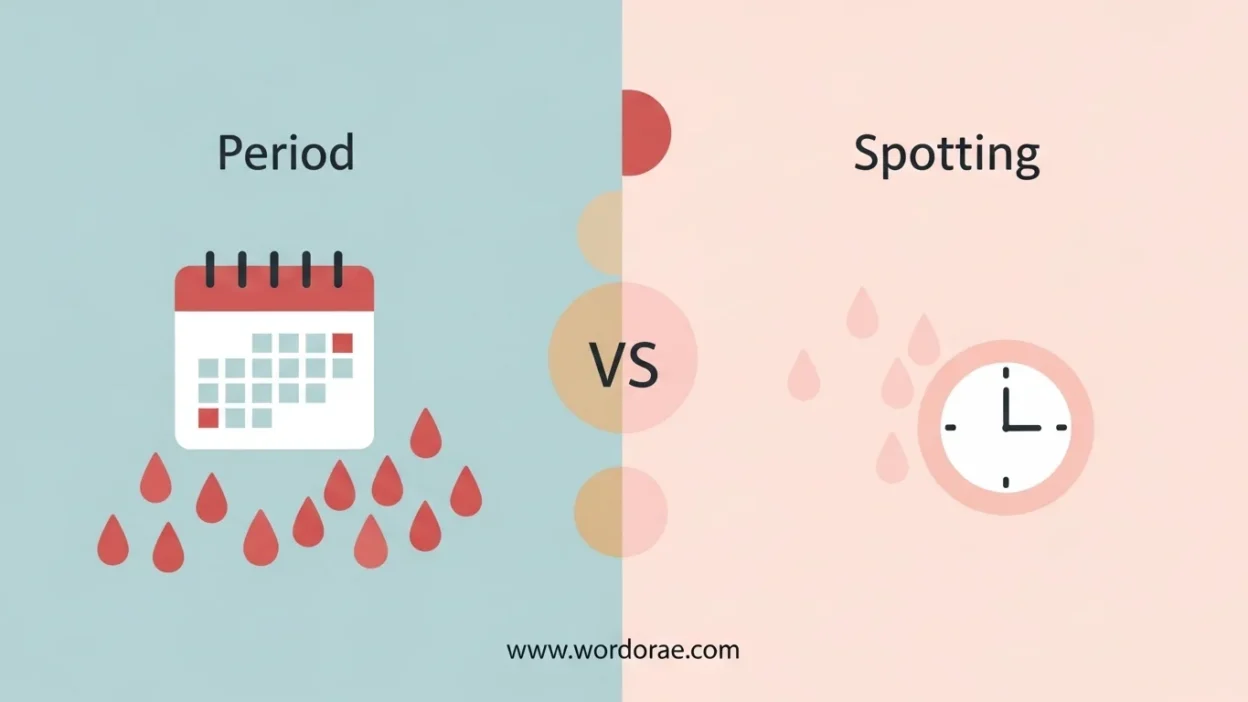
Quick answer: A period is regular menstrual bleeding, while spotting is light, irregular bleeding that happens outside your normal cycle.
I know why you searched “period or spotting.” You see blood, and the first thought is panic or confusion.
You ask yourself, Is this my period starting, or is something else going on? I’ve been there too.
When your body does something unexpected, you want clear answers, not medical jargon.
You and I hear these words a lot. Period. Spotting. People use them casually, but they are not the same thing.
One is normal and expected. The other can be normal too, but it means something different. The problem is that no one explains it simply.
This article clears that confusion. I’ll explain what period or spotting really means, how they differ,
what causes each one, and when you should pay attention. I’ll keep it clear, calm, and easy to understand.
By the end, you’ll know exactly what your body may be telling you.
Period or Spotting – Quick Answer
A period is full menstrual bleeding that comes on a schedule.
Spotting is light bleeding that shows up between periods.
Examples:
- Bleeding for 4–7 days each month = period
- A few drops of blood for one day = spotting
The amount, timing, and flow are the key differences.
The Meaning of Period
A period is part of the menstrual cycle. It happens when the body sheds the lining of the uterus. This usually happens once a month.
Periods often:
- Last 3 to 7 days
- Have steady blood flow
- Come with cramps or tiredness
Periods are expected. They follow a pattern. Many people track them on a calendar or app.
The Meaning of Spotting
Spotting is light bleeding that is not part of a full period. It can appear as:
- Pink drops
- Brown stains
- Light red marks
Spotting is usually:
- Very light
- Short (a few hours or one day)
- Unpredictable
Spotting does not need pads or tampons. Often, a liner is enough.
The Origin of Period and Spotting
The word period comes from a Greek word meaning “cycle.” That fits well because menstruation is a cycle.
The word spotting comes from the word “spot.” It describes small marks, not heavy flow. The name itself shows how light it is.
Both words grew from everyday language. That’s why they are still easy to understand today.
Period vs Spotting: Key Differences
Here is a clear comparison to help you decide.
Comparison : Period vs Spotting
| Feature | Period | Spotting |
|---|---|---|
| Flow | Heavy to medium | Very light |
| Timing | On schedule | Between periods |
| Duration | 3–7 days | Few hours to 1–2 days |
| Color | Red | Pink or brown |
| Protection | Pads or tampons | Panty liner |
If the bleeding is light and unexpected, it is more likely spotting.
Common Causes of a Period
Periods happen because of normal hormonal changes.
Common causes include:
- Monthly hormone cycle
- Puberty
- Stopping birth control
- After pregnancy recovery
A period means the body is doing what it normally does.
Common Causes of Spotting
Spotting has many causes. Some are harmless. Some need attention.
Common reasons include:
- Ovulation
- Stress
- Birth control pills
- Hormone changes
- Early pregnancy
Spotting can happen even when nothing is wrong.
Period or Spotting During Pregnancy
This is where confusion grows.
- Periods stop during pregnancy
- Spotting can still happen
Light spotting early in pregnancy is common. It does not always mean danger. But heavy bleeding should always be checked by a doctor.
Period or Spotting: Which One Are You Having?
Ask yourself three simple questions:
- Is the bleeding light or heavy?
- Did it come on your normal schedule?
- How long did it last?
Heavy + regular + days long = period
Light + random + short = spotting
Your body gives clues. You just need to read them.
Common Mistakes with Period or Spotting
Mistake 1: Calling all bleeding a period
Light bleeding is often spotting, not a period.
Mistake 2: Panicking over spotting
Spotting is common and often harmless.
Mistake 3: Ignoring heavy spotting
If spotting becomes heavy, it needs attention.
Knowing the difference helps you stay calm and informed.
Period or Spotting in Everyday Life
At School or Work
- Periods usually need planning.
- Spotting often catches people off guard.
In Conversations
- “My period started early.”
- “I noticed some spotting today.”
In Health Tracking
Many people log both periods and spotting to see patterns.
Period or Spotting in Medical Writing
Doctors use these words carefully.
- Period means menstrual bleeding.
- Spotting means abnormal or irregular bleeding.
Using the right term helps doctors help you faster.
Comparison : When to Pay Attention
| Situation | Period | Spotting |
|---|---|---|
| Normal cycle | Yes | Sometimes |
| Needs tracking | Yes | Helpful |
| Needs doctor visit | Rarely | If frequent |
| Pregnancy sign | No | Possible |
This table helps you decide when to act.
FAQs About Period or Spotting
1. Can spotting happen instead of a period?
Yes, especially with hormones or stress.
2. Is spotting normal?
Yes. Many people experience it.
3. Can stress cause spotting?
Yes. Stress affects hormones.
4. Is spotting painful?
Usually no, but mild cramps can happen.
5. Can spotting mean pregnancy?
Sometimes, especially early on.
6. Should I track spotting?
Yes. It helps spot patterns.
7. When should I see a doctor?
If spotting is heavy or frequent.
Conclusion
I want you to feel confident about your body. Bleeding does not always mean the same thing.
Now you know the difference between a period or spotting, and that knowledge gives you control. You don’t have to guess anymore.
You and I both know that bodies are not perfect machines. They change. They react.
Understanding those changes helps you feel calmer and more prepared. Use what you learned here to track patterns,
Ask better questions, and take care of yourself. Clear knowledge replaces fear every time.

I’m Jane Austen, a writer at Wordorae.com, where I focus on explaining grammar mistakes and confusing English words in a clear, simple way.
I help readers improve their writing by making tricky language rules easy to understand and use.