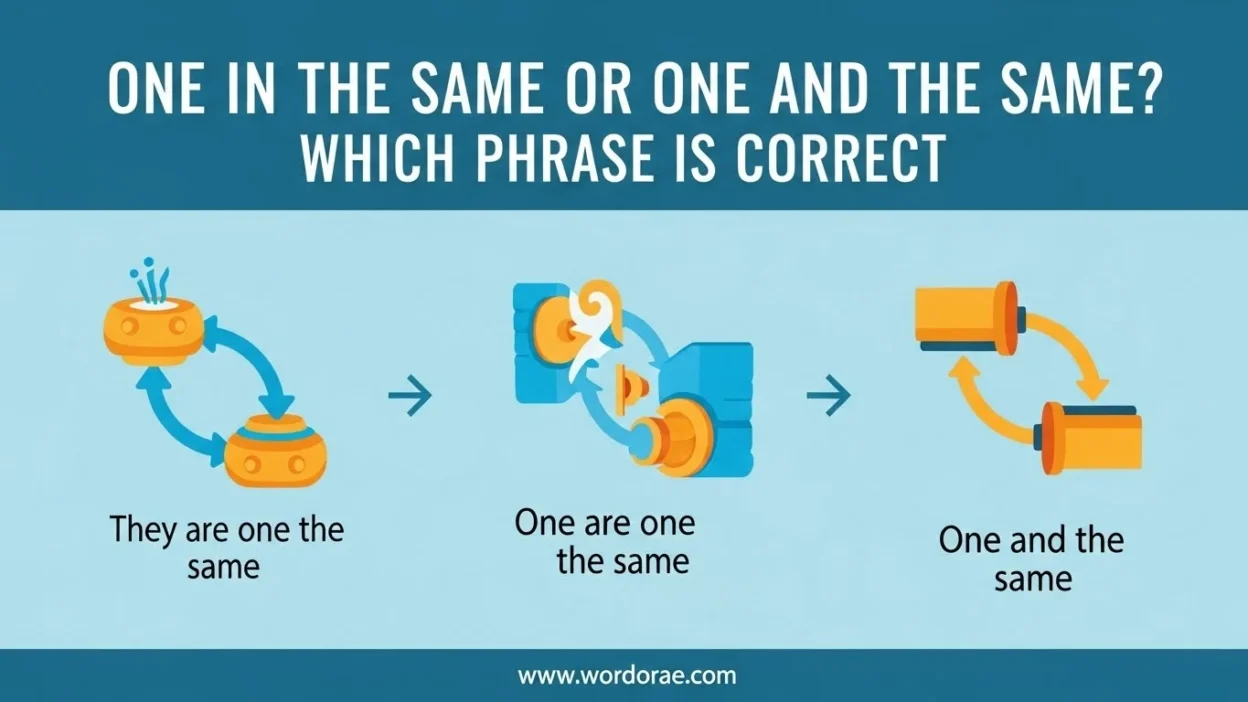
Quick answer: The correct phrase is “one and the same.” “One in the same” is a common mistake.
I once stopped mid-sentence while writing and thought, “Wait… is it one in the same or one and the same?” I had seen both used online, and for a moment, the wrong one didn’t even look wrong. That’s exactly why this phrase confuses so many people.
Because the two versions sound almost identical when spoken, the mistake spreads easily, especially on social media and in casual writing. This guide clears it up quickly and clearly, so you know which phrase is correct and how to use it with confidence.
One in the Same or One and the Same: Quick Answer
The only correct phrase is “one and the same.”
It means two things are identical or refer to the same thing.
Examples:
- ✅ They realized the two ideas were one and the same.
- ❌ They realized the two ideas were one in the same.
If you’re choosing between the two, “one and the same” is always the right choice.
The Origin of One in the Same or One and the Same
The phrase “one and the same” has been part of English for centuries. The word “and” connects two things to show they are identical—not separate.
The incorrect version, “one in the same,” likely comes from how the phrase sounds when spoken quickly. When people hear “and the”, it can sound like “in the.” Over time, that mishearing turned into a writing mistake.
Importantly, “one in the same” has no historical or grammatical basis.
British English vs American English
This is one area where British and American English fully agree.
| English Variant | Correct Phrase |
| American English | one and the same |
| British English | one and the same |
| Formal Writing | one and the same |
| Casual Speech | often misheard, still incorrect |
No matter where you’re writing, “one and the same” is the standard form.
Which Spelling Should You Use?
There’s no audience based exception here.
- Professional writing: Always use one and the same
- Academic writing: Always use one and the same
- Casual writing: Still best to use one and the same
Using the incorrect version can make your writing look careless even if the meaning is understood.
Common Mistakes to Avoid
These are the most frequent errors:
❌ The two brands are one in the same.
✅ The two brands are one and the same.
❌ They’re basically one in the same person.
✅ They’re basically one and the same person.
Easy rule to remember:
If you can replace the phrase with “identical,” then “one and the same” is correct.
Everyday Examples
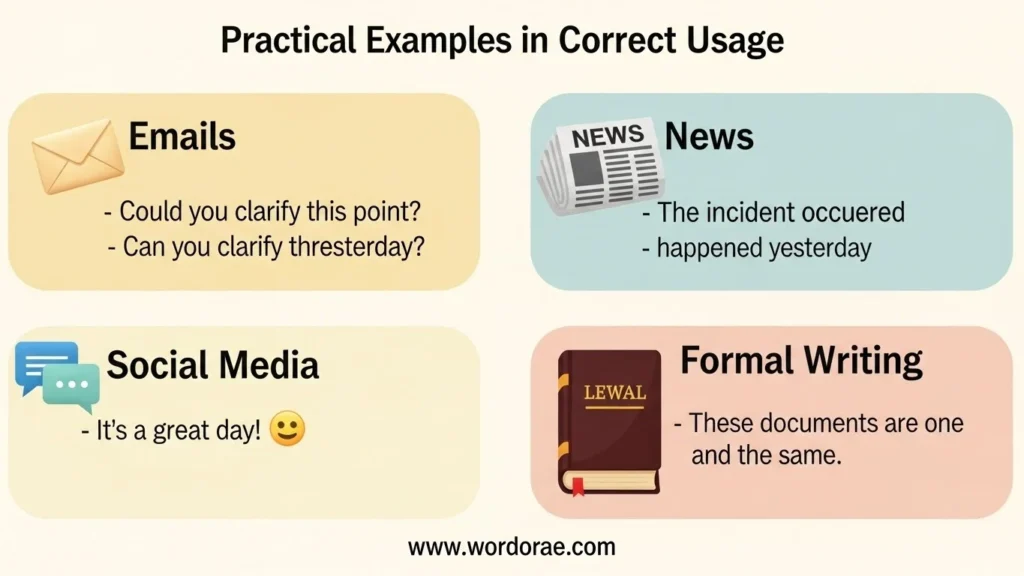
Emails:
- These documents are one and the same.
News:
- The investigation showed the cases were one and the same.
Social Media:
- Turns out the rumors are one and the same.
Formal Writing:
- The two concepts are treated as one and the same.
One in the Same or One and the Same Usage Trends
Search data shows many people type “one in the same or one and the same” because they’re unsure which is correct.
The incorrect version appears more often in casual online writing, while professional and edited content consistently uses “one and the same.”
This tells us the intent is simple: people want confirmation and a clear answer.
Comparison Table
| Phrase | Correct | Notes |
| one and the same | ✅ Yes | Standard English |
| one in the same | ❌ No | Common mistake |
| identical | ✅ Yes | Good alternative |
| exactly the same | ✅ Yes | Informal alternative |
FAQs
1. Is “one in the same” ever correct?
No. It’s always considered incorrect.
2. Why do people say “one in the same”?
Because it sounds similar when spoken.
3. Is this different in British English?
No. Both use one and the same.
4. Can I use “one in the same” casually?
You can, but it’s still a mistake.
5. What’s the safest option in writing?
Always use one and the same.
Conclusion
The confusion between one in the same or one and the same comes from sound, not meaning. When spoken, the phrase blurs. In writing, though, the rule is clear.
“One and the same” is the correct, accepted form in all types of English. Using it shows clarity, confidence, and attention to detail.
Once you know the rule, there’s no reason to second guess it again.

I’m Helena Marwick, a grammar-focused writer at Wordorae.com, where I help readers understand confusing English words and usage clearly.
I specialize in making grammar simple, accurate, and easy to apply in everyday writing.