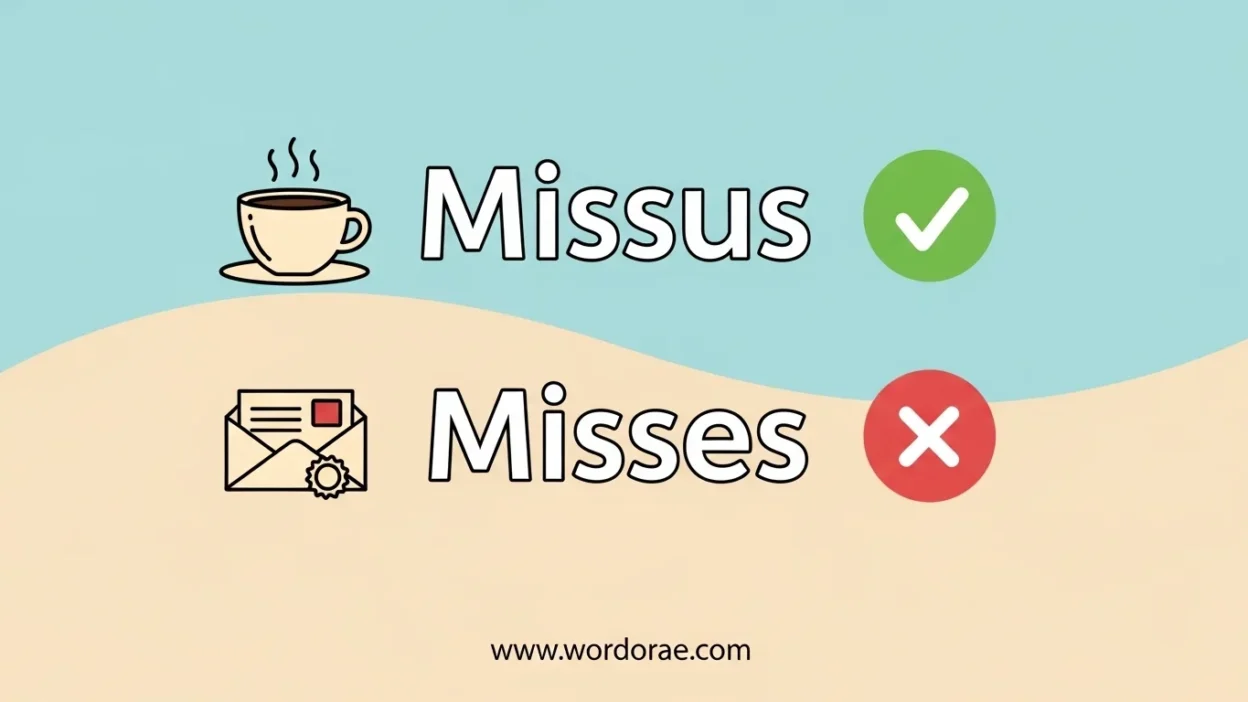
Quick answer: Use missus when talking about a married woman informally; use misses in standard plural or formal contexts.
I know this can be confusing because both words sound similar, and you might have seen them in books, emails, or even casual chats.
You’re probably asking yourself, “Which one is correct here?” Don’t worry—I’ve been there too.
I want to help you understand the difference quickly so that you can write confidently without second-guessing yourself.
By the end of this article, you’ll know exactly when to use missus and when to use misses, and I’ll show you examples you can use in everyday writing.
Missus or Misses – Quick Answer
Missus
- Informal term for a married woman, often used as a nickname or in casual speech.
Misses
- Plural of “miss” or used in formal contexts, such as addressing multiple unmarried women.
Examples:
- My missus is making dinner. (informal)
- The misses at the office are attending the meeting. (plural/formal)
The Meaning of Missus
Missus is an informal spoken word derived from “Mrs.” It is often used in everyday conversation to refer to someone’s wife.
Examples:
- I went to the shop with my missus yesterday.
- His missus is a teacher.
It’s friendly and casual, mostly used in speech or informal writing.
The Meaning of Misses
Misses is either:
- The plural of “miss” (unmarried women)
- Used formally in addressing letters or multiple women
Examples:
- The misses of the town were invited to the party.
- Letters addressed to the misses Smith and Johnson.
It’s not casual and rarely used in spoken conversation today.
Origin of Missus
The word missus comes from British English, as a spoken form of Mrs. over the centuries.
It became common in informal speech, especially in Britain and some Commonwealth countries.
People started saying “my missus” instead of “my wife” in a friendly, relaxed way.
Origin and Usage
| Word | Origin | Common Use | Tone |
|---|---|---|---|
| Missus | British | Informal, spoken English | Casual |
| Misses | English | Plural/formal writing | Formal |
British English vs American English
Both missus and misses exist in British and American English, but the usage differs slightly:
- British English:
- “Missus” is very common in casual speech.
- “Misses” is used rarely, mainly in formal letters.
- American English:
- “Missus” is sometimes used informally, but less common than in the UK.
- “Misses” is mostly formal or plural.
British vs American Usage
| Word | British English Usage | American English Usage |
|---|---|---|
| Missus | Very common, informal | Occasional, informal |
| Misses | Rare, formal/plural | Mostly formal or plural |
Which Form Should You Use?
- If you are writing informally about your wife or someone’s wife, use missus.
- If you are writing formally or referring to multiple women, use misses.
Examples:
- I went shopping with my missus. ✅
- The misses at the meeting were very helpful. ✅
Using the wrong word can confuse your reader. I always tell my students: when in doubt, think about tone. Casual → missus. Formal → misses.
Common Mistakes with Missus / Misses
❌ My misses is cooking dinner.
✅ My missus is cooking dinner.
❌ The missus of the office attended the meeting.
✅ The misses of the office attended the meeting.
❌ Letter addressed to the missus Smith.
✅ Letter addressed to the misses Smith.
Always double-check your context: informal or formal, singular or plural.
Missus or Misses Examples
Emails / Informal Writing:
- I’ll meet my missus later.
- The misses at work submitted their reports.
Social Media:
- Spending the weekend with my missus!
- The misses in our team are amazing.
School or Professional Writing:
- Letters addressed to the misses of the company.
- Not suitable: “missus” in official documents.
Frequently Asked Questions
1. Can I use missus in formal writing?
No, it is informal. Use misses or Mrs. instead.
2. Is missus American English?
It exists but is more common in British English.
3. What is the plural of missus?
There isn’t a standard plural; use misses for multiple women formally.
4. Can I say “my missus”?
Yes, in informal conversation. It’s very common in casual English.
5. Are missus and misses interchangeable?
No. Tone and context matter. Missus = informal, wife. Misses = plural/formal.
6. Can I use missus in social media posts?
Absolutely! Perfect for casual writing.
7. Which one sounds friendlier?
Missus sounds friendly and approachable.
Conclusion
Now you see the difference between missus or misses. I’ve used examples and tables to make it easy for you.
If you’re talking about your wife or a married woman casually, go with missus. If you’re writing formally or about multiple women, choose misses.
I’ve made it simple so that the next time you write, you won’t pause or guess.
You’ll know exactly which word to use, and your writing will sound natural and professional.
Remember, tone is everything: informal = missus, formal/plural = misses.
Once you get this right, your emails, texts, and letters will look clean and confident.
I hope now you feel ready to use both words correctly every time!

I’m Sophia Larkins, a grammar-focused writer at Wordorae.com, where I break down common grammar mistakes and confusing words.
I specialize in clear, practical explanations that help readers write with confidence and accuracy.