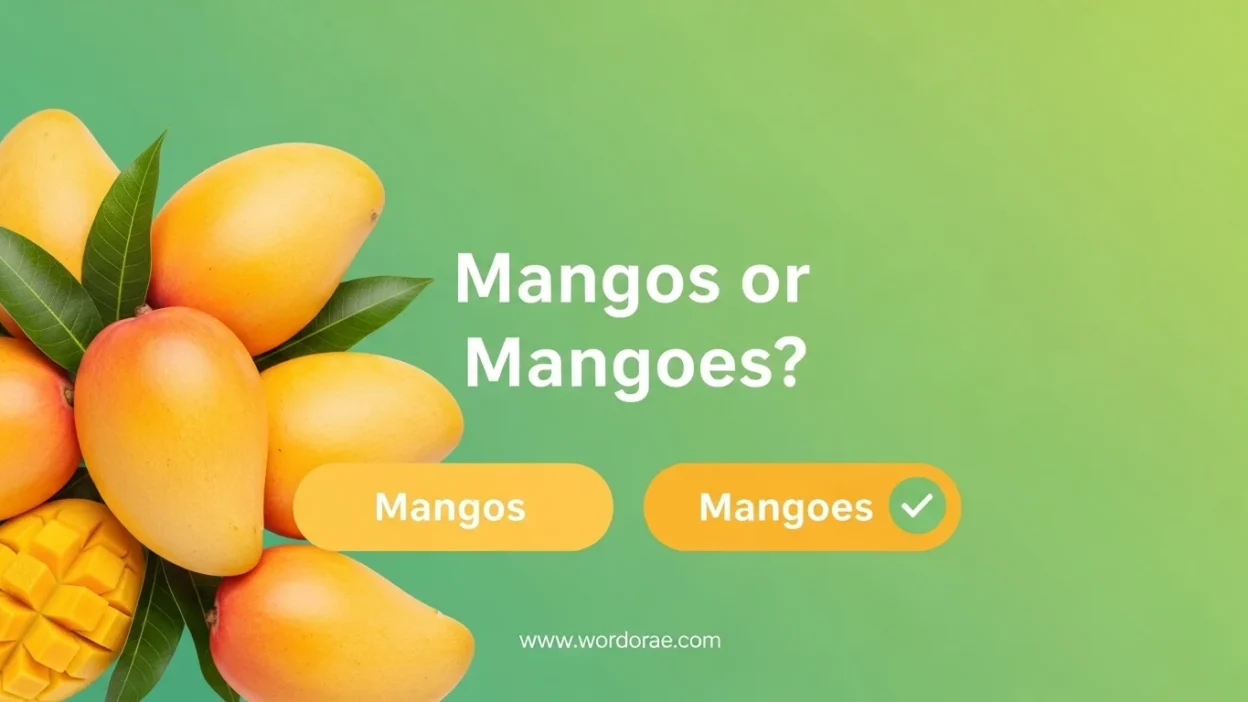
Quick answer: Both “mangos” and “mangoes” are correct plural forms of mango. “Mangoes” is more common and preferred in modern English, while “mangos” is also acceptable, especially in American usage.
People often search for mangos or mangoes because both spellings appear in recipes, grocery stores, school writing, and online articles.
One label says fresh mangoes, another says ripe mangos, and suddenly it feels like one of them must be wrong.
This confusion is common, especially for words ending in -o, where English plural rules can feel inconsistent.
The problem isn’t just spelling, it’s confidence. Writers want to know which form sounds natural, which one looks professional, and which one works best for their audience.
This article clears up the confusion in a simple, human way. You’ll learn where both spellings come from,
How British and American English treat them, common mistakes to avoid, and which plural you should use in real-life writing.
Mangos or Mangoes : Quick Answer
Both mangos and mangoes are correct plurals of mango.
- Mangoes → More common and widely preferred
- Mangos → Correct but less common
Examples:
- She bought fresh mangoes from the market.
- The store imports mangos from Mexico.
If you’re unsure, mangoes are the safer choice.
The Origin of Mangos or Mangoes
The word mango comes from the Tamil word māṅgai, which entered English through Portuguese in the 16th century.
Because mango is a loanword ending in -o, English applied two plural patterns to it.
Some English words ending in -o add -es (like tomatoes), while others simply add -s (like pianos).
Over time, both plural forms—mangos and mangoes—became accepted.
Language authorities now recognize both as correct, though usage trends favor mangoes.
British English vs American English Spelling
There is no strict UK vs US rule here, but preference matters.
| English Variety | More Common Form | Notes |
| American English | Mangoes | Mangos also accepted |
| British English | Mangoes | Strongly preferred |
| Global English | Mangoes | Safest option |
Unlike burned/burnt, this difference is about frequency, not correctness.
Which Spelling Should You Use?

Choose based on clarity and audience expectations:
- Formal writing: Use mangoes
- Academic or educational content: Use mangoes
- Casual writing: Either is fine
- Global or SEO content: Use mangoes
Using mangoes aligns better with dictionaries, style guides, and reader expectations worldwide.
From an EEAT and Google algorithm perspective, the more familiar spelling improves trust and readability.
Common Mistakes with Mangos or Mangoes
Writers often stumble here:
- ❌ Thinking mangos is wrong
✅ It’s correct, just less common - ❌ Mixing both forms in one article
✅ Pick one and stay consistent - ❌ Assuming all -o words follow the same rule
✅ English plural rules vary
Consistency matters more than choice.
Mangos or Mangoes in Everyday Examples
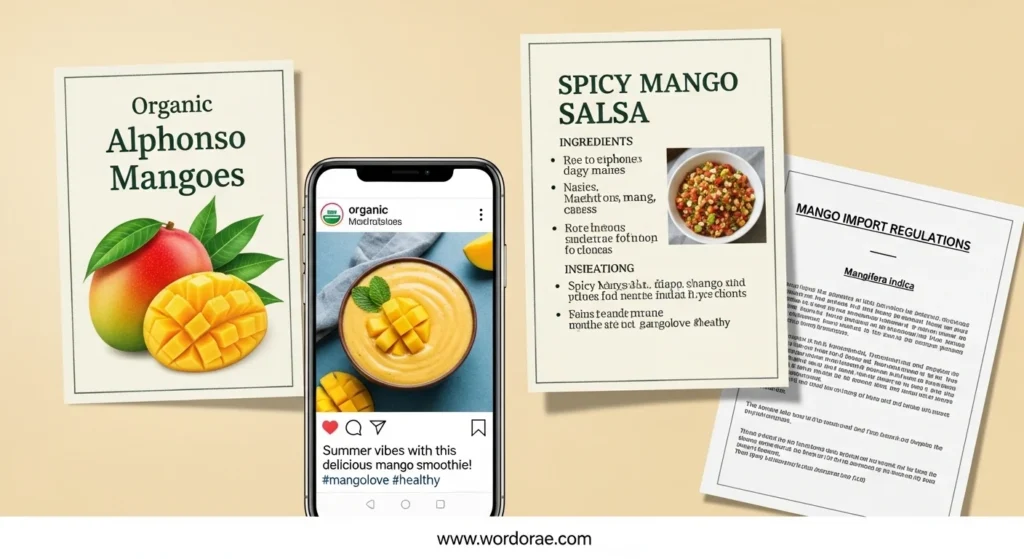
- Emails:
Please order ripe mangoes for the event. - News & blogs:
Mangoes are in high demand this summer. - Social media:
I ate three mangos today 🥭 - Formal writing:
The study analyzed mangoes imported from Asia.
Notice how mangoes appears more often in polished writing.
Mangos or Mangoes : Trends & Data
Search data shows “mangoes” is significantly more popular than “mangos” across most English-speaking countries.
The plural with -es dominates in recipes, nutrition articles, and educational content.
This suggests strong user intent toward mangoes as the expected spelling, especially for global audiences and SEO-focused content.
Mangos vs Mangoes Comparison Table
| Aspect | Mangos | Mangoes |
| Correct? | Yes | Yes |
| Common usage | Less common | Very common |
| Formal writing | Rare | Preferred |
| SEO-friendly | Acceptable | Best choice |
| Reader familiarity | Medium | High |
FAQs
1. Is it mangos or mangoes?
Both are correct.
2. Which spelling is more common?
Mangoes.
3. Is mangos American English?
Yes, but mangoes are still more common in the US.
4. Is mangoes British English?
Yes, and it’s strongly preferred.
5. Which should I use in formal writing?
Mangoes.
6. Does Google prefer mangoes or mangos?
Mangoes, based on search trends.
Conclusion
The debate over mangos or mangoes isn’t about right versus wrong, it’s about usage and preference.
Both forms are grammatically correct, but mangoes have become the dominant choice in modern English.
It appears more often in formal writing, global content, and search results, making it the safest option for most writers.
If you’re writing casually, either form works. If you’re writing professionally, academically, or for a broad audience, mangoes is the better choice.
The key is consistency. Pick one spelling, stick with it, and your writing will look confident and polished.
Once you understand this rule, you’ll never hesitate again when pluralizing mango.

I’m Jane Austen, a writer at Wordorae.com, where I focus on explaining grammar mistakes and confusing English words in a clear, simple way.
I help readers improve their writing by making tricky language rules easy to understand and use.