If you’ve ever stopped mid-sentence wondering, “Is it macaroon or macaron?” you’re definitely not alone.
The words look almost the same, sound similar, and both refer to desserts but they are not the same thing.
In fact, mixing them up is one of the most common food-related confusions online.
So let’s clear it up once and for all.
The short answer:
A macaron is a French almond sandwich cookie, while a macaroon is a chewy coconut cookie. Same family of words, completely different desserts.
Now let’s go deeper.
Quick Answer: Macaroon or Macaron?
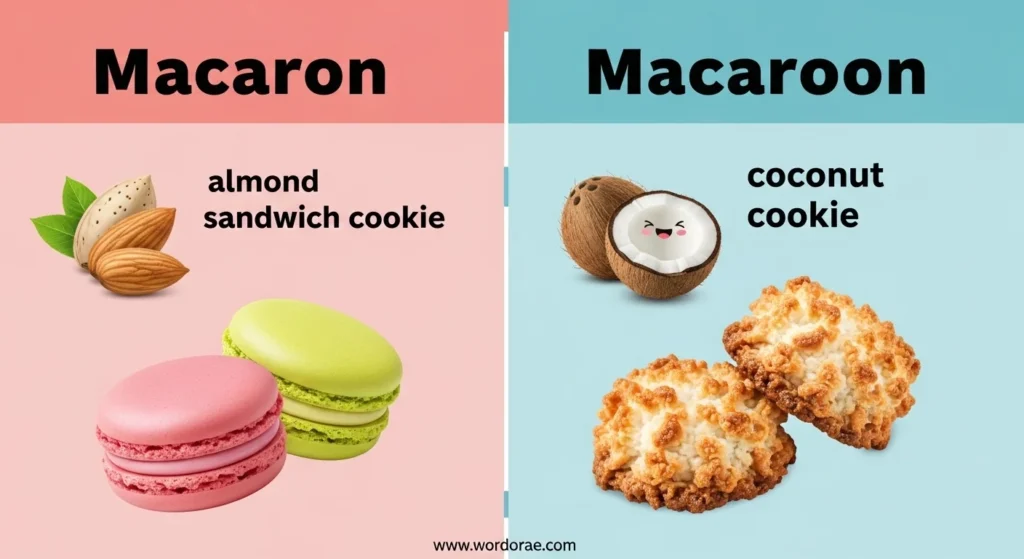
A macaron is a French almond sandwich cookie with filling, while a macaroon is a chewy coconut cookie. They are different desserts with different ingredients and pronunciation.
Macaron is pronounced mack-uh-ROHN.
Macaroon is pronounced mack-uh-ROON.
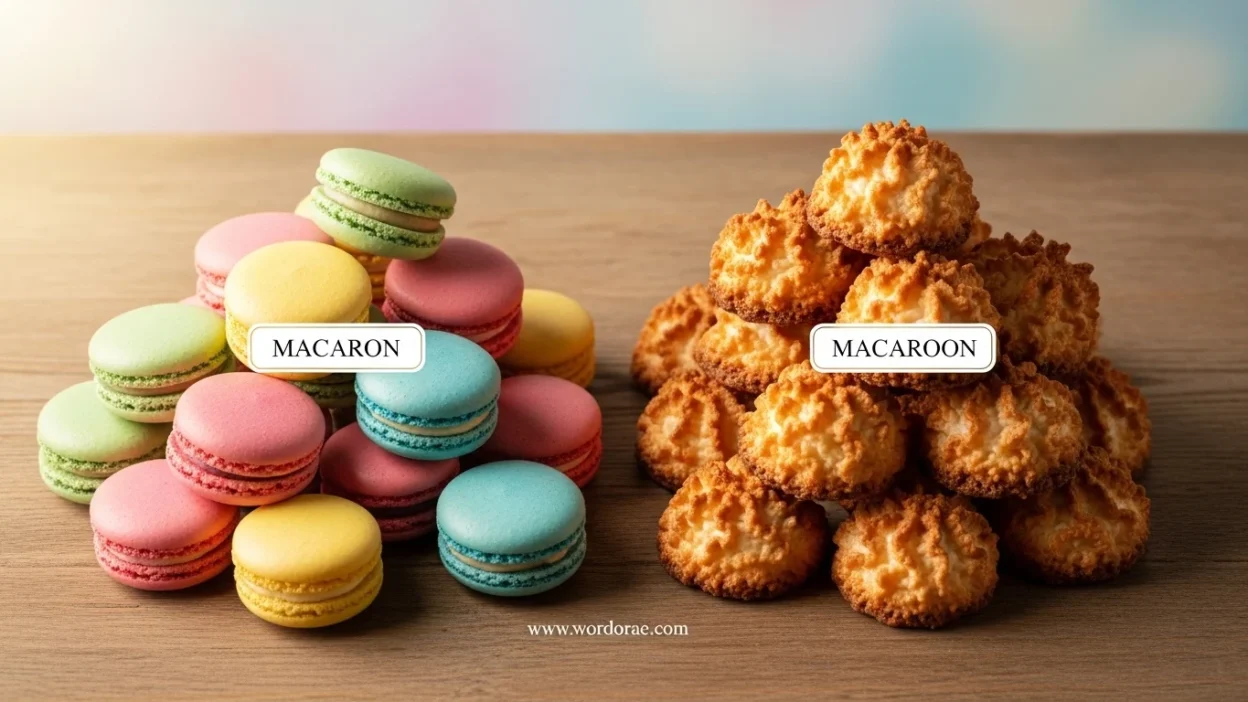
If it’s colorful and filled, it’s a macaron.
If it’s coconut-based and mound-shaped, it’s a macaroon.
Is It Pronounced Macaroon or Macaron?
This is another big source of confusion.
Macaron is pronounced:
mack-uh-ROHN (soft “ron,” almost like the word “gone” without the g)
Macaroon is pronounced:
mack-uh-ROON (rhymes with “moon”)
The difference is subtle but important. Many people pronounce macaron incorrectly as macaroon, especially in English-speaking countries. That’s why the question “is it pronounced macaroon or macaron?” is searched so often.
If you’re ordering at a French bakery, saying “mack-uh-ROHN” will sound much more accurate.
What Is a Macaron?
A macaron is a delicate French dessert made from almond flour, egg whites, and sugar. Two light shells are sandwiched together with a filling such as buttercream, chocolate ganache, or fruit jam.
Macarons are known for:
- Smooth tops
- Ruffled edges (called “feet”)
- Bright, pastel colors
- A crisp exterior with a chewy center
They are elegant and refined. Because they require precision to make, they’re often sold in specialty bakeries and can be quite expensive.
When people ask about “macaroon or macaron food,” this is usually the dessert they’re picturing — the colorful Instagram-famous one.
What Is a Macaroon?
A macaroon is a coconut-based cookie made with shredded coconut, egg whites, and sugar. It’s usually shaped into a small mound and baked until golden on the outside while staying soft inside.
Macaroons are:
- Dense and chewy
- Textured from coconut flakes
- Often dipped in chocolate
- Simple in appearance
They are much easier to make compared to macarons and are common in home baking.
When someone searches “macaroon or macaron dessert,” they’re often trying to figure out which cookie they actually had.
Which Came First: Macaroon or Macaron?
If you’re wondering which came first “macaroon or macaron” the answer goes back centuries.
Both desserts evolved from early almond-based cookies that originated in Italy. The word itself comes from an Italian term related to paste or dough.
Over time:
- The French refined the almond cookie into the modern macaron.
- Coconut became popular in Europe later, leading to the coconut macaroon.
So technically, both trace back to the same roots, but the almond-based version is historically older.
Over time, regional ingredients influenced how the original almond-based cookie evolved.
In France, it became more refined and developed into the sandwich-style macaron.
In other regions, the addition of coconut led to the creation of the macaroon. This is why both desserts share similar names but have very different textures and appearances today.
Macaroon or Macaron Recipe Differences
The recipe differences are significant.
A macaron recipe typically includes:
- Almond flour
- Egg whites
- Sugar
- Filling (buttercream, ganache, or jam)
A macaroon recipe typically includes:
- Shredded coconut
- Egg whites
- Sugar
- Sometimes chocolate
Macarons require careful folding techniques, precise measurements, and controlled baking conditions. Even humidity can ruin them.
Macaroons are far more forgiving. You mix, shape, and bake.
That’s why beginner bakers usually start with macaroons.
Why Do People Still Mix Them Up?
There are a few reasons:
- The names differ by only one letter.
- They share a similar linguistic origin.
- Many people hear the word before they see it spelled.
- Some bakeries and menus use the terms incorrectly.
Because of this, searches like “is it a macaroon or macaron?” are extremely common.
It’s simply a case of similar spelling creating long-term confusion.
Quick Comparison to Remember
Here’s an easy way to remember:
MacarON → two shells stacked ON top of each other.
MacarOON → extra “o” like a round coconut mound.
Not perfect, but surprisingly helpful.
Macaroon vs Macaron: Quick Comparison Table
| Feature | Macaron | Macaroon |
|---|---|---|
| Main Ingredient | Almond flour | Shredded coconut |
| Texture | Crisp outside, chewy inside | Dense and chewy |
| Shape | Two sandwich shells | Single mound |
| Filling | Yes (ganache, buttercream, jam) | No filling (sometimes dipped in chocolate) |
| Difficulty Level | Difficult to make | Easy to make |
| Origin | France | Coconut-based European adaptation |
| Pronunciation | Mack-uh-ROHN | Mack-uh-ROON |
Are They Both Gluten-Free?
Traditionally, yes.
Macarons are made with almond flour, which contains no wheat.
Macaroons rely on coconut and egg whites, also typically flourless.
However, store-bought versions can vary, so always check ingredients if gluten sensitivity is a concern.
Final Answer: Macaroon or Macaron?
Both are correct words. They simply describe different desserts.
If it’s colorful, smooth, and filled — it’s a macaron.
If it’s chewy, coconut-based, and mound-shaped — it’s a macaroon.
Once you know the difference, the confusion disappears.
FAQs
- Is it macaroon or macaron?
It depends on the dessert. A macaron is a French almond sandwich cookie. A macaroon is a coconut cookie.
- Is it pronounced macaroon or macaron?
Macaron is pronounced “mack-uh-ROHN.”
Macaroon is pronounced “mack-uh-ROON.”
- Which came first, macaroon or macaron?
Both evolved from early Italian almond cookies, but the almond-based version dates back further historically.
- Are macarons and macaroons the same dessert?
No, they are completely different in ingredients, texture, and preparation.
- Why are macarons more expensive?
They require almond flour, precise technique, and careful baking, which increases cost.
- What does macaroon or macaron mean?
Macaron refers to a delicate almond meringue cookie filled with cream or ganache. Macaroon refers to a coconut cookie made with shredded coconut, egg whites, and sugar.
- Why do people say macaroon instead of macaron?
Many people are more familiar with the word macaroon, which has been used in English for a longer time. Because the words look similar, macaron is often mispronounced as macaroon.
- Are macarons healthier than macaroons?
Both are desserts and should be enjoyed in moderation. Macarons contain almond flour and fillings like buttercream, while macaroons are typically made from coconut and sugar. Nutritional value depends on ingredients and portion size.
- Can you use macaroon and macaron interchangeably?
No. Even though they share similar spelling and history, they refer to two completely different desserts.
- Which is more popular: macaroon or macaron?
In modern bakeries and on social media, macarons are more popular because of their colorful appearance. However, macaroons remain popular in traditional and home baking.
Conclusion
The confusion between macaroon and macaron comes down to spelling, pronunciation, and history but they are not the same dessert.
A macaron is a delicate French almond sandwich cookie, while a macaroon is a chewy coconut cookie.
Once you understand the ingredients and texture differences, it becomes easy to choose the right word.
So the next time someone asks, “Is it macaroon or macaron?” You’ll know exactly what to say.

I’m Helena Marwick, a grammar-focused writer at Wordorae.com, where I help readers understand confusing English words and usage clearly.
I specialize in making grammar simple, accurate, and easy to apply in everyday writing.