If you’ve ever paused while writing and wondered “is it leech or leach?”, you’re not alone. These two words look similar and sound almost identical, which makes them easy to confuse.
Many people search for leech or leach meaning, to leech or leach, or even leech or leach lines when trying to understand the correct usage.
I see this confusion often when people write about science, environmental topics, or everyday expressions like “leech off someone.”
In reality, the two words belong to completely different contexts. One is biological or metaphorical, while the other is usually scientific or environmental.
In this guide, I’ll explain the difference between leech or leach, show clear examples, and help you remember which word to use.
By the end, you’ll easily recognize when to write leech and when leach is the correct choice.
Table of Contents
- Leech or Leach – Quick Answer
- Meaning of Leech
- Meaning of Leach
- Leech vs Leach vs Similar Contexts
- 10 Differences Between Leech and Leach
- Common Mistakes With Leech or Leach
- Leech or Leach in Everyday Examples
- Comparison Tables
- FAQs
- Conclusion
Leech or Leach – Quick Answer
Understanding leech or leach becomes simple when you know their meanings.
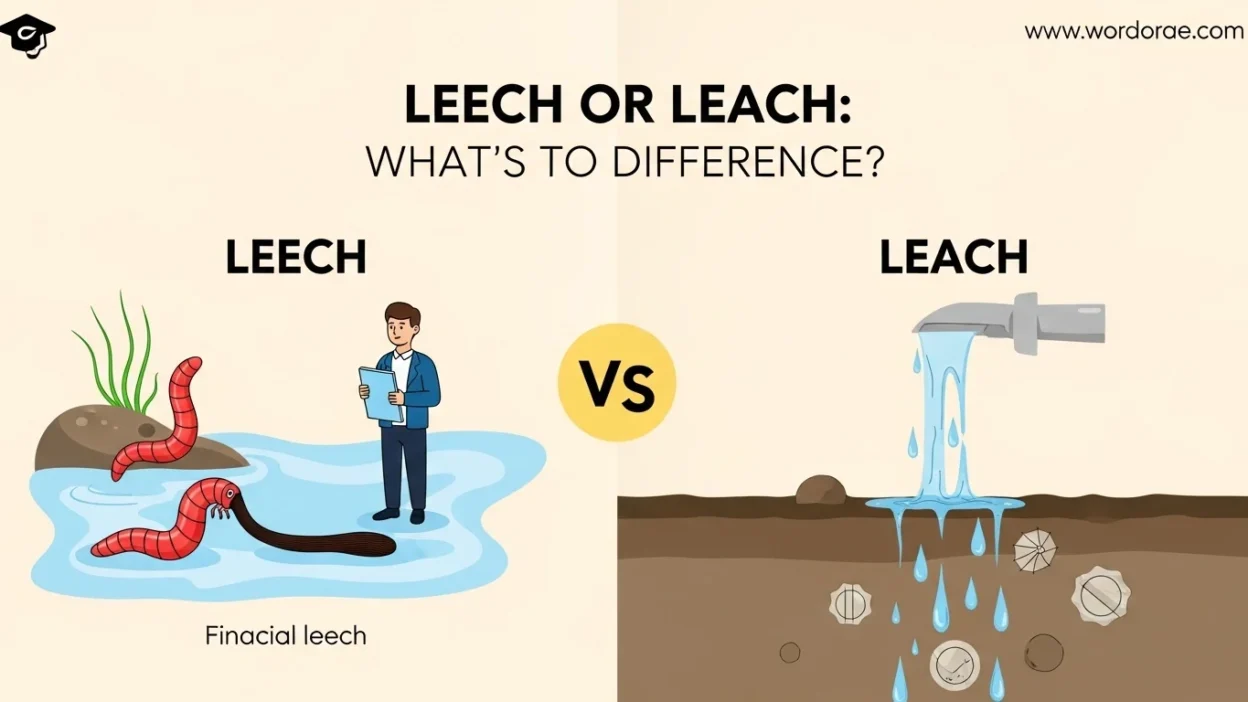
Leech is usually a noun referring to a small worm that feeds on blood. It can also describe a person who depends on others for money or support.
Example:
He is leeching off his friends without contributing anything.
Leach is a verb that means to drain, dissolve, or remove substances through liquid.
Example:
Rainwater can leach chemicals into the soil.
So the rule is simple:
- Leech → parasite or dependent person
- Leach → draining or dissolving substances
Meaning of Leech
The word leech originally referred to a small blood-sucking worm used historically in medicine. Doctors once used leeches to draw blood from patients.
Today, the word is used in two main ways:
1. Biological meaning
A leech is a type of parasite that feeds on blood.
Example:
A leech attached to the hiker’s leg near the river.
2. Figurative meaning
The word can also describe a person who relies on others without giving anything back.
Example:
He keeps borrowing money and never pays it back. He’s a leech.
People also search phrases like “leech off or leech off” or “leech or leach person” because this word often appears in everyday language.
Meaning of Leach
The word leach has a completely different meaning. It usually appears in science, agriculture, and environmental discussions.
Leach means to remove or dissolve substances from something using water or another liquid.
Example:
Heavy rain can leach nutrients from the soil.
This word often appears in phrases such as:
- leach out
- leach into
- leach lines
For example:
Chemicals may leach into groundwater over time.
In wastewater systems, leach lines help distribute treated water into the soil.
Leech vs Leach vs Similar Contexts
Because these words sound similar, they often appear in confusing searches like “leech or leach field” or “sail leech or leach.”
Here’s the basic difference:
- Leech → parasite or someone who takes advantage of others
- Leach → liquid removing substances from materials
Example comparison:
The swamp was full of leeches.
Rainwater may leach minerals from rocks.
Some technical terms also use the word leech, such as sail leech, which refers to the back edge of a sail in sailing terminology.
10 Differences Between Leech and Leach
Here are the most important differences between leech or leach.
1. Basic Meaning
Leech refers to a parasite or dependent person.
Example:
The hiker found a leech on his ankle.
Leach refers to dissolving or draining substances.
Example:
Water can leach minerals from the soil.
2. Part of Speech
Leech is mainly used as a noun.
Example:
A leech attached to the swimmer’s leg.
Leach is mainly used as a verb.
Example:
Chemicals may leach into groundwater.
3. Scientific Use
Leech belongs to biology.
Leach belongs to chemistry and environmental science.
Example:
Scientists study leeches in freshwater ecosystems.
Researchers examine how metals leach into soil.
4. Figurative Meaning
Leech can describe a person who depends on others.
Example:
He keeps asking for money. He’s a leech.
Leach rarely describes people.
Example:
Pollution may leach into rivers.
5. Common Expressions
Leech off someone is a common phrase.
Example:
He keeps leeching off his parents.
Leach out describes chemical processes.
Example:
Acids can leach out minerals from rocks.
6. Environmental Context
Leech rarely appears in environmental writing.
Leach is common in discussions about soil and water.
Example:
Fertilizers may leach into groundwater.
7. Technical Fields
Leach appears in agriculture and wastewater systems.
Example:
A septic system uses leach lines.
Leech appears in biology or figurative language.
8. Action vs Object
Leech is usually an object or creature.
Example:
The pond had many leeches.
Leach describes an action.
Example:
Rain may leach nutrients from plants.
9. Usage in Sentences
Example with leech:
That friend is leeching off everyone.
Example with leach:
Chemicals can leach into drinking water.
10. Search Confusion
People frequently search “is it leech or leach?”
Correct usage depends on the context.
Example:
Correct:
Fertilizers may leach into soil.
Correct:
He is leeching off his roommate.
Common Mistakes With Leech or Leach
Many writers accidentally mix these words.
Incorrect:
The chemicals may leech into the soil.
Correct:
The chemicals may leach into the soil.
Another example:
Incorrect:
He keeps leaching off his parents.
Correct:
He keeps leeching off his parents.
The easiest trick is to remember:
Leech = parasite
Leach = dissolve or drain
Leech or Leach in Everyday Examples
Here are simple real-world examples.
The manager complained that some employees were leeching off the team’s effort.
Environmental
Heavy rain can leach nutrients from farmland.
News
Scientists warn that chemicals may leach into groundwater.
Casual conversation
Stop leeching off your friends and start contributing.
These examples show how leech or leach appear in different contexts.
Comparison Table: Leech vs Leach
| Feature | Leech | Leach |
| Meaning | Parasite or dependent person | Dissolving substances through liquid |
| Part of speech | Mostly noun | Mostly verb |
| Context | Biology or slang | Science and environment |
| Example | He is a financial leech | Chemicals may leach into water |
Comparison Table: Common Phrases
| Phrase | Correct Word | Example |
| Leech off someone | Leech | He keeps leeching off friends |
| Leach into soil | Leach | Chemicals leach into groundwater |
| Leach out minerals | Leach | Acid can leach out metals |
FAQs
Is it leech or leach?
It depends on context. Leech refers to a parasite or dependent person, while leach means draining or dissolving substances.
What is the meaning of leech or leach?
Leech is a blood-sucking worm or someone who takes advantage of others. Leach means removing substances through liquid.
What does leach out mean?
Leach out means a substance dissolves and leaves a material due to water or liquid.
What does leech off someone mean?
It means relying on someone else for money, support, or resources without contributing anything.
What are leach lines?
Leach lines are pipes in septic systems that distribute wastewater into soil for natural filtration.
Can chemicals leach into water?
Yes. Pollutants and fertilizers can leach into groundwater through soil.
Is leech used figuratively?
Yes. It often describes a person who constantly takes from others.
Conclusion
Understanding the difference between leech or leach becomes easy once you know their meanings. Leech usually refers to a parasite or a person who takes advantage of others. Leach, on the other hand, describes a process where liquids dissolve or remove substances from materials.
I always suggest focusing on the context of the sentence. If you’re talking about biology or someone depending on others, the correct word is leech. If you’re describing chemicals dissolving or draining into soil or water, the correct word is leach.
Once you remember this simple rule, you’ll never confuse leech or leach again.

I’m Helena Marwick, a grammar-focused writer at Wordorae.com, where I help readers understand confusing English words and usage clearly.
I specialize in making grammar simple, accurate, and easy to apply in everyday writing.