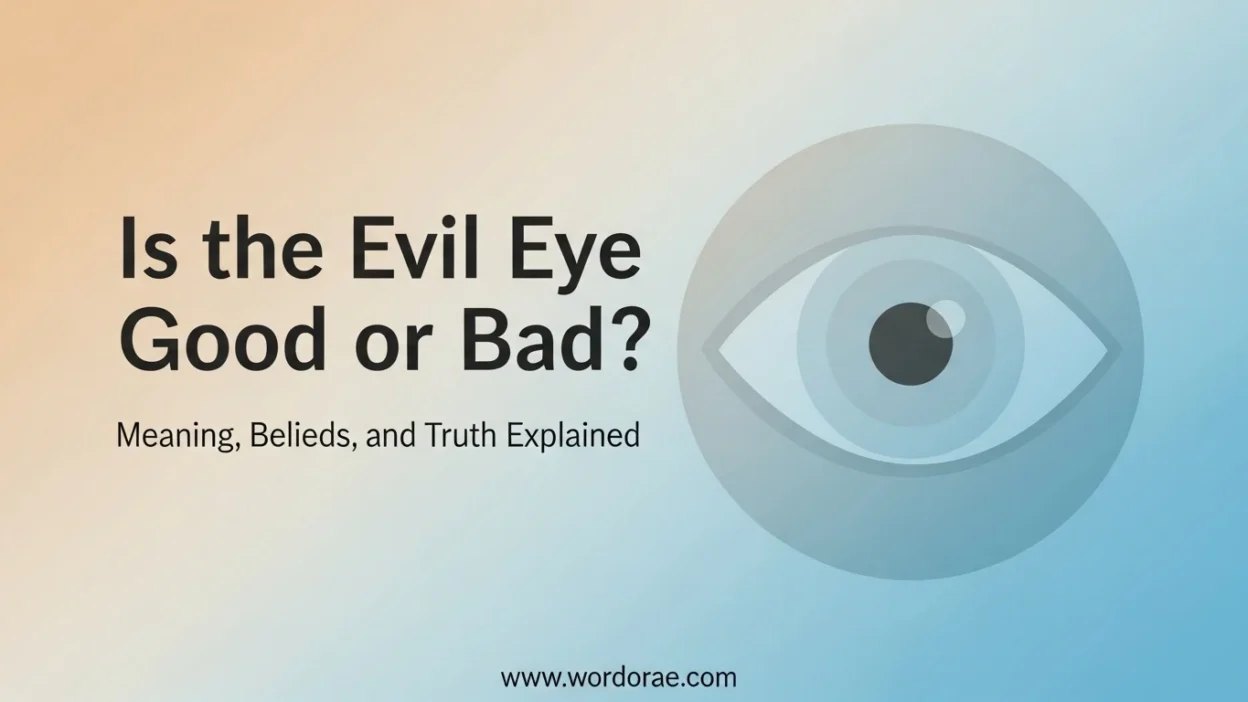
Quick answer: The evil eye itself is considered bad, but evil eye symbols and charms are widely believed to be good because they offer protection.
If you’ve ever seen an evil eye bracelet, wall hanging, or emoji and wondered whether it’s something to fear or something to trust, you’re not alone.
I’ve noticed this question comes up a lot especially when people see the symbol used for babies, homes, or even fashion.
You might be thinking, Why would anyone wear something called “evil”?
That confusion is completely normal. The idea of the evil eye sits between belief, culture, and psychology.
In many traditions, it represents jealousy or negative energy. At the same time, the symbol of the evil eye is meant to block that negativity.
In this article, I’ll explain what the evil eye really means, whether it’s good or bad, how different cultures view it, and why people still use it today.
No fear, no exaggeration, just a clear explanation so you can decide what it means for you.
Is the Evil Eye Good or Bad – Quick Answer
The evil eye is bad when it refers to harmful intent, jealousy, or negative energy directed at someone.
The evil eye symbol or charm is good because it is believed to protect against that negativity.
Simple distinction:
- ❌ Evil eye as jealousy or curse → Bad
- ✅ Evil eye charm or symbol → Good (protective)
The Origin of the Evil Eye Belief
The belief in the evil eye goes back thousands of years. Ancient Greek, Roman, Middle Eastern, and South Asian cultures all shared a similar idea: intense envy or admiration could cause harm.
People believed that:
- Praise without protection could invite misfortune
- Jealous looks carried negative energy
- Success attracted envy
To protect themselves, people created symbols, rituals, and charms. Over time, the evil eye symbol became a defensive tool, not a threat.
Cultural Views on the Evil Eye
Different cultures interpret the evil eye slightly differently, but the core belief is similar.
| Culture / Region | Local Name | Belief |
| Middle East | Evil Eye | Harm caused by jealousy |
| South Asia | Nazar | Negative spiritual effect |
| Mediterranean | Mati | Curse from envy |
| Western modern use | Evil Eye Symbol | Protective charm or fashion |
Across cultures, the belief remains consistent: envy is harmful, protection is necessary.
When Is the Evil Eye Considered Bad?
The evil eye is considered bad when it’s believed to cause:
- Sudden bad luck
- Illness or fatigue
- Relationship issues
- Financial problems
It’s often associated with:
- Excessive praise
- Public success
- Envy from others
Whether spiritual or psychological, many people link the evil eye to negative attention.
When Is the Evil Eye Considered Good?
The evil eye becomes good when it’s used as a symbol of protection.
People use it to:
- Block jealousy
- Absorb negative energy
- Feel safe and reassured
This is why you’ll often see it:
- On baby bracelets
- In homes or cars
- As jewelry or décor
Even for non-believers, it often works as a comfort symbol.
Evil Eye: Concept vs Symbol
This table clears up the biggest confusion.
| Aspect | Meaning | Good or Bad |
| Evil eye (belief) | Jealous or harmful intent | Bad |
| Evil eye symbol | Protection against negativity | Good |
| Wearing a charm | Defensive practice | Good |
| Giving the evil eye | Negative act | Bad |
Common Mistakes About the Evil Eye
❌ The evil eye charm brings bad luck
✅ It’s meant to prevent bad luck
❌ Only superstitious people believe in it
✅ Many view it culturally or symbolically
❌ Wearing it attracts negativity
✅ Most traditions say it blocks negativity
Evil Eye in Everyday Life
- Homes: Hung near doors or walls
- Jewelry: Bracelets, necklaces, rings
- Babies: Protective accessories
- Online: Emojis and aesthetic use
Its meaning has evolved, but its purpose stays the same: protection and peace of mind.
Is the Evil Eye Scientifically Proven?
There’s no scientific proof that the evil eye causes harm or protection. Its influence comes from:
- Cultural belief
- Psychological reassurance
- Emotional comfort
Feeling protected can reduce stress and that alone can have a real impact.
FAQs
Is the evil eye always bad?
No. The belief is negative, but the symbol is protective.
Can wearing an evil eye charm cause harm?
No evidence supports that.
Is the evil eye religious?
No. It appears across many cultures and religions.
Why do people use it for babies?
To symbolically protect them from envy.
Do you have to believe in it?
Not necessarily. Many wear it culturally or fashionably.
Conclusion
So, is the evil eye good or bad? In simple terms, the evil eye as a belief is bad, because it represents jealousy and negative intent.
But the evil eye symbol is good, because it’s meant to protect against that harm.
Over time, the symbol has moved beyond superstition and become a cultural and emotional safeguard.
Whether you see it as spiritual protection, tradition, or simply a meaningful design, its value depends on what it gives you comfort, confidence, or peace.
What matters most isn’t fear, but understanding.

I’m Jane Austen, a writer at Wordorae.com, where I focus on explaining grammar mistakes and confusing English words in a clear, simple way.
I help readers improve their writing by making tricky language rules easy to understand and use.