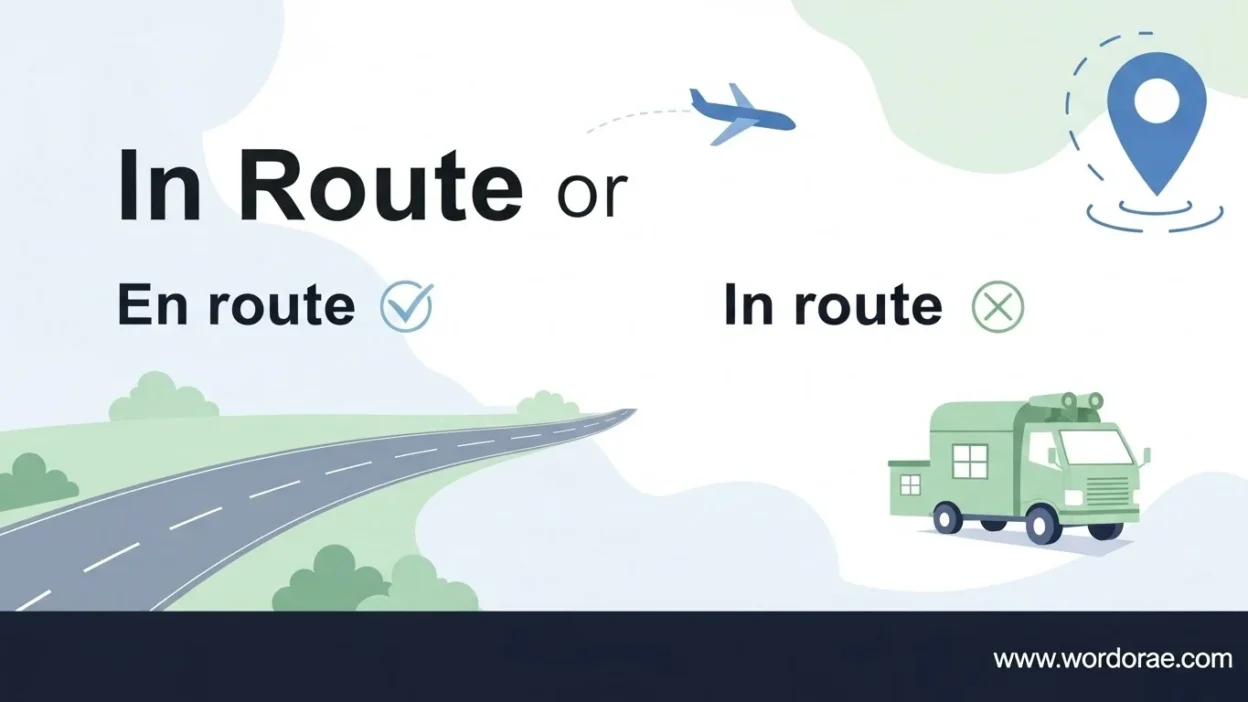
Quick answer: En route is correct. In route is a common spelling mistake.
If you’ve ever typed “I’m in route” while rushing to a meeting or sending a quick text, you’re not alone.
Many people search “in route or en route,” “is it in route or en route?”, or “in route or en route meaning” because the phrase sounds natural when spoken.
The confusion usually appears in emails, travel updates, work chats, and delivery messages.
The issue isn’t pronunciation, it’s spelling and origin. One version follows proper English usage, while the other does not.
Using the wrong form can make professional writing look careless, especially in business or formal communication.
This guide explains the difference in simple terms. You’ll learn which spelling is correct, why the confusion exists,
How British and American English treat it, and how to use the phrase correctly in everyday writing. By the end, you’ll never hesitate again.
In Route or En Route : Quick Answer
En route means on the way or in transit.
In route is not considered correct in standard English.
Correct examples:
- I’m en route to the office.
- The train is en route to London.
- The delivery is en route and will arrive soon.
Incorrect example:
- ❌ I’m in route to the meeting.
If you’re wondering “is it in route or en route?” The answer is always en route.
The Origin of In Route or En Route
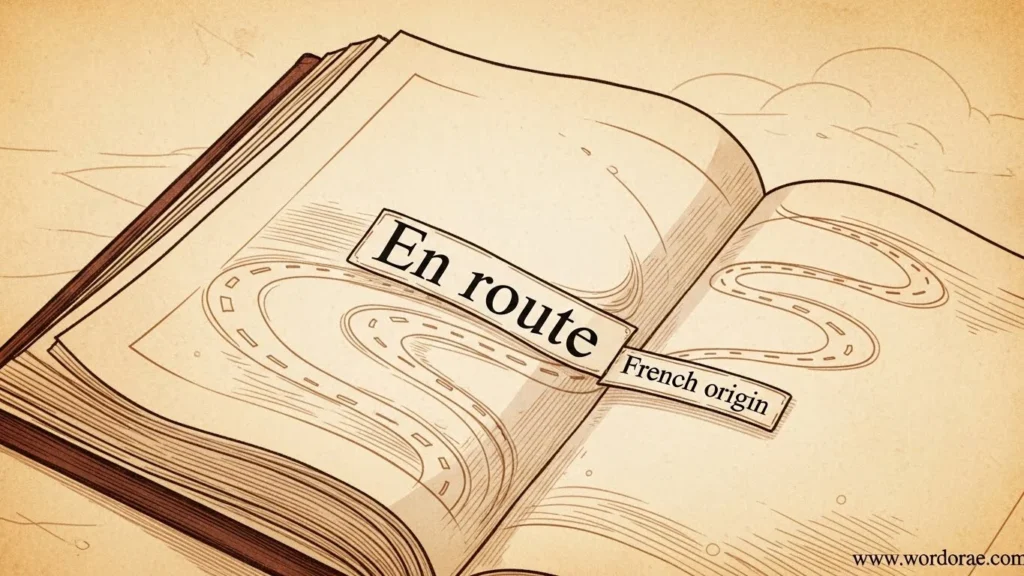
The phrase en route comes directly from French. In French:
- en means on
- route means road or way
Together, en route literally means “on the way.”
English borrowed the phrase without changing its spelling. Over time, many English speakers assumed it followed normal English prepositions and began writing in route instead. This created confusion, especially in casual writing.
However, grammar guides and dictionaries were never accepted in route as standard usage. The original French form remains the correct one.
British English vs American English Spelling
Some spelling debates depend on region, but this one does not.
| Spelling | British English | American English |
| en route | ✅ Correct | ✅ Correct |
| in route | ❌ Incorrect | ❌ Incorrect |
Whether you’re writing for the UK, US, or international readers, en route is always correct.
Which Spelling Should You Use?
No matter who your audience is, the rule stays simple.
- US audience: Use en route
- UK audience: Use en route
- Global or professional writing: Use en route
- Emails, texts, meetings: Use en route
If your goal is clarity and professionalism, en route is the only safe choice.
Common Mistakes with In Route or En Route
These errors appear often in writing:
- ❌ Writing in route instead of en route
- ❌ Writing inroute as one word
- ❌ Assuming in route is American English
- ❌ Avoiding the phrase entirely out of uncertainty
Correct approach:
Always write en route as two words.
In Route or En Route in Everyday Examples

Emails
- “I’m en route and will join the call shortly.”
Meetings
- “The manager is en route to the conference room.”
Travel
- “Your flight is currently en route to Paris.”
Delivery Updates
- “Your order is en route and arriving today.”
Social Media
- “Coffee first, then en route to work ☕”
Formal Writing
- “Emergency services were en route within minutes.”
In Route or En Route : Trends & Usage Data
Search interest for “in route or en route” continues to grow, especially in:
- Workplace communication
- Travel and logistics
- Customer service updates
- Messaging apps
Globally, en route dominates published content, news articles, and professional writing.
In route appears mostly in informal texts and autocorrect errors.
Google favors the correct spelling in indexed results, making en route better for SEO and clarity.
Comparison Table: In Route vs En Route
| Feature | In Route | En Route |
| Correct spelling | ❌ No | ✅ Yes |
| Dictionary accepted | ❌ No | ✅ Yes |
| Professional usage | ❌ No | ✅ Yes |
| Meaning | Intended: on the way | On the way |
| SEO-friendly | ❌ No | ✅ Yes |
FAQs
1. Is it in route or en route?
En route is correct.
2. What does en route mean?
It means on the way or in transit.
3. Is in route ever acceptable?
No. It’s considered incorrect.
4. Is en route British or American English?
Both. It’s used worldwide.
5. Can I use en route in business emails?
Yes. It’s professional and clear.
6. Should en route be italicized?
No. It’s fully accepted in English.
7. Is en route formal or casual?
It works in both formal and casual writing.
Conclusion
The confusion between in route or en route comes from how the phrase sounds, not how it’s written.
While in route may feel natural when typing quickly, it isn’t correct English. The proper form is en route, and it has been standard for decades.
If you mean on the way, there’s only one right choice. Using en route improves clarity, professionalism, and accuracy in emails, meetings, travel updates, and formal writing.
Once you remember its French origin, the spelling becomes easy to recall.
Stick with en route, and you’ll never second-guess this phrase again.

I’m Sophia Larkins, a grammar-focused writer at Wordorae.com, where I break down common grammar mistakes and confusing words.
I specialize in clear, practical explanations that help readers write with confidence and accuracy.