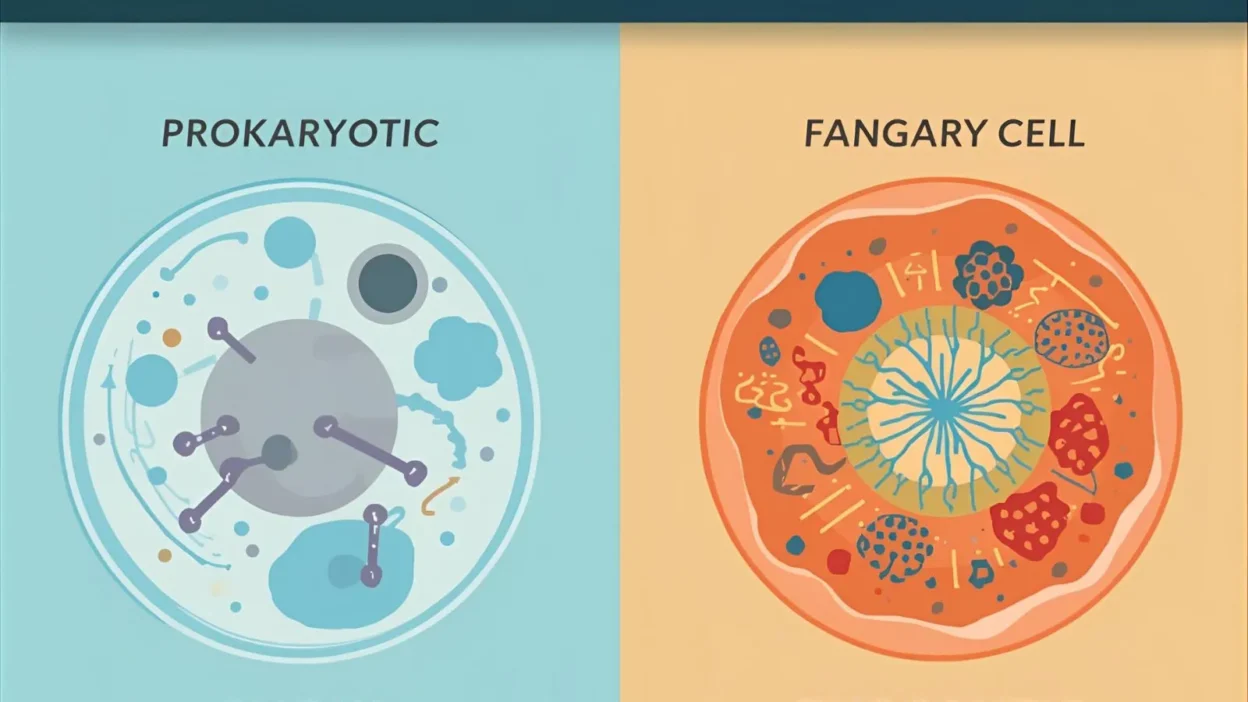
Biology students, science enthusiasts, and even curious readers often search “is fungi prokaryotic or eukaryotic” to clear a very common confusion.
At first glance, fungi: like mushrooms, mold, and yeast: look simple, almost like bacteria.
This makes people wonder: do fungi belong to the prokaryotes, which lack a true nucleus, or the eukaryotes, which have one?
This confusion arises because fungi share some traits with both. Like bacteria, they can be microscopic, reproduce quickly, and live in diverse environments. But like plants and animals, they also have complex cells with organelles.
Is yeast prokaryotic or eukaryotic?
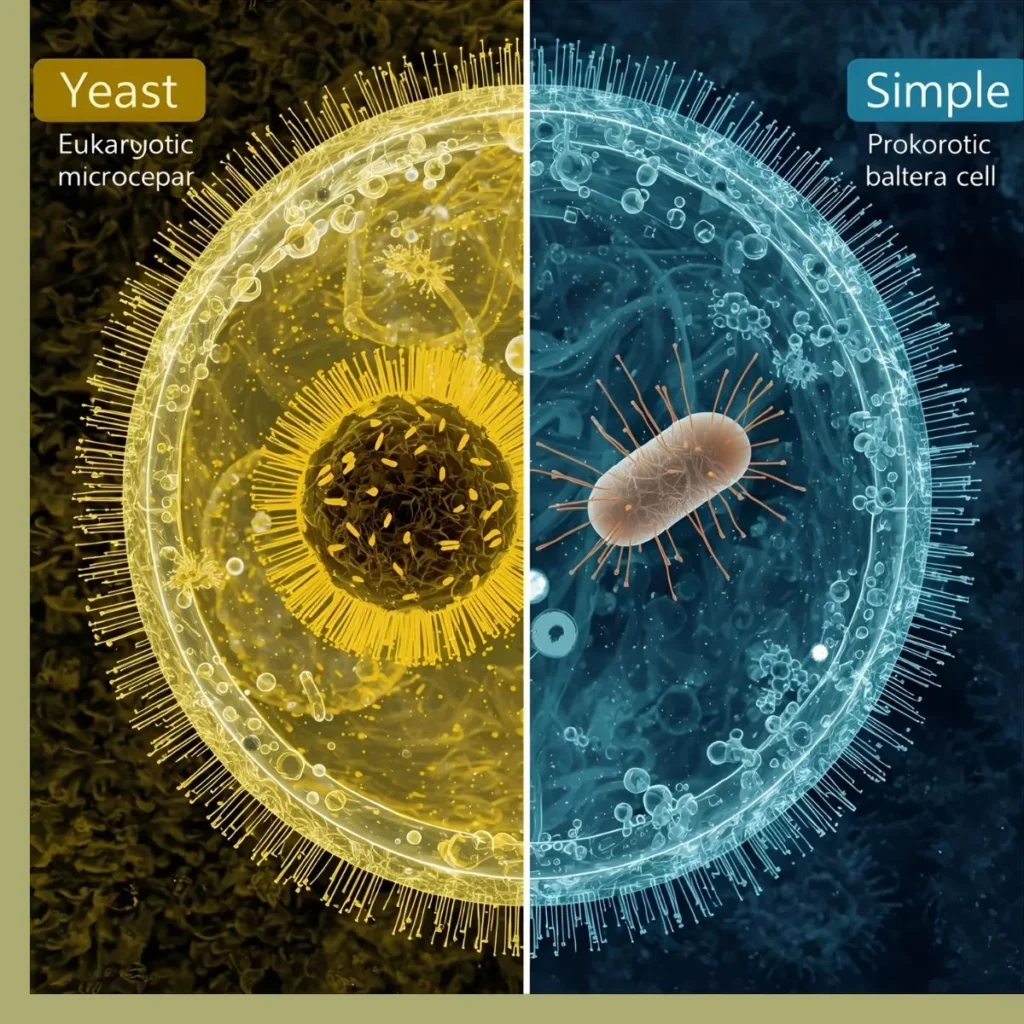
- Yeast belongs to the fungi kingdom.
- Like all fungi, yeast cells have a true nucleus surrounded by a membrane.
- They also have membrane-bound organelles (such as mitochondria).
- Unlike prokaryotes (like bacteria), yeast cells are more complex.
👉 In short: Yeast is a single-celled eukaryotic organism (unicellular fungi).
Is Fungi Prokaryotic or Eukaryotic? Quick Answer
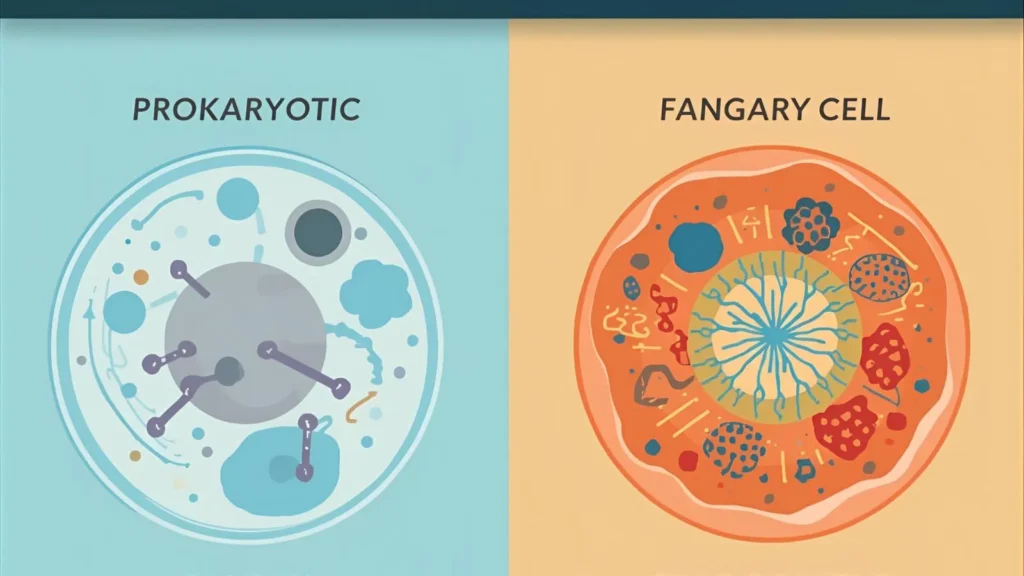
Fungi are eukaryotic organisms.
Fungi are eukaryotic organisms. They have a true nucleus surrounded by a nuclear membrane, along with other membrane-bound organelles like mitochondria and endoplasmic reticulum.
This means their cells have:
- A true nucleus enclosed in a membrane.
- Membrane-bound organelles such as mitochondria.
- A complex structure, unlike prokaryotes (bacteria and archaea).
Examples:
Mushrooms (Agaricus bisporus)
Baker’s yeast (Saccharomyces cerevisiae)
Bread mold (Rhizopus stolonifer)
Penicillium (antibiotic-producing fungus)
So the quick answer: fungi are eukaryotes, not prokaryotes.
Read More About
Where or Were? Simple Guide to Choose Right Word
The Origin of “Fungi”
The word fungi comes from the Latin word fungus, meaning “mushroom” or “mold.”
The question “is fungi prokaryotic or eukaryotic” emerged from advances in microscopy and cell biology during the 20th century.
Historical Timeline:
- 1665: Robert Hooke first observed fungal structures under a microscope
- 1838: Matthias Schleiden and Theodor Schwann developed cell theory
- 1937: Édouard Chatton coined the terms “prokaryotic” and “eukaryotic”
- 1969: Robert Whittaker placed fungi in their own kingdom separate from plants
Why the confusion existed: Early scientists classified fungi as plants because they:
- Don’t move around like animals
- Grow in soil and on organic matter
- Have cell walls (though different from plant cell walls)
Scientific breakthrough: Electron microscopy in the 1950s revealed that fungal cells have:
- A true nucleus with nuclear membrane
- Complex internal membrane systems
- Mitochondria and other organelles
This evidence clearly showed fungi are eukaryotic, not prokaryotic.
The confusion often arises not only from biology but also from spelling and usage.
British English vs American English Spelling

In scientific writing, both British and American English use the same spelling for fungi. The difference comes in pronunciation and in related terms.
- British English often pronounces fungi as fun-jai or fun-gee.
- American English often pronounces fungi as fun-guy.
- Scientific naming stays consistent:
- Prokaryotic/Eukaryotic (same spelling globally)
- Fungi/Fungus (Latin-based, universal)
- Mitochondria (same worldwide)
- Nucleus (same worldwide)
Comparison Table: Spelling & Pronunciation
| Term | British English | American English |
|---|---|---|
| Fungi | Fungi (fun-jai/fun-gee) | Fungi (fun-guy) |
| Fungus | Fungus | Fungus |
| Mycology | Mycology (my-co-lo-gy) | Mycology (my-cah-lo-gy) |
Which Spelling Should You Use?
- If you’re in the US → use American pronunciation (fun-guy).
- If you’re in the UK or Commonwealth → use British pronunciation (fun-jai).
- For global audiences (academic papers, online articles, or SEO) → both are acceptable; just be consistent.
- For international scientific journals: Most accept both spellings but require consistency throughout the paper. Check the journal’s style guide.
- For student assignments: Ask your teacher which style they prefer. Many biology teachers accept both as long as you’re consistent.
- General rule: The core scientific terms (prokaryotic, eukaryotic, fungi) remain the same regardless of your location.
Read More About
Unphased or Unfazed? Guide to Choose the Right Word
Common Mistakes with “Is Fungi Prokaryotic or Eukaryotic?”

- Calling fungi bacteria – Incorrect. Fungi are not bacteria.
- Saying fungi are plants – Wrong. They lack chlorophyll and cannot photosynthesize.
- Mixing singular and plural – Fungus = singular, fungi = plural.
- Confusing prokaryotic traits – Fungi are eukaryotic, with nuclei and organelles.
- Thinking fungi are prokaryotic because they’re simple
- Wrong: “Fungi are simple organisms, so they must be prokaryotic”
- Right: “Fungi are eukaryotic despite appearing simple externally”
Read More About
Axe vs Ax: British vs American Spelling Made Clear For 2026
Is Fungi Prokaryotic or Eukaryotic? in Everyday Examples
You’ll often see this question in:
- Emails: Students asking professors about assignments.
- News articles: Health pieces about fungal infections.
- Social media: Posts explaining science facts.
- Formal writing: Research papers, textbooks, and biology exams.
- Context of searches: Most searches come from students studying introductory biology, microbiology, or cell biology courses. The question peaks during exam seasons and when textbook chapters cover cellular organization.
Is Fungi Prokaryotic or Eukaryotic? Google Trends & Usage Data
Google Trends shows high search interest in:
- India, Pakistan, USA → mostly students searching during exams.
- Europe → medical students searching about fungal diseases.
The keyword is popular in academic, educational, and medical contexts.
Comparison Table: Keyword Variations
| Search Keyword | Popularity | Context Used |
|---|---|---|
| Is fungi prokaryotic or eukaryotic | High | Exams, biology basics |
| Are fungi eukaryotic | Medium | Research, medical notes |
| Fungi prokaryotic or eukaryotic answer | High | Homework help |
| Why fungi are eukaryotic | Medium | Academic articles |
FAQs
1. Are fungi eukaryotic or prokaryotic?
Fungi are eukaryotic.
2. Do fungi have a nucleus?
Yes, all fungi have a nucleus enclosed in a membrane.
3. Are bacteria and fungi the same?
No, bacteria are prokaryotic, fungi are eukaryotic.
4. Is yeast prokaryotic or eukaryotic?
Yeast is a single-celled eukaryotic fungus.
5. Do fungi photosynthesize like plants?
No, they absorb nutrients from other sources.
6. Why are fungi not plants?
Because they lack chlorophyll and cell structures for photosynthesis.
7. Are fungi considered living organisms?
Yes, fungi are living and form their own kingdom.
Conclusion
So, are fungi prokaryotic or eukaryotic? The clear answer is: fungi are eukaryotic organisms. They have nuclei, organelles, and complex structures, making them different from prokaryotes like bacteria.
The confusion usually comes from their microscopic size or their similarities to plants and bacteria. But with this guide, you now know the biology, spelling rules, and correct usage.
Whether you’re writing an exam answer, a research paper, or an online article, remember: fungi are eukaryotes. Use the correct form (fungus for singular, fungi for plural), choose spelling styles based on your audience, and stay consistent..

I’m Jane Austen, a writer at Wordorae.com, where I focus on explaining grammar mistakes and confusing English words in a clear, simple way.
I help readers improve their writing by making tricky language rules easy to understand and use.