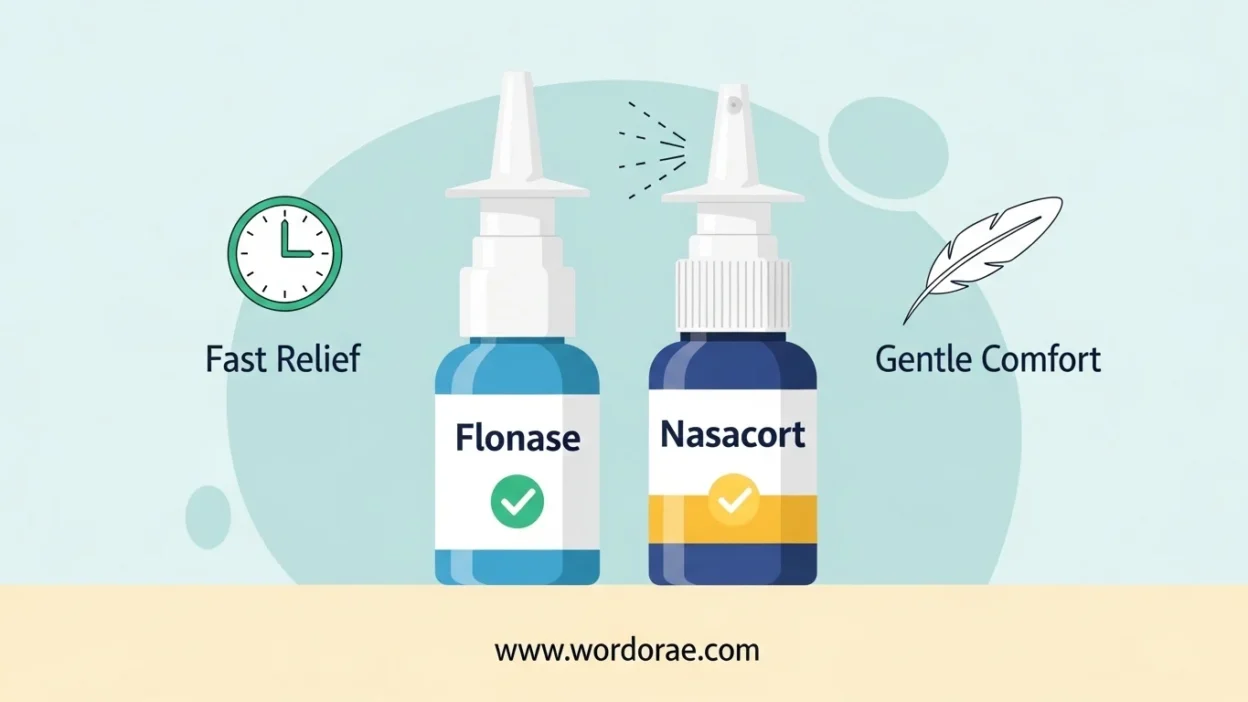
Quick answer: Flonase and Nasacort both treat nasal allergies well, but Flonase works a bit faster, while Nasacort is often gentler for long-term daily use.
I see this question all the time, and I get why you’re here. If you’re standing in a pharmacy aisle or scrolling online,
Flonase or Nasacort can feel like a real dilemma. The boxes look similar. Both promise allergy relief.
Both are sprays. So why are there two, and which one should you trust?
I’ve been there too itchy nose, sneezing, watery eyes, and a headache coming on.
You just want relief that works without side effects or confusion. That’s exactly why people search “Flonase or Nasacort”.
They want a clear answer. They want to know which one fits their body, their routine, and their comfort level.
This guide breaks it down in plain English. No medical jargon. No hype.
Just clear differences, real examples, and simple advice so you can choose with confidence.
Flonase or Nasacort – Quick Answer
Flonase contains fluticasone propionate. Nasacort contains triamcinolone acetonide.
Both reduce swelling inside the nose and calm allergy symptoms.
Example:
- If fast relief matters, Flonase often starts working sooner.
- If you plan daily use and want a milder feel, Nasacort may suit you better.
What Is Flonase?
Flonase is a steroid nasal spray used to treat allergies. It targets inflammation inside the nose.
It helps with:
- Sneezing
- Stuffy nose
- Runny nose
- Itchy nose
- Watery eyes
Flonase is popular because it often works within 12 hours. Some people feel relief the same day.
It comes in:
- Flonase Allergy Relief
- Flonase Sensimist (gentler mist)
What Is Nasacort?
Nasacort is also a steroid nasal spray. It treats the same allergy symptoms.
It helps with:
- Nasal congestion
- Sneezing
- Runny nose
- Itching
Nasacort is known for being alcohol-free. That matters to people with sensitive noses.
Relief usually starts within 24 hours, with full effect in a few days.
The Origin of Flonase and Nasacort
Both sprays were first sold as prescription medicines. Doctors used them for years before they became available over the counter.
Flonase came first. It built trust through clinical use.
Nasacort followed later and focused on comfort and gentleness.
The different formulas explain why people still debate Flonase or Nasacort today.
How They Work Inside Your Nose
Both sprays:
- Reduce swelling
- Calm immune response
- Block allergy triggers
They do not work like instant decongestant sprays.
They work slowly and steadily.
This makes them safer for long-term use.
Flonase vs Nasacort: Key Differences
| Feature | Flonase | Nasacort |
|---|---|---|
| Active ingredient | Fluticasone | Triamcinolone |
| Onset speed | Faster (12 hours) | Slower (24 hours) |
| Alcohol-free | No | Yes |
| Scent | Light scent | Unscented |
| Best for | Quick relief | Sensitive noses |
Which One Should You Use?
The choice depends on your needs.
Use Flonase if:
- You want faster relief
- Your symptoms are strong
- You don’t mind a light scent
Use Nasacort if:
- You have a sensitive nose
- You prefer alcohol-free sprays
- You plan daily long-term use
Both are safe when used as directed.
Common Mistakes People Make
Many users don’t get results because of simple mistakes.
Mistake 1: Expecting instant relief
These sprays need time.
Mistake 2: Using it only once
Daily use matters.
Mistake 3: Spraying straight up
Aim slightly outward, not toward the center.
Mistake 4: Stopping too soon
Full relief can take several days.
Flonase or Nasacort in Everyday Life
At home:
People use these sprays before allergy season starts.
At work:
Once-a-day dosing makes them easy.
For travel:
Both help with pollen, dust, and pet allergies.
For families:
Nasacort is often chosen for teens due to gentler feel.
Side-by-Side Usage Comparison Table
| Situation | Flonase | Nasacort |
|---|---|---|
| Seasonal allergies | Excellent | Excellent |
| Year-round allergies | Good | Very good |
| Sensitive nasal lining | Fair | Excellent |
| Fast symptom control | Best | Moderate |
| Long-term comfort | Good | Best |
Safety and Side Effects
Most people tolerate both sprays well.
Possible side effects:
- Mild nose irritation
- Dryness
- Nosebleeds (rare)
Stop use and consult a professional if irritation persists.
Frequently Asked Questions
Is Flonase stronger than Nasacort?
Flonase may feel stronger due to faster action, but both are equally effective.
Can I use Flonase or Nasacort every day?
Yes, when used as directed.
Which one is better for kids?
Nasacort is often preferred due to gentle formula.
Can I switch between them?
Yes, but give each one several days to work.
Do these sprays cause rebound congestion?
No. They are not decongestant sprays.
Is Nasacort safer long term?
Both are safe, but Nasacort feels milder to many users.
Do I need a prescription?
No. Both are over-the-counter.
Conclusion
I know choosing between Flonase or Nasacort can feel confusing at first.
You just want to breathe easily again and move on with your day.
The good news is that both options are reliable and widely trusted.
If you want quicker relief and don’t mind a scented spray, Flonase can be a solid choice.
If comfort, sensitivity, and gentle daily use matter more to you, Nasacort often feels easier on the nose.
I always suggest paying attention to how your body reacts. That matters more than brand names.
Once you understand the differences, the choice becomes simple. You’re not picking a winner. You’re picking what fits you best.

I’m David Miller, a grammar expert and author at Wordorae.com, specializing in clear, simple explanations of confusing English grammar and word usage.
I help readers write with confidence by turning complex grammar rules into easy, practical guidance.