Quick answer:
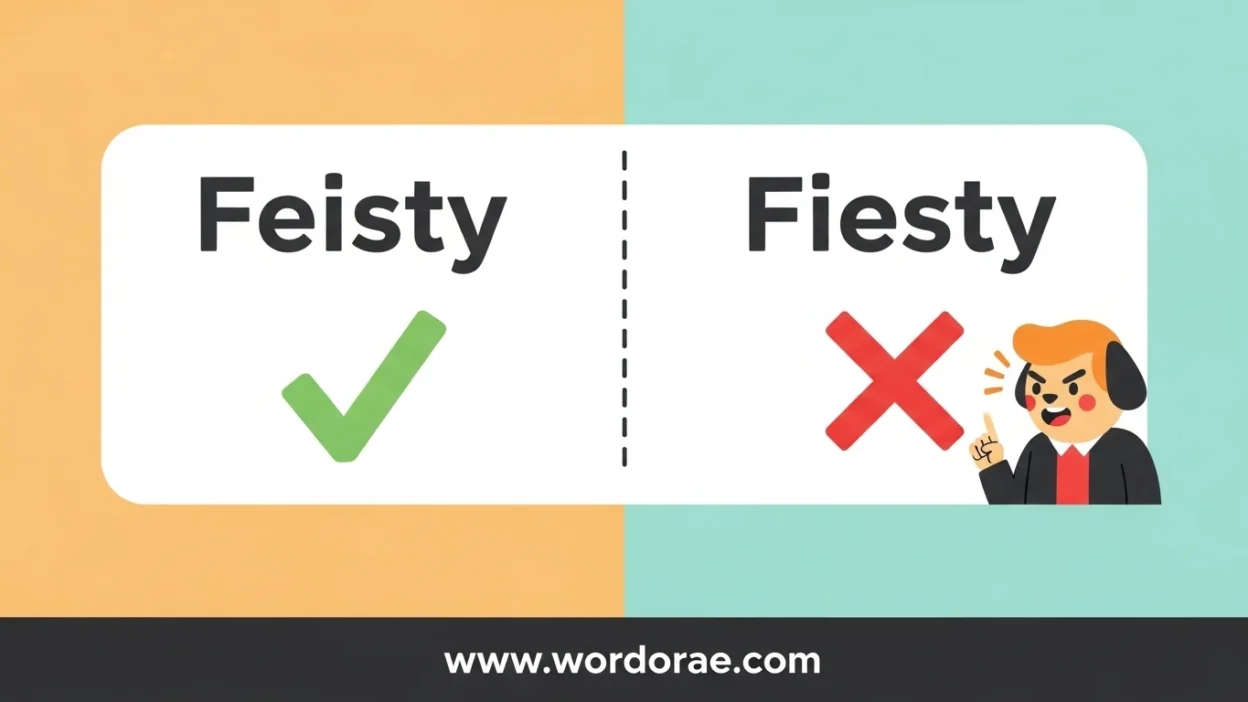
Feisty is the correct spelling; fiesty is a common misspelling and should be avoided in formal and professional writing.
I see this mistake everywhere, and I get why it happens.
You hear the word said out loud—fye-stee—and your brain wants to spell it the same way it sounds.
That’s why so many people type fiesty or feisty into Google. You want to be sure before you post, send, or publish something.
If you’re writing an email, a caption, or even a story, the wrong spelling can make you look careless.
I don’t want that for you. I want you to feel confident every time you use this word.
Once you understand where the confusion comes from and how English handles this spelling, the choice becomes easy.
In this guide, I’ll walk you through the meaning, origin, common mistakes, and real-life examples. By the end, you won’t second-guess this word again.
Fiesty or Feisty – Quick Answer
Feisty is the correct spelling.
Fiesty is incorrect.
Examples:
- ✔ She has a feisty personality.
- ✘ She has a fiesty personality.
The Meaning of Feisty
The word feisty describes someone or something that is lively, bold, or spirited. It often refers to people who speak their mind and don’t back down easily.
You might use it to describe:
- A confident child
- A bold speaker
- A small dog with a big attitude
It is usually positive, though sometimes it can suggest stubbornness.
The Origin of Feisty
Feisty comes from the word fice, which was an old term for a small dog. Over time, people used feisty to describe dogs that barked a lot or showed attitude despite their size.
Later, the word began describing people. That history explains why the word feels energetic and strong. There was never a correct version spelled fiesty. That spelling only exists because English pronunciation can be misleading.
British English vs American English Spelling
This is one case where British and American English fully agree.
Both use:
- Feisty ✔
- Fiesty ✘
There is no regional difference here.
Spelling Comparison Table
| Variant | Correct? | Usage |
|---|---|---|
| Feisty | Yes | All English |
| Fiesty | No | Misspelling |
Which Spelling Should You Use?
Always use feisty.
Use it in:
- Emails
- Essays
- Blogs
- Social media
- Professional writing
There is no situation where fiesty is acceptable. Even in casual writing, it still looks like a mistake.
Common Mistakes with Fiesty or Feisty
This error happens for simple reasons.
Mistake 1: Spelling by sound
The “ei” sound tricks people.
Mistake 2: Mixing it with the word fiesta
The word fiesta makes fiesty feel logical, but it’s wrong.
Mistake 3: Auto-correct trust
Some tools don’t catch this error.
Fiesty or Feisty Examples
Email:
- ✔ She is a feisty team leader.
Social media:
- ✔ Loving my feisty little puppy today.
News:
- ✔ The candidate gave a feisty debate performance.
Formal writing:
- ✔ A feisty response followed the criticism.
Feisty Meaning and Usage
| Context | Correct Usage |
|---|---|
| Personality | She is feisty |
| Animals | A feisty kitten |
| Writing | Feisty tone |
| Misspelling | Fiesty (avoid) |
FAQs
Is fiesty ever correct?
No. It is always a spelling error.
Why do people spell feisty wrong?
Because English pronunciation can be misleading.
Does feisty mean angry?
Not always. It often means bold or lively.
Can feisty be positive?
Yes. It often describes confidence.
Is feisty informal?
No. It works in both casual and formal writing.
Is feisty used worldwide?
Yes. All English-speaking regions use it.
Conclusion
I know spelling mistakes like this can feel small, but they matter more than people think.
When you choose feisty instead of fiesty, you show attention to detail. That builds trust with your reader.
Now that you know the origin, meaning, and correct spelling, you won’t hesitate again.
The next time you describe a bold personality or spirited moment, you’ll use the right word without thinking twice. That confidence shows in your writing.

I’m Helena Marwick, a grammar-focused writer at Wordorae.com, where I help readers understand confusing English words and usage clearly.
I specialize in making grammar simple, accurate, and easy to apply in everyday writing.