Quick answer:
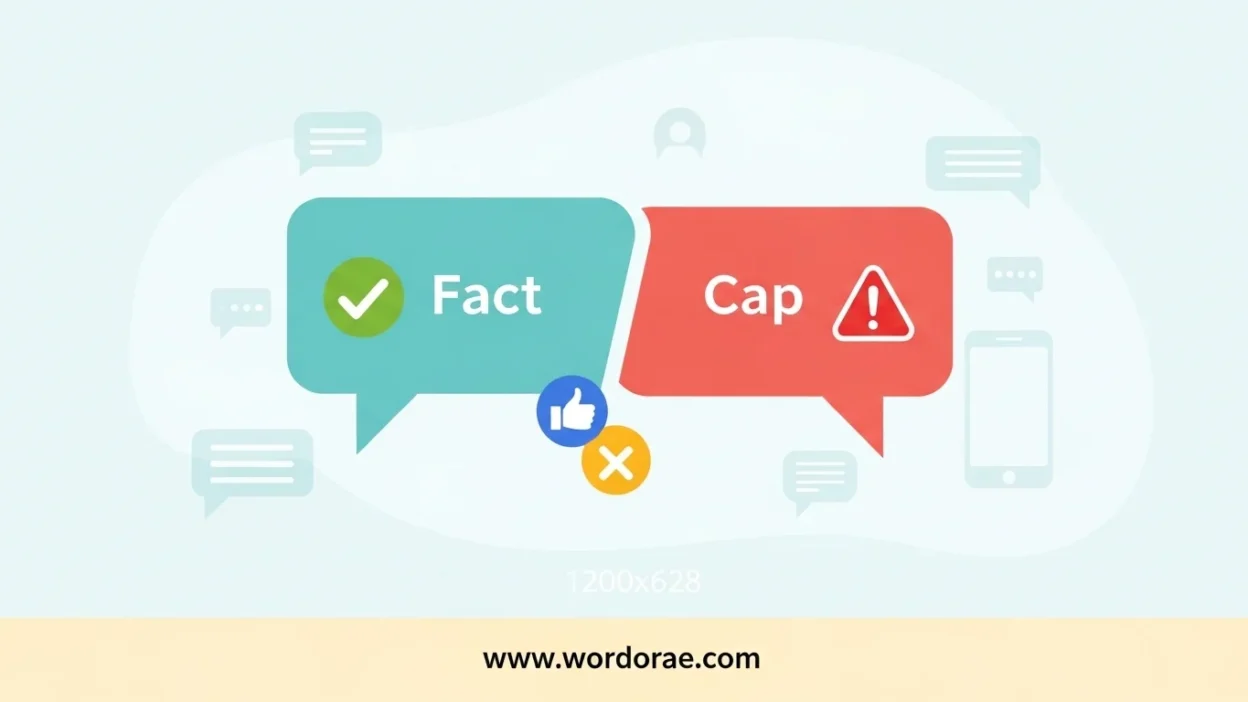
Fact means something is true and proven, while cap is modern slang that means a lie or something not true.
I know exactly why you searched fact or cap. You’ve probably seen it all over social media. Someone makes a bold claim,
and another person replies, “Fact or cap?” You pause for a second. You know what they’re asking,
but you’re not fully sure how these words work together or how to use them correctly.
I’ve had that moment too. Language changes fast, especially online.
Words that once had one clear meaning now carry new ones. Fact has always been about truth.
Cap, on the other hand, has taken on a whole new life in internet culture.
This article clears up that confusion in simple terms. I’ll show you what each word means,
where cap came from, how people use fact or cap today, and how you can use it naturally without sounding forced or confused.
Fact or Cap – Quick Answer
Fact means true and proven.
Cap means false or a lie, especially in slang.
Example:
- “He scored 50 points last night.”
- “Fact or cap?”
The speaker is asking: Is this true, or are you lying?
What Does “Fact or Cap” Mean?
The meaning of fact or cap is simple. It asks whether something is true or a lie.
In modern slang, especially on TikTok and Instagram, the phrase is used to challenge a statement. When someone says “Fact or cap?”, they are asking:
Is this real?
Is this true?
Or are you exaggerating?
So if you’re searching for fact or cap meaning or what does fact or cap mean, the answer is:
It means “Is this true or false?” in casual online language.
On TikTok, the phrase is often used in short videos where someone makes a bold claim and invites viewers to respond in the comments.
The Meaning of Fact
A fact is something that is real and can be proven.
Facts are based on:
- Evidence
- Records
- Observation
Example:
- The sun rises in the east.
- Water freezes at 0°C.
- The meeting starts at 9 a.m.
Facts do not depend on opinions or feelings. They stay true no matter who says them.
The Meaning of Cap
Cap is slang. It means a lie or something not true.
When someone says “That’s cap”, they mean:
- That’s fake
- That’s not true
- You’re exaggerating
Example:
- “I ran 10 miles without stopping.”
- “Cap.”
It’s casual language. You’ll see it online more than in formal writing.
Where Did “Cap” Come From?
The slang use of cap comes from African American Vernacular English (AAVE). Over time, it spread through music, memes, and social media.
Originally:
- Cap meant bragging or exaggerating
Now:
- Cap = lie
- No cap = no lie / I’m serious
This evolution is why fact or cap feels natural to younger audiences.
Fact or Cap vs True or False
These phrases serve similar purposes, but they live in different worlds.
- True or false → formal, academic
- Fact or cap → informal, social, online
You would not use fact or cap in exams, legal writing, or professional reports.
Fact vs Cap Comparison
| Term | Meaning | Tone | Best Used In |
|---|---|---|---|
| Fact | Proven truth | Neutral | News, school, work |
| Cap | Lie or false claim | Casual | Social media, chat |
When Should You Use “Fact or Cap”?
Use fact or cap when:
- Talking casually
- Commenting online
- Reacting to bold claims
Avoid it when:
- Writing essays
- Sending professional emails
- Speaking formally
Knowing the audience matters more than knowing the definition.
Common Mistakes with Fact or Cap
People often misuse this phrase.
Mistake 1 : Using it in formal writing
❌ Fact or cap: The data shows growth.
✅ True or false: The data shows growth.
Mistake 2: Thinking cap means hat
Context matters. Slang cap has nothing to do with clothing.
Mistake 3: Using cap as a noun incorrectly
❌ This is a cap.
✅ This is cap.
Mistake 4: Overusing slang
Too much slang can make writing feel unclear.
Fact or Cap in Everyday Examples
On social media:
- “This phone lasts three days on one charge.”
- “Fact or cap?”
In texting:
- “I finished the project early.”
- “No cap?”
In conversation:
- “That story sounds like cap.”
- “It’s fact, I swear.”
In content creation:
Creators often use fact or cap to boost engagement.
The “Fact or Cap” Game
Fact or cap is also used as a simple online game.
Here’s how it works:
One person makes a statement.
Others reply with “Fact” if they believe it’s true or “Cap” if they think it’s false.
Example:
“I can solve a Rubik’s cube in 30 seconds.”
Fact or cap?
This format has become popular in videos, livestreams, and even classroom icebreakers.
Sample Fact or Cap Questions
- “Sharks can smell blood from miles away.”
- “Humans only use 10% of their brains.”
- “Lightning never strikes the same place twice.”
These types of fact or cap questions with answers are often used for fun quizzes and engagement content.
Usage Comparison
| Situation | Better Choice |
|---|---|
| School test | True or false |
| Instagram comment | Fact or cap |
| News article | Fact |
| Group chat | Cap / No cap |
Why Understanding This Phrase Matters
Language reflects culture. Knowing when to use fact or cap helps you:
- Sound natural
- Avoid awkward mistakes
- Connect with modern audiences
It’s not about replacing proper English. It’s about understanding context.
“Welcome to Fact or Cap” Meme Trend
You may have seen videos starting with “Welcome to Fact or Cap.”
This is part of a meme format where creators present surprising or controversial statements and ask viewers to decide.
The phrase became especially popular on TikTok, where short, interactive content performs well. That’s why many people search for fact or cap meaning TikTok or what does ‘fact or cap’ mean TikTok slang.
It’s less about grammar and more about participation.
FAQs
- Is “fact or cap” real English?
It’s real slang, but not formal English. - What does “no cap” mean?
It means “I’m telling the truth.” - Can I use fact or cap in school?
No. Use true or false instead. - Is cap always negative?
Mostly yes. It implies lying or exaggeration. - Does cap replace the word lie?
In casual speech, yes. Not in formal writing. - Where did cap become popular?
Through music, memes, and social media. - Can older people use this phrase?
Anyone can, but it’s more common among younger users. - Is fact the opposite of cap?
Yes, in slang usage. - Is cap used worldwide?
Mostly in English-speaking online communities. - Will cap stay in the language?
Some slang fades, some stays. Cap is still very popular.
Conclusion
I’ll be honest with you. Fact or cap isn’t about grammar rules. It’s about culture and context.
Fact stands for truth that doesn’t change. Cap calls out exaggeration or lies in a casual way.
When you understand both, you can move between formal and informal English without confusion.
I want you to feel confident choosing the right words for the right moment. Use fact when accuracy matters.
Use cap when the situation is relaxed and social. Once you get that balance, this phrase stops being confusing and starts feeling natural.

I’m Sophia Larkins, a grammar-focused writer at Wordorae.com, where I break down common grammar mistakes and confusing words.
I specialize in clear, practical explanations that help readers write with confidence and accuracy.