I remember pausing mid-sentence while typing an important message and wondering, “Is it email or e-mail?” I had seen both versions online social media posts, blogs, and even news articles so it almost looked right.
Before sending, I checked a grammar guide, and that quick check saved me from a common mistake.
If you’re searching for email or e-mail, you’re not alone. People look this up because English allows both spellings, but trends and style guides favor one.
Choosing the right form matters for clarity, professionalism, and SEO content. In this guide,
I’ll explain the correct usage, historical context, style recommendations, and practical examples so you can write with confidence.
Email or E-mail: Quick Answer
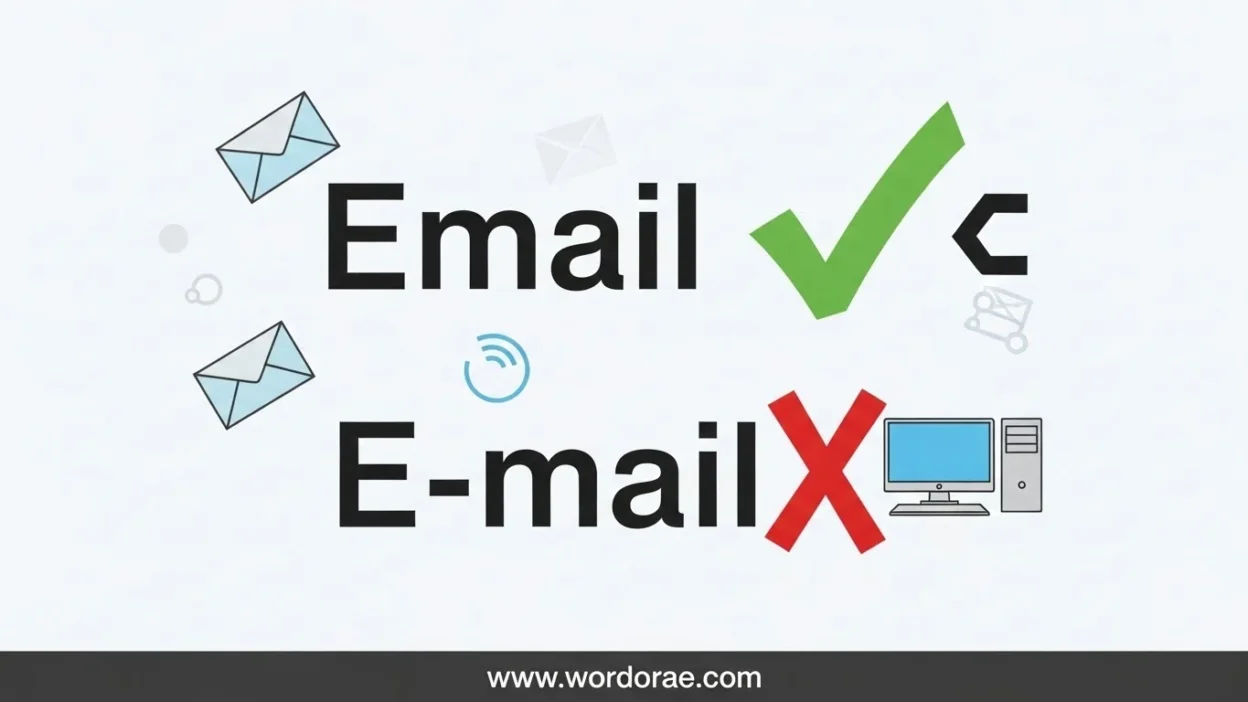
- Correct: email
- Acceptable but old-fashioned: e-mail
Examples:
✅ Please send me an email with the details.
❌ Please send me an e-mail with the details. (still correct but less common)
Why?
- Email is the modern spelling, recommended by most style guides.
- E-mail was originally hyphenated when electronic mail was new.
The Origin of Email or E-mail
The word “email” comes from electronic mail.
- E-mail first appeared in the 1970s when computers were less common.
- Over time, style guides like AP Style and modern dictionaries have dropped the hyphen, making email the preferred form in professional writing.
British English vs American English Spelling
Both British and American English now favor email, though e-mail is still recognized.
| Version | Correct Form |
| American English | |
| British English | |
| Australian English | |
| Canadian English |
Which Spelling Should You Use?
Use email for all modern writing, including:
- Business emails
- Academic work
- Blog posts and SEO content
Use e-mail only if quoting older documents or maintaining historical consistency.
Common Mistakes with Email or E-mail
❌ I’ll send you an e-mail later. (modern usage prefers email)
✅ I’ll send you an email later.
❌ Make sure your e-mail is professional.
✅ Make sure your email is professional.
Mistakes usually happen when writers follow outdated habits or style inconsistencies.
Email or E-mail in Everyday Examples
Business: I received your email and will reply shortly.
News Article: The company announced a new policy via email.
Social Media: Check your email for updates!
Formal Writing: All correspondence should be sent via email.
Email or E-mail : Trends & Usage Data
Search trends indicate:
- “Email” dominates usage worldwide.
- “E-mail” still appears occasionally but is declining.
- Google often auto-corrects e-mail to email.
Most people search “is it email or e-mail” to ensure proper usage in professional or academic contexts.
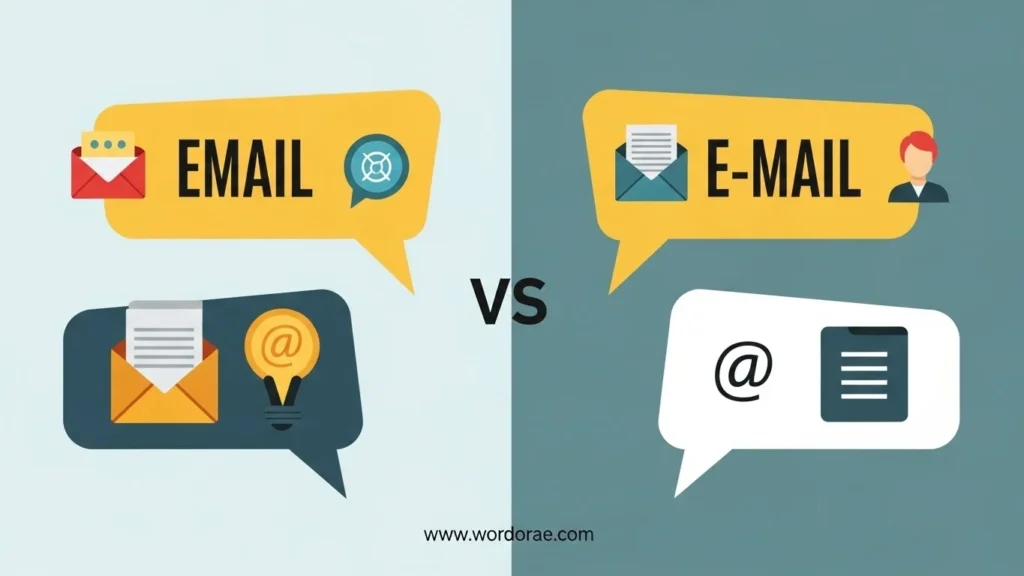
Comparison Table: Email vs E-mail
| Term | Correct? | Usage Notes |
| ✅ Yes | Modern, widely accepted | |
| ✅ Acceptable | Old-fashioned, less common |
FAQs
1. Is “e-mail” still correct?
Yes, but most style guides recommend email.
2. Does AP Style allow “e-mail”?
No, AP Style now prefers email.
3. Should I use email in academic writing?
Yes, always use email for consistency.
4. Can I write “e-mail” in casual contexts?
It’s acceptable but less modern.
5. Will using “e-mail” hurt SEO?
Minorly. Search engines prefer common usage, which is email.
Conclusion
The confusion between email or e-mail is common, but the choice is simple today.
Email is modern, widely recognized, and recommended for professional writing, academic work, and SEO content. E-mail is understood but increasingly old-fashioned.
Following this guidance ensures clarity, professionalism, and aligns with style guides and search engine expectations.
When in doubt, stick with email it’s the spelling most readers and algorithms prefer.

I’m David Miller, a grammar expert and author at Wordorae.com, specializing in clear, simple explanations of confusing English grammar and word usage.
I help readers write with confidence by turning complex grammar rules into easy, practical guidance.