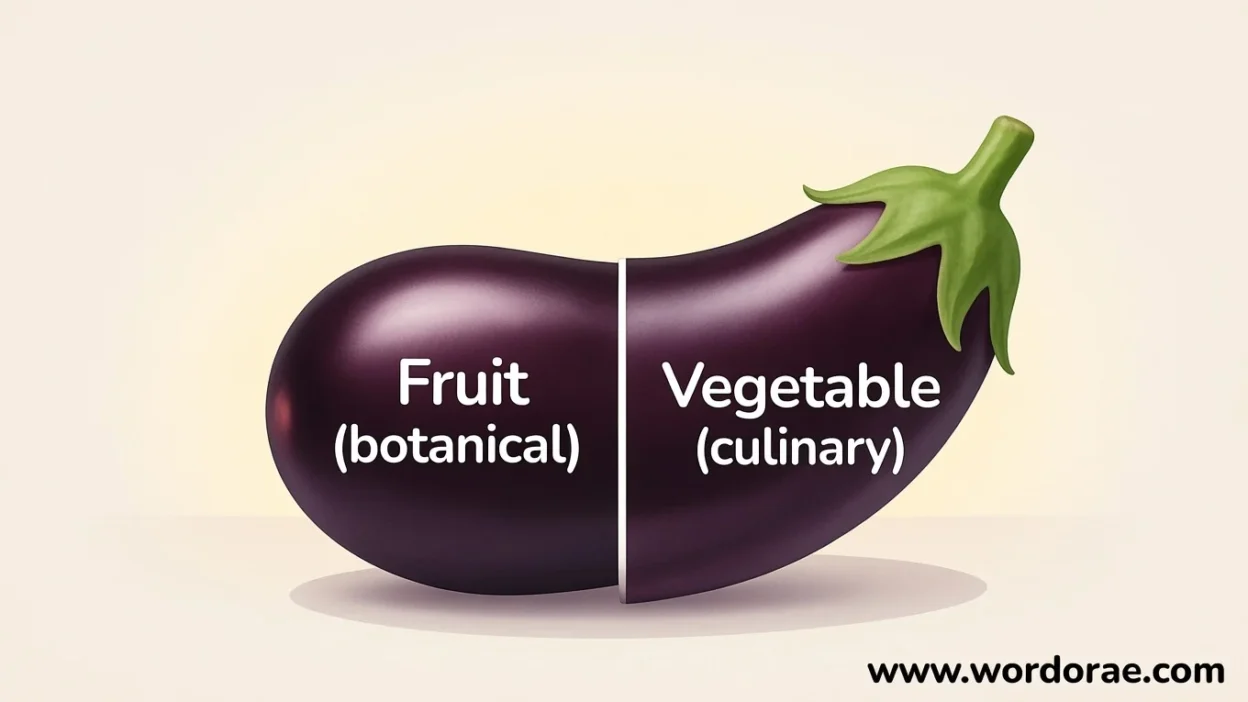
Quick answer: an eggplant is botanically a fruit, but culinarily used as a vegetable.
If you’ve ever stood in the grocery store or kitchen and wondered, “Wait… is eggplant a fruit or a vegetable?” You’re not alone.
I’ve asked this myself. Many people do. That’s why searches like eggplant fruit or vegetable, is eggplant a fruit or vegetable, and eggplant vegetable or fruit keep growing.
The confusion happens because science and cooking don’t always agree. Botanists use one set of rules.Chefs use another. And everyday language mixes both.
In this article, I’ll break it down in plain English. I’ll explain what eggplant really is, why people argue about it,
How British and American English treat it, and what you should call it in daily life, school, or writing.
No complicated terms. Just clear answers you can remember.
Eggplant Fruit or Vegetable – Quick Answer
Eggplant is a fruit by science.
Eggplant is a vegetable made by cooking.
Examples:
- In biology class, eggplant is a fruit.
- In recipes and kitchens, eggplant is treated as a vegetable.
Both answers are correct. It depends on context.
The Origin of Eggplant Fruit or Vegetable Confusion
The confusion comes from how we define fruits and vegetables.
In botany, a fruit grows from a flower and contains seeds. Eggplant checks both boxes. It grows from a flower and has seeds inside.
Vegetables, in scientific terms, are other plant parts. Roots, stems, or leaves.
Eggplant doesn’t fit that category. That’s why scientists call it a fruit.
But language didn’t grow in labs. It grew in kitchens.
Eggplant tastes savory. It’s cooked in meals, not desserts. Over time, people grouped it with vegetables. That habit stuck.
British English vs American English Usage
There is no spelling or meaning difference between British and American English here. Both treat eggplant the same way.
| English Type | Common Term | Usage |
| British English | Aubergine | Used as a vegetable |
| American English | Eggplant | Used as a vegetable |
| Botanical Term | Fruit | Scientific classification |
So whether you say aubergine or eggplant, the fruit vs vegetable rule stays the same.
Which Term Should You Use?
Here’s my simple rule for you.
- Use “fruit” when:
- Studying biology
- Writing scientific or educational content
- Explaining plant classification
- Use “vegetable” when:
- Cooking or sharing recipes
- Shopping for food
- Talking casually
If you’re writing for general readers, calling eggplant a vegetable feels more natural.
Common Mistakes About Eggplant
These mistakes pop up often:
❌ Saying eggplant is “not a fruit at all”
✔️ It is a fruit botanically
❌ Correcting people in cooking contexts
✔️ Vegetable is fine in the kitchen
❌ Thinking this is a US vs UK issue
✔️ It’s not
The key is understanding context, not forcing one label everywhere.
Eggplant Fruit or Vegetable in Everyday Examples
At Home
I’m making grilled eggplant tonight.
In School
Eggplant is a fruit because it develops from a flower.
In Recipes
Slice the eggplant like other vegetables.
In News or Blogs
Though used as a vegetable, eggplant is technically a fruit.
Each sentence is correct. Context decides the word.
Eggplant Fruit or Vegetable – Trends & Usage
Search data shows steady interest in:
- eggplant fruit or vegetable
- is eggplant a fruit or vegetable
- eggplant fruit or vegetable question
Why?
- School assignments
- Trivia questions
- Health and nutrition topics
Most people want a quick answer, not a debate. That’s why the best explanation includes both views.
Comparison Table: Fruit vs Vegetable
| Feature | Fruit | Vegetable |
| Grows from flower | ✅ | ❌ |
| Contains seeds | ✅ | ❌ |
| Used in desserts | ❌ | ❌ |
| Used in savory dishes | ❌ | ✅ |
| Eggplant fits | ✅ | ✅ (culinary) |
Eggplant lives in both worlds.
FAQs
Is eggplant a fruit or vegetable?
Both. Fruit by science, vegetable by cooking.
Why is eggplant called a fruit?
It grows from a flower and has seeds.
Is eggplant a vegetable in recipes?
Yes. That’s how it’s used.
Does British English change the meaning?
No. Only the name changes.
Is tomato the same case?
Yes. Tomato and eggplant follow the same rule.
Should I call eggplant a fruit in daily life?
You can, but vegetables sound more natural.
Conclusion
So let’s clear it up once and for all. Eggplant is a fruit by biology and a vegetable by cooking. Both answers are right. You just need to know when to use which one.
If you’re in the kitchen, call it a vegetable. If you’re in class or writing something educational, call it a fruit. Simple.
Understanding this helps you speak with confidence, not confusion. Language isn’t about being strict. It’s about being clear.
Now you know exactly what eggplant is and why people argue about it.

I’m Sophia Larkins, a grammar-focused writer at Wordorae.com, where I break down common grammar mistakes and confusing words.
I specialize in clear, practical explanations that help readers write with confidence and accuracy.