Quick answer:
DUI means Driving Under the Influence, while DWI means Driving While Intoxicated; the exact meaning depends on your state’s laws.
I get it you’re probably reading a legal article, watching the news, or filling out a quiz and wondering: Is it DUI or DWI? I’ve been there too, trying to understand which one is correct and what the difference really is.
It can feel confusing because different states use these terms differently, and many people assume they’re the same.
People search “DUI or DWI” because they want a clear, simple explanation.
Maybe you’re a student, a driver, or just someone curious about legal terminology.
In this article, I’ll explain both terms, show the differences, and give you clear examples, so you can use the right term confidently.
By the end, you’ll know exactly what DUI and DWI mean and why it matters.
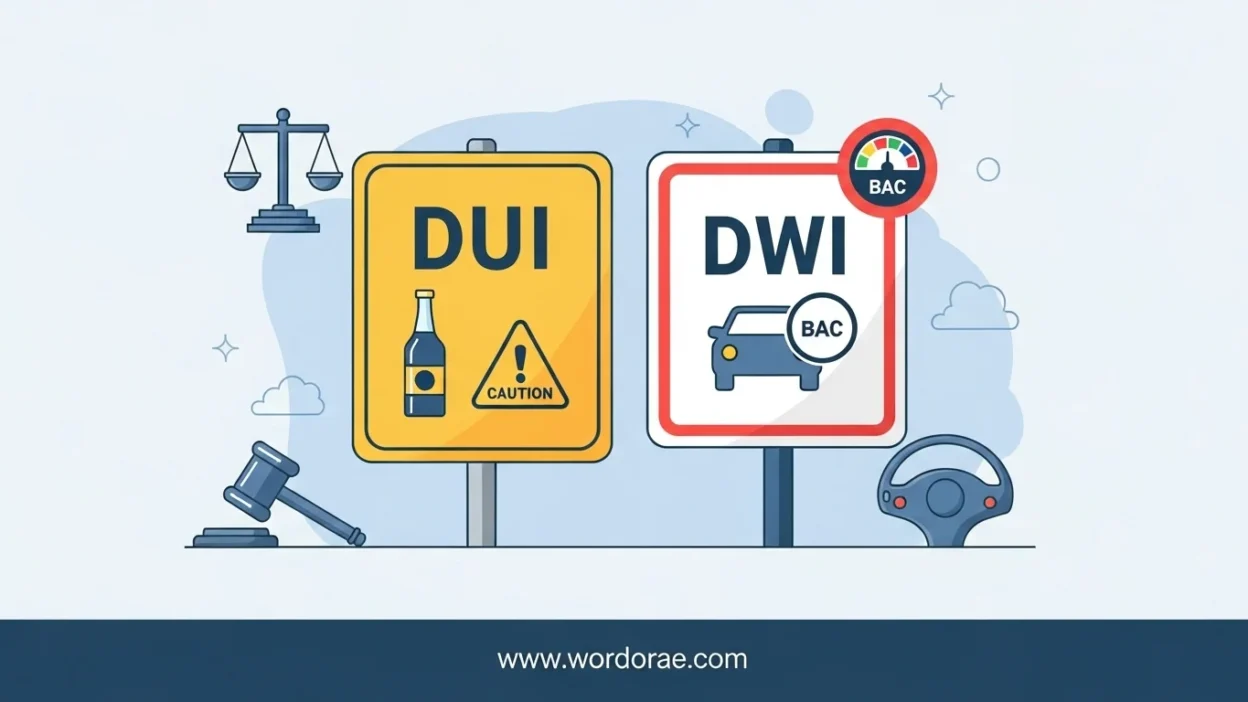
DUI or DWI – Quick Answer
- DUI (Driving Under the Influence): A driver operates a vehicle while impaired by alcohol or drugs.
- DWI (Driving While Intoxicated): Often used similarly to DUI, but in some states, it refers specifically to alcohol impairment.
Example:
- He was arrested for a DUI after failing a sobriety test. ✅
- She got a DWI in Texas for drinking and driving. ✅
The Meaning of DUI
DUI is short for Driving Under the Influence.
- Covers impairment from alcohol, prescription drugs, and illegal substances.
- Used in most U.S. states.
- Includes first-time offenses and repeat offenses.
Examples:
- He received a DUI after a roadside breath test.
- DUI penalties can include fines, license suspension, or jail time.
The Meaning of DWI
DWI stands for Driving While Intoxicated or Driving While Impaired, depending on the state.
- Some states use DWI to indicate higher blood alcohol concentration (BAC) than DUI.
- In certain states, DWI is more serious than DUI.
- DWI typically refers to alcohol impairment specifically.
Examples:
- In Texas, a DWI applies to drivers with BAC of 0.08% or higher.
- First-time DWI offenses may still involve fines and mandatory programs.
DUI vs DWI: Key Differences
| Term | Full Form | Main Focus | Typical Use | Severity |
| DUI | Driving Under the Influence | Alcohol or drugs | Most U.S. states | Usually less severe first offense |
| DWI | Driving While Intoxicated | Alcohol (sometimes high BAC) | Certain states like Texas, New York | Can be higher penalties or felony in repeat cases |
Why the Confusion Exists
- Different states define DUI and DWI differently.
- Some states use both terms with subtle distinctions:
- DUI = impairment from any substance
- DWI = intoxication from alcohol only
- News reports and TV shows often use them interchangeably.
Which One Should You Use?
- Check your state laws first.
- Use DUI when talking generally about impaired driving.
- Use DWI if referring to a state where that term is standard.
Tip: If in doubt, default to DUI, since it’s more universally recognized.
Common Mistakes with DUI / DWI
Mistake 1: Using DUI and DWI interchangeably without checking the state ❌
✅ Correct: Always refer to local legal definitions.
Mistake 2: Assuming DUI only involves alcohol ❌
✅ Correct: DUI includes drugs, alcohol, and prescription medications.
Mistake 3: Thinking DWI is always more serious ❌
✅ Correct: Severity depends on state law and BAC level.
DUI or DWI Examples
Legal documents:
- John was charged with a DUI for operating a vehicle while impaired.
News articles:
- A DWI arrest was made in downtown Austin last night.
Conversations:
- “Did you hear he got a DUI?”
- “No, it was actually a DWI in his state.”
Social media posts:
- Awareness campaigns often say: Don’t drink and drive—avoid DUI/DWI.
Usage and Grammar
| Term | Part of Speech | Usage Tip |
| DUI | Noun | General term for impaired driving, alcohol or drugs |
| DWI | Noun | Specific to alcohol in certain states, check local laws |
Frequently Asked Questions
- What’s the difference between DUI and DWI?
- DUI covers alcohol and drugs, while DWI often refers specifically to alcohol impairment.
- Are DUI and DWI used in all states?
- No, some states use only one term, and definitions vary.
- Is a DWI more serious than a DUI?
- Sometimes, depending on the state and BAC, but not always.
- Can you get a DUI without drinking alcohol?
- Yes, using drugs or prescription medication that impairs driving counts.
- What is BAC?
- Blood Alcohol Concentration, the percentage of alcohol in a driver’s bloodstream.
- Are penalties different for DUI and DWI?
- Yes, penalties depend on the state, offense number, and BAC level.
- Can I drive after a DUI or DWI?
- Often you may face license suspension; always follow court orders.
- Do DUI and DWI affect insurance?
- Yes, they usually increase premiums and may stay on records for years.
- Is there a difference in court procedures?
- Minor differences may exist depending on the state.
- Can you have both DUI and DWI on your record?
- Yes, if charged separately in different states or under different circumstances.
Conclusion
I know it can feel confusing when you hear DUI or DWI, especially since laws vary by state.
The key takeaway is simple: DUI = impaired driving, alcohol or drugs; DWI = intoxication, usually alcohol, depending on your state.
I always suggest checking your state’s specific definition if you’re writing, reading, or discussing legal matters.
Knowing the difference not only helps you communicate clearly but also keeps you informed about legal consequences.
Once you understand this, you’ll never mix them up again.

I’m David Miller, a grammar expert and author at Wordorae.com, specializing in clear, simple explanations of confusing English grammar and word usage.
I help readers write with confidence by turning complex grammar rules into easy, practical guidance.