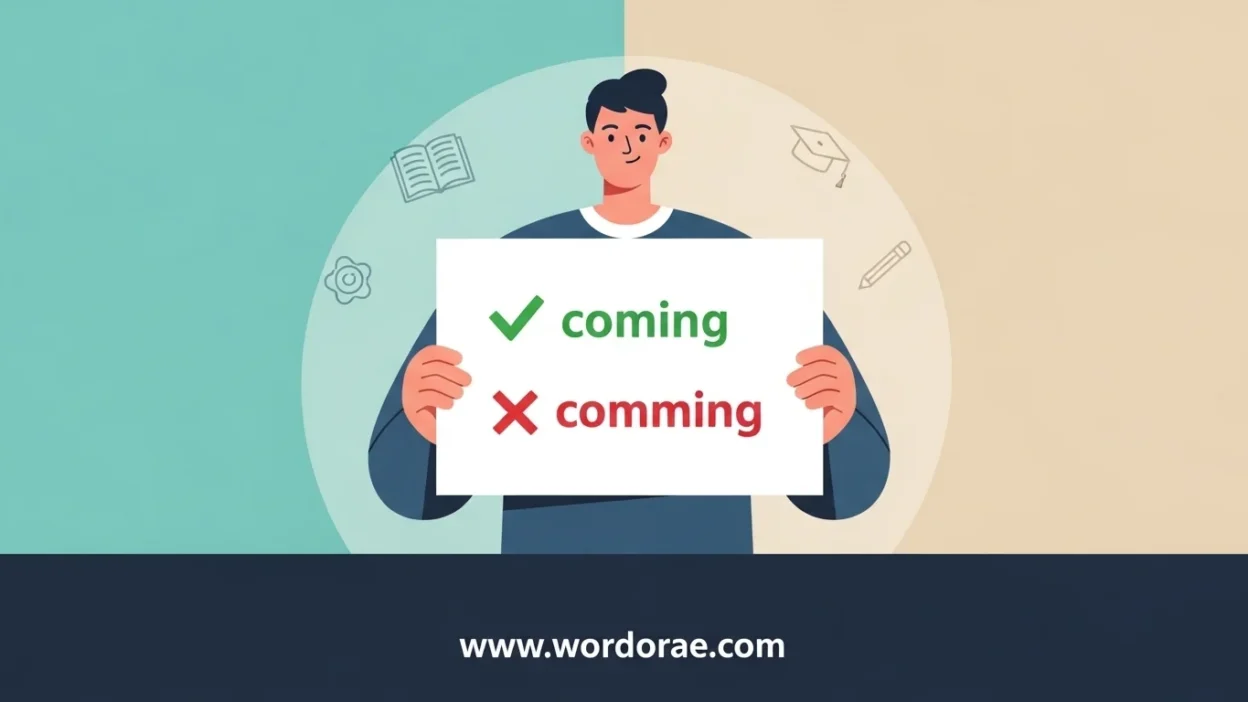
Quick answer: Coming is the correct spelling; comming is always wrong.
Hey, I know this might sound confusing because you may have seen “comming” online or in messages.
You might be asking yourself, “Is this really correct?” Don’t worry you’re not alone.
I’ve noticed many people make this mistake, and it’s super easy to fix once you understand the rule.
The problem is small but important. One extra letter can make your writing look careless or unprofessional, even if your message is clear.
In this article, I’ll walk you through everything about coming and comming. I’ll explain why the mistake happens, show you the correct spelling, and give real-life examples.
By the end, you’ll feel confident using coming in every sentence and never make the “comming” mistake again.
Coming or Comming – Quick Answer
The correct spelling is coming.
Comming is always incorrect.
Examples:
- I’m coming to your house tonight.
- The meeting is coming up soon.
Think of it this way: whenever you are talking about something happening soon or moving closer, coming is the only correct choice.
The Meaning of Coming
Coming is the present participle of come. It is used to show that something is on the way, happening soon, or approaching.
You can use it to describe:
- Movement
- Time
- Events
- Changes
Examples:
- Winter is coming.
- She is coming to the party later.
- A new update is coming next week.
It’s a very common word in everyday English, and you probably use it more than you think.
Why People Confuse Coming and Comming
This is a mistake many people make because of English spelling rules. Some verbs double the last consonant before adding -ing.
For example:
- run → running
- sit → sitting
Because of this, people sometimes assume:
- come → comming
But that’s wrong. Come doesn’t follow the same rule, so you don’t double the “m.”
Why “Coming” Has Only One M
Here’s the rule in simple terms:
The base word is come. When you add -ing, you drop the silent e.
- come → coming
You do not double the “m.”
Quick tip: You only double the last consonant if:
- The word ends in a single vowel + consonant
- The stress is on the last syllable
“Come” does not meet these conditions, so it stays coming.
British English vs American English
The good news? There is no difference. The spelling is the same everywhere.
| Language | Correct | Incorrect |
|---|---|---|
| British English | coming | comming |
| American English | coming | comming |
| Australian English | coming | comming |
| Canadian English | coming | comming |
No matter where you are, always write coming.
Common Mistakes with Coming
Here are some mistakes I see a lot, and how to correct them:
❌ I am comming late.
✅ I am coming late.
❌ New features are comming soon.
✅ New features are coming soon.
❌ She said she is comming tomorrow.
✅ She said she is coming tomorrow.
If you spot comming in your writing, you now know it’s a typo. Always fix it to coming.
Coming in Everyday Writing
Let’s look at how coming appears in everyday situations.
Emails
- I am coming to the office today.
- A response is coming shortly.
Text Messages
- I’m coming now.
- Food is coming soon.
Social Media
- Big news is coming.
- Something exciting is coming your way.
School Writing
- Exams are coming next month.
- Change is coming in the story.
Professional Writing
- A new policy is coming into effect.
- Updates are coming soon.
Is “Comming” Ever Correct?
No. Comming is never correct.
It is not:
- British English
- American English
- Old English
- Slang
It’s simply a spelling mistake. If you want your writing to look professional, avoid it completely.
How to Remember the Correct Spelling
Here’s a simple trick I use:
- Start with the base word come.
- Drop the silent e.
- Add -ing → coming
Think of it like this: run → running, but come → coming. The “m” does not double here.
Another trick: whenever you see comming, just remember—it looks wrong and feels wrong. Your instinct will guide you.
Frequently Asked Questions
1. Is coming ever spelled with two m’s?
No. Comming is always wrong.
2. Can people accidentally write comming?
Yes, especially in casual writing. But it is incorrect.
3. Is coming the same in British and American English?
Yes, the spelling is identical everywhere.
4. Is coming a verb?
Yes. It is the present participle of come.
5. Can I use coming in formal writing?
Absolutely. It is correct in all contexts.
6. How do I know when to use coming?
Whenever something is approaching, happening soon, or moving closer.
7. Any tricks to remember the spelling?
Think: come → coming, drop the e, never double the m.
Conclusion
Now you know the difference between coming or comming. The correct spelling is coming, and comming is always wrong.
Once you remember the rule drop the silent “e” and add “-ing”—you’ll never make this mistake again.
Correct spelling makes your writing look clean, professional, and confident.
Whether you’re texting a friend, sending an email, writing a school assignment, or posting online, coming is always the right word.
So next time you write, you can stop guessing and write with confidence. You’ll know that coming is correct every single time.

I’m Jane Austen, a writer at Wordorae.com, where I focus on explaining grammar mistakes and confusing English words in a clear, simple way.
I help readers improve their writing by making tricky language rules easy to understand and use.