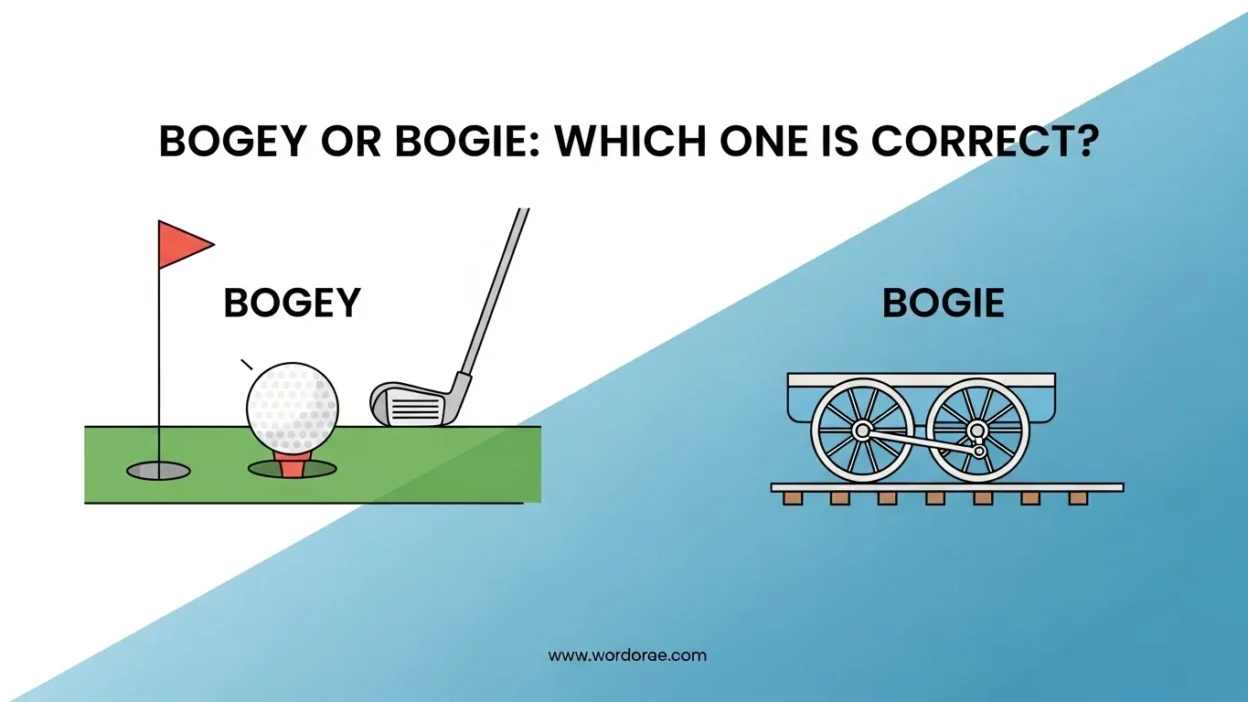
Quick Answer: “Bogey” is correct for golf, slang, snot, and informal uses, while “bogie” is only correct in railway contexts.
If you’ve ever typed bogey or bogie into Google, you were probably unsure which spelling is correct. The two words sound exactly the same, look nearly identical, and show up in completely different situations — from golf courses to train stations to playground slang.
People commonly ask:
- Is it spelled bogey or bogie?
- Bogey or bogie meaning — are they the same?
- Bogey or bogie cigarette?
- Bogey or bogie snot?
- Bogey or bogie slang — which one is right?
The confusion makes sense. But once you understand the contexts, the difference becomes very clear.
Quick Answer
Both bogey and bogie are correct spellings — but they mean different things depending on context.
- Bogey is used in golf, slang (like snot), and informal expressions.
- Bogie is mainly used in British railway terminology for a train wheel assembly.
If you’re unsure, the safest general spelling in everyday English is bogey.
Is It Spelled Bogey or Bogie?
The honest answer: it depends on what you’re talking about.
If you’re referring to:
- A golf score → Bogey
- A piece of mucus (snot) → Bogey
- A slang term → Bogey
- A cigarette (informal slang in some regions) → Bogey
- A train wheel assembly → Bogie
So when people search is it spelled bogey or bogie, they’re usually asking about everyday usage — and in most non-technical situations, bogey is the correct spelling.
Bogey or Bogie Meaning: Are They the Same?
No, they are not the same — even though they sound identical.
Bogey Meaning
“Bogey” has several meanings:
- Golf term — One stroke over par.
- Slang (British English) — A piece of dried nasal mucus (snot).
- Military slang — An unidentified aircraft or radar target.
- Informal slang (regional) — Sometimes used casually for a cigarette.
Because it appears in sports, slang, and informal English, “bogey” is much more versatile.
Bogie Meaning
“Bogie” has a much narrower meaning:
- A wheeled chassis under a railway carriage.
That’s it.
If you’re writing about trains, engineering, or railway mechanics, you use bogie. Outside of that context, it’s rarely needed.
Bogey or Bogie Cigarette: Which Is Correct?
This is one of the more unusual searches — bogey or bogie cigarette.
In some regional slang (especially older British or Australian usage), “bogey” has occasionally been used informally to refer to a cigarette. However, this usage is rare and not widely standardized.
If you see the term in slang context, bogey is the spelling you’re more likely to encounter.
“Bogie cigarette” would generally be considered incorrect or at least uncommon.
Bogey or Bogie Snot: Which Spelling Is Right?
When referring to nasal mucus (yes, the childhood word), the correct spelling is:
Bogey
In British English, especially informal speech, “bogey” refers to dried mucus in the nose.
Example:
- “That kid has a bogey hanging from his nose.”
“Bogie” is not used in this meaning.
So if you’re wondering bogey or bogie snot, the answer is clearly bogey.
Bogey or Bogie Slang Usage
When it comes to slang, “bogey” dominates.
Here are common slang uses:
- Something unpleasant
- An unidentified aircraft (military slang)
- A nasal mucus reference (British slang)
- Rare informal cigarette reference
“Bogie” does not typically function as slang outside railway contexts.
So for bogey or bogie slang, the correct form is almost always bogey.
What About Golf?
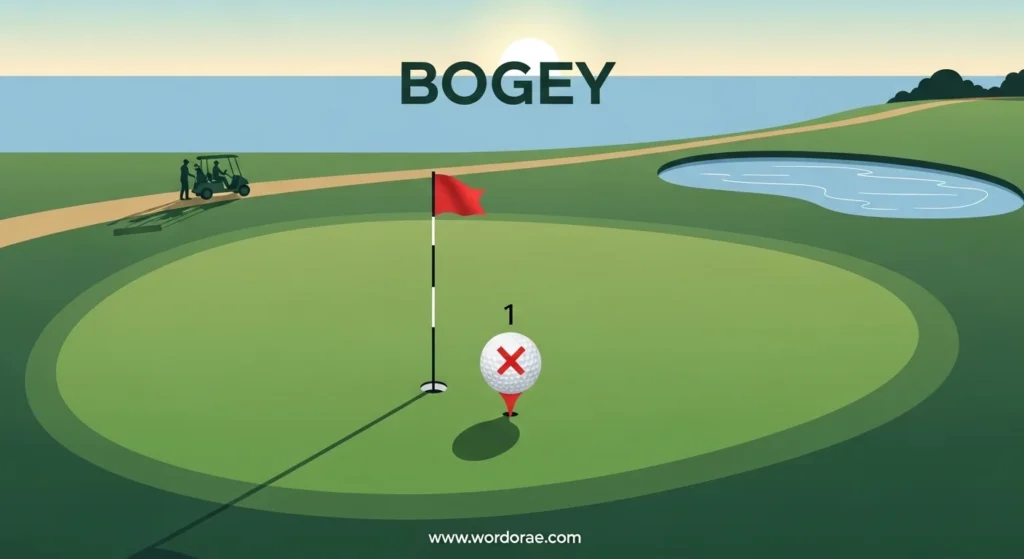
Even though you didn’t include golf keywords this time, it’s worth mentioning because it drives a lot of confusion around bogey or bogie meaning.
In golf:
- A bogey = one stroke over par.
The spelling has standardized globally as bogey, even in modern British golf writing.
So in sports writing, “bogey” is always correct.
Why Do Two Spellings Exist?
The difference between bogey and bogie largely comes down to regional language development.
Historically, British English often favored “bogie” in certain contexts. Over time, American English standardized “bogey” in sports and informal language.
Railway terminology retained “bogie” because technical industries tend to preserve original spellings.
Language evolves based on usage patterns — and today, “bogey” is far more common in general English.
Pronunciation: Any Difference?
No.
Both words are pronounced:
BOH-gee
The spelling difference does not affect pronunciation.
This identical sound is one of the biggest reasons people search is it spelled bogey or bogie in the first place.
Simple Rule to Remember
If it involves:
- Golf
- Slang
- Snot
- Informal speech
- Cigarettes (rare slang use)
→ Use Bogey
If it involves:
- Trains
- Railway engineering
- Mechanical wheel assemblies
→ Use Bogie

That’s the easiest way to keep them straight.
Quick Comparison Table
| Context | Correct Spelling |
|---|---|
| Golf score | Bogey |
| Slang usage | Bogey |
| Cigarette (informal) | Bogey |
| Snot (British slang) | Bogey |
| Train wheel assembly | Bogie |
| Railway engineering | Bogie |
Why This Confusion Matters
Spelling signals credibility.
If you’re writing:
- A sports article and use “bogie” → it looks incorrect.
- A railway engineering post and use “bogey” → it looks unprofessional.
Understanding the difference helps maintain authority in your writing.
And because “bogey” appears in more everyday contexts, it’s the version most people encounter first — which increases confusion when they later see “bogie” in technical materials.
So Which One Should You Use?
If you’re writing general content and unsure, default to bogey.
It covers:
- Golf
- Informal slang
- Everyday language
- Common search intent
Only switch to bogie if you’re clearly discussing trains or railway systems.
FAQs
1. Is it spelled bogey or bogie?
It depends on context: use bogey for golf, slang, or snot, and bogie for trains.
2. What does bogey mean?
Bogey can refer to one stroke over par in golf, a piece of nasal mucus, or informal slang for something unpleasant.
3. What does bogie mean?
Bogie refers to a wheeled framework under a train carriage, mainly used in British English.
4. Is bogey or bogie golf correct?
In golf, the correct spelling is bogey.
5. Is bogey or bogie slang correct?
For slang (snot, cigarette, or general informal use), the correct spelling is bogey.
6. Can bogey refer to a cigarette?
Yes, in some regional informal slang, “bogey” can refer to a cigarette, though this is rare.
7. Is bogey or bogie snot correct?
When referring to nasal mucus, the correct spelling is bogey.
8. How do you pronounce bogey and bogie?
Both are pronounced the same: /ˈboʊɡi/ (BOH-gee).
Conclusion
So, bogey or bogie — which one is correct?
Both are correct — but not interchangeable.
- Talking about golf? → Bogey
- Referring to slang or snot? → Bogey
- Wondering about bogey or bogie cigarette? → Bogey
- Writing about trains? → Bogie
If you remember one thing, let it be this:
Bogey is for everyday language.
Bogie is for railways.
Once you tie the word to its context, the spelling becomes obvious.
And now, the next time you wonder is it spelled bogey or bogie, you’ll know exactly which one to choose — and why.

I’m Sophia Larkins, a grammar-focused writer at Wordorae.com, where I break down common grammar mistakes and confusing words.
I specialize in clear, practical explanations that help readers write with confidence and accuracy.