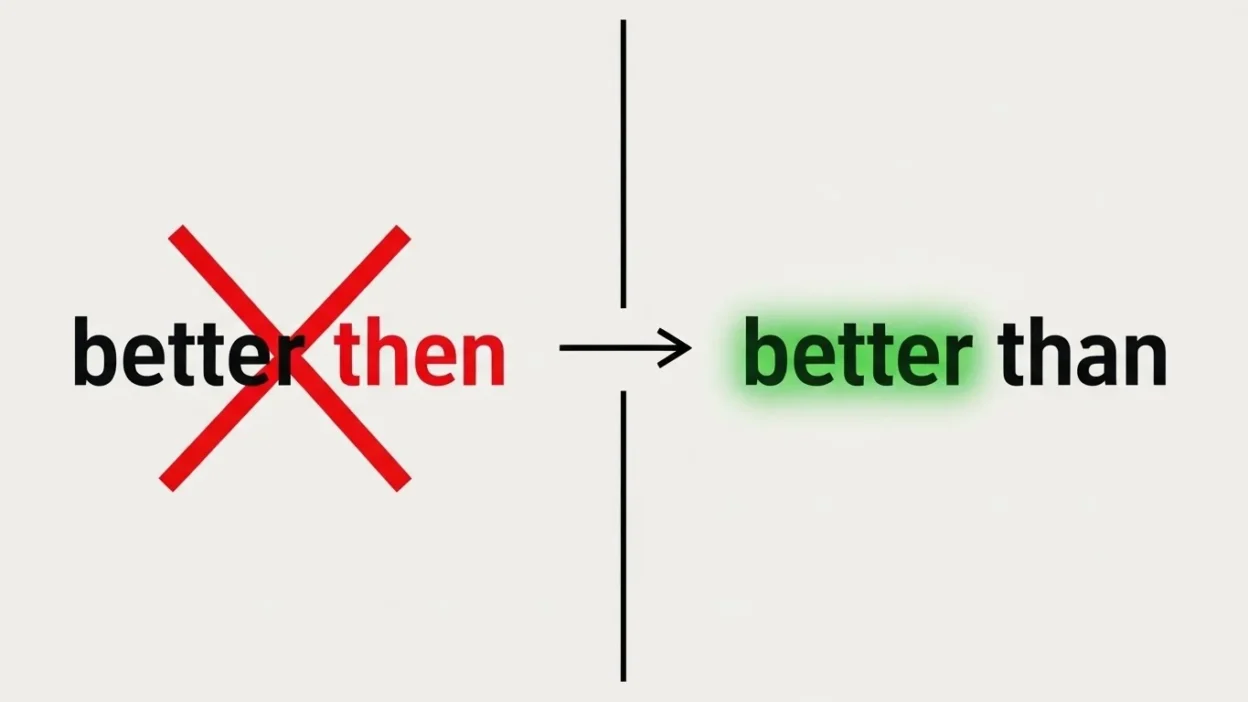
Quick answer first: “Better than” is correct. “Better then” is wrong in standard English.
I learned this the hard way.
I remember pausing mid-sentence while writing an email and thinking, “Is it better then or better than?” I had seen better then online so often on social media and blogs—that it started to look normal. Still, something felt off. A quick grammar check saved me from a common mistake.
If you’re here, you’re not bad at English. You’re facing one of the most confusing grammar errors: then vs than. This mix-up matters because one word compares, while the other shows time. In this guide, I’ll explain the difference clearly and help you choose the right word every time.
Better Then or Than: Quick Answer
- Correct: better than
- Incorrect: better then
Examples:
✅ This option is better than the last one.
❌ This option is better then the last one.
Why?
- Than is used for comparisons
- Then is used for time or sequence
The Origin of Better Then or Than
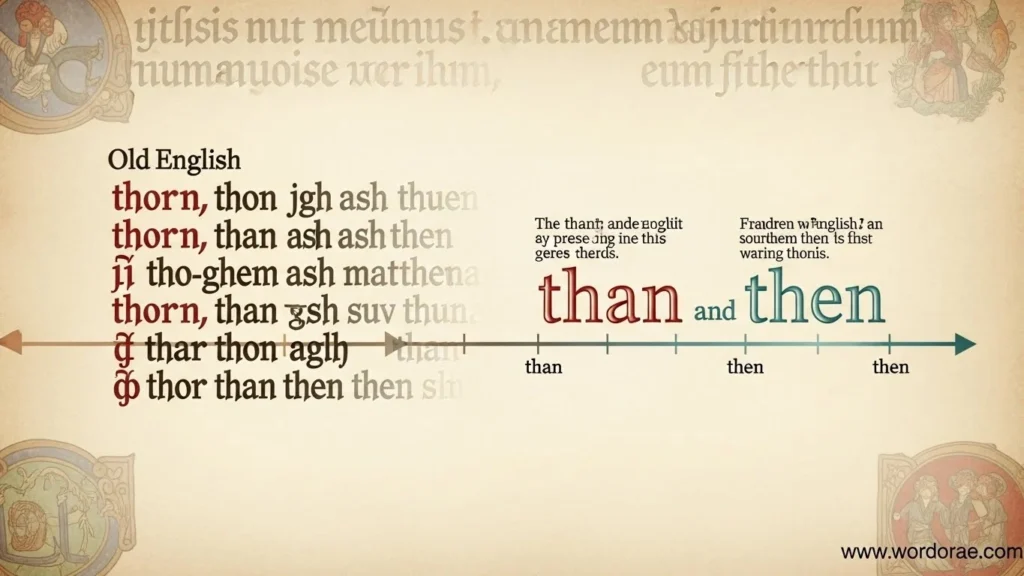
The confusion comes from history and sound.
- Than comes Old English þanne, used for comparison.
- Then also comes from Old English but evolved to show time or order.
Over centuries, their spelling and meaning separated, but pronunciation stayed similar. That’s why better then looks tempting: but grammar rules are clear: comparatives use “than.”
British English vs American English Spelling
There is no difference between British and American English here.
| Version | Correct Form |
| American English | better than |
| British English | better than |
| Australian English | better than |
| Canadian English | better than |
Better then is incorrect everywhere.
Which Spelling Should You Use?
Always choose based on meaning:
- If you are comparing, use than
This phone is better than the old one. - If you are talking about time, use then
Finish your work, then relax.
For professional writing, emails, schoolwork, and SEO content, better than is the only correct choice.
Common Mistakes with Better Then or Than
❌ This movie is better then the book.
✅ This movie is better than the book.
❌ He is better then me at math.
✅ He is better than me at math.
Mistake reason: confusing comparison with sequence.
Better Then or Than in Everyday Examples

Emails:
This solution is better than the previous one.
News:
The new policy performed better than expected.
Social Media:
This update is way better than the last 🔥
Formal Writing:
The results were significantly better than earlier findings.
Better Then or Than: Google Trends & Usage Data
Search data shows:
- “Better than” dominates in correct usage.
- “Better then” appears mostly as a spelling mistake.
- Google often auto-corrects better then to better than.
Users search this term because they want certainty and clarity improves both writing quality and search performance.
Comparison Table: Better Then vs Better Than
| Phrase | Correct? | Usage |
| better than | ✅ Yes | Comparison |
| better then | ❌ No | Grammar error |
FAQs
1. Is “better then” ever correct?
No. It is always a mistake in comparisons.
2. Why do people confuse then and than?
They sound similar and are often typed quickly.
3. Is this mistake common in spoken English?
Yes, but writing requires accuracy.
4. Does British English allow “better then”?
No. Both use better than.
5. Can grammar checkers catch this?
Most do, but not all.
6. Does using “better then” hurt SEO?
Yes. It can reduce credibility and clarity.
Conclusion
The confusion between better then or than is common but the rule is simple. Better than is always correct when comparing. Better then is a mistake, no matter how often you see it online.
I learned that even small grammar errors can change how professional writing feels.
Once you understand the difference between then (time) and than (comparison), the choice becomes automatic. Writers who focus on clarity build trust with readers and search engines reward that clarity too.
If you ever pause again, remember this:
If you can replace the word with “compared to,” the answer is than.
That one trick will save you every time.

I’m Helena Marwick, a grammar-focused writer at Wordorae.com, where I help readers understand confusing English words and usage clearly.
I specialize in making grammar simple, accurate, and easy to apply in everyday writing.