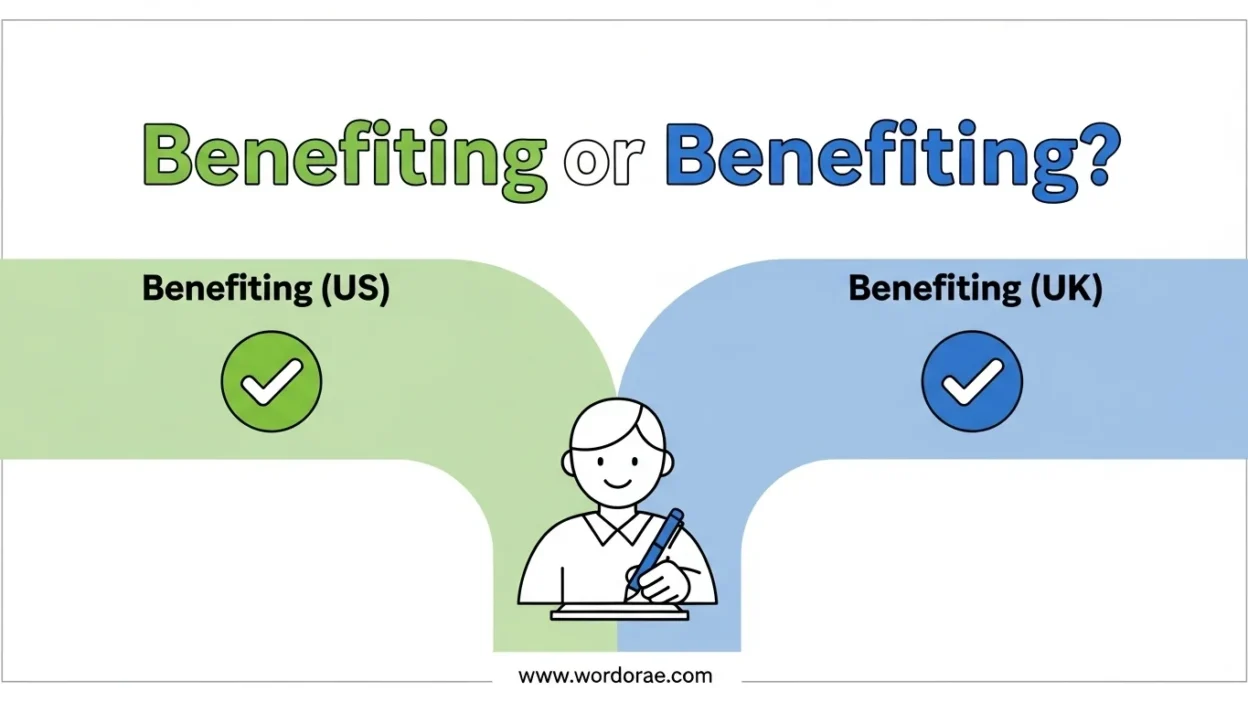
Quick answer: Both “benefiting” and “benefitting” are correct. “Benefiting” is preferred in American English, while “benefitting” is more common in British English.
People search for benefiting or benefitting because both spellings appear in professional writing, news articles, and everyday emails. You might see benefiting customers in one report and benefitting society in another and it’s not obvious which one is right.
The confusion usually comes from English spelling rules around double consonants, which don’t always feel consistent.
This matters more than it seems. Choosing the wrong spelling for your audience can make writing look careless, especially in academic, legal, or business contexts.
Writers want clarity, correctness, and confidence without stopping to second-guess every sentence.
This article explains the difference in simple terms. You’ll learn where both spellings come from, how American and British English treat them, common mistakes to avoid, and which version you should use based on your audience.
By the end, you’ll know exactly when to use benefiting or benefitting and why.
Benefiting or Benefitting – Quick Answer
Both spellings are correct present participle forms of the verb benefit.
- Benefiting → Preferred in American English
- Benefitting → Preferred in British English
Examples:
- US: The policy is benefiting small businesses.
- UK: The program is benefitting local communities.
Neither spelling is wrong. The choice depends on regional spelling rules.
The Origin of Benefiting or Benefitting
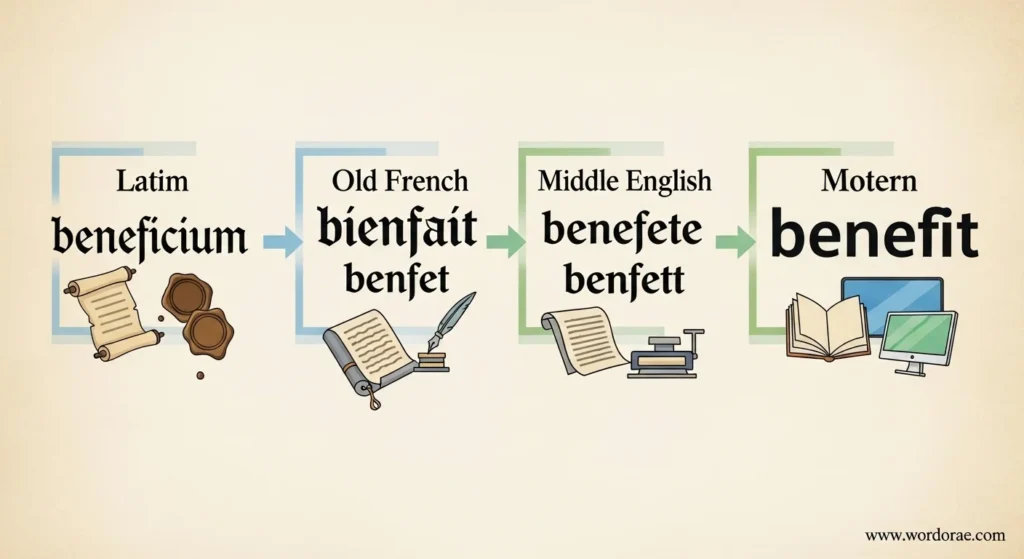
The word benefit comes from the Latin beneficium, meaning “a good deed” or “advantage.” When English verbs add -ing, spelling rules determine whether the final consonant doubles.
British English usually follows a rule that doubles the final consonant when adding endings like -ing or -ed, even if the stress is not on the last syllable.
American English applies this rule more selectively. As a result, British English kept benefitting, while American English simplified it to benefiting.
This difference isn’t about grammar, it’s about spelling convention.
British English vs American English Spelling
This is a clear regional distinction.
| English Variety | Preferred Spelling | Example |
| American English | Benefiting | The change is benefiting users. |
| British English | Benefitting | The reform is benefitting workers. |
| Global English | Benefiting | Safer for mixed audiences |
Both versions appear in dictionaries, but usage patterns differ.
Which Spelling Should You Use?
Choose based on your audience and purpose:
- US audience: Use benefiting
- UK, Australia, NZ: Use benefitting
- International or SEO content: Use benefiting
From an EEAT and Google algorithm perspective, familiarity matters. Readers are more likely to trust content that matches their regional expectations.
For global websites and professional writing, benefiting is usually the safest choice.
Common Mistakes with Benefiting or Benefitting
Here’s where writers often slip up:
- ❌ Mixing both spellings in the same article
✅ Pick one and stay consistent - ❌ Assuming one spelling is incorrect
✅ Both are valid - ❌ Applying the rule to all verbs
✅ English spelling rules vary by word
Consistency matters more than the spelling itself.
Benefiting or Benefitting in Everyday Examples
- Emails:
This update is benefiting our team. - News:
The law is benefitting low-income families. - Social media:
Daily exercise is benefiting my health. - Formal writing:
The initiative is benefitting the education sector.
Notice how professional and academic writing often follows regional standards closely.
Benefiting or Benefitting – Trends & Usage Data
Search trends show benefiting is far more common globally, especially in the United States and international content. Benefitting appears more often in UK-based publications and British educational resources.
This suggests user intent is largely regional. For broader reach and SEO visibility, benefiting performs better across search engines.
Benefiting vs Benefitting Comparison Table
| Aspect | Benefiting | Benefitting |
| Correct? | Yes | Yes |
| US English | Preferred | Rare |
| UK English | Acceptable | Preferred |
| Formal writing | Common | Common (UK) |
| SEO-friendly | Best choice | Regional |
FAQs
1. Is it benefiting or benefitting?
Both are correct.
2. Which spelling is American English?
Benefiting.
3. Which spelling is British English?
Benefitting.
4. Is benefitting a mistake?
No, it’s correct in British English.
5. Which should I use in professional writing?
Use the spelling your audience expects.
6. Does Google prefer benefiting or benefitting?
Benefiting, due to higher global search volume.
Conclusion
The difference between benefiting or benefitting comes down to regional spelling rules, not correctness.
American English prefers benefiting, while British English prefers benefitting. Both are grammatically sound and widely accepted.
If you’re writing for a specific audience, match their spelling conventions. If your audience is global or unknown, benefiting is the safer and more familiar option.
The key is consistency once you choose one spelling, use it throughout your content.
Understanding this small distinction helps your writing look polished, professional, and confident.
And once you know the rule, you’ll never hesitate over this word again.

I’m Helena Marwick, a grammar-focused writer at Wordorae.com, where I help readers understand confusing English words and usage clearly.
I specialize in making grammar simple, accurate, and easy to apply in everyday writing.