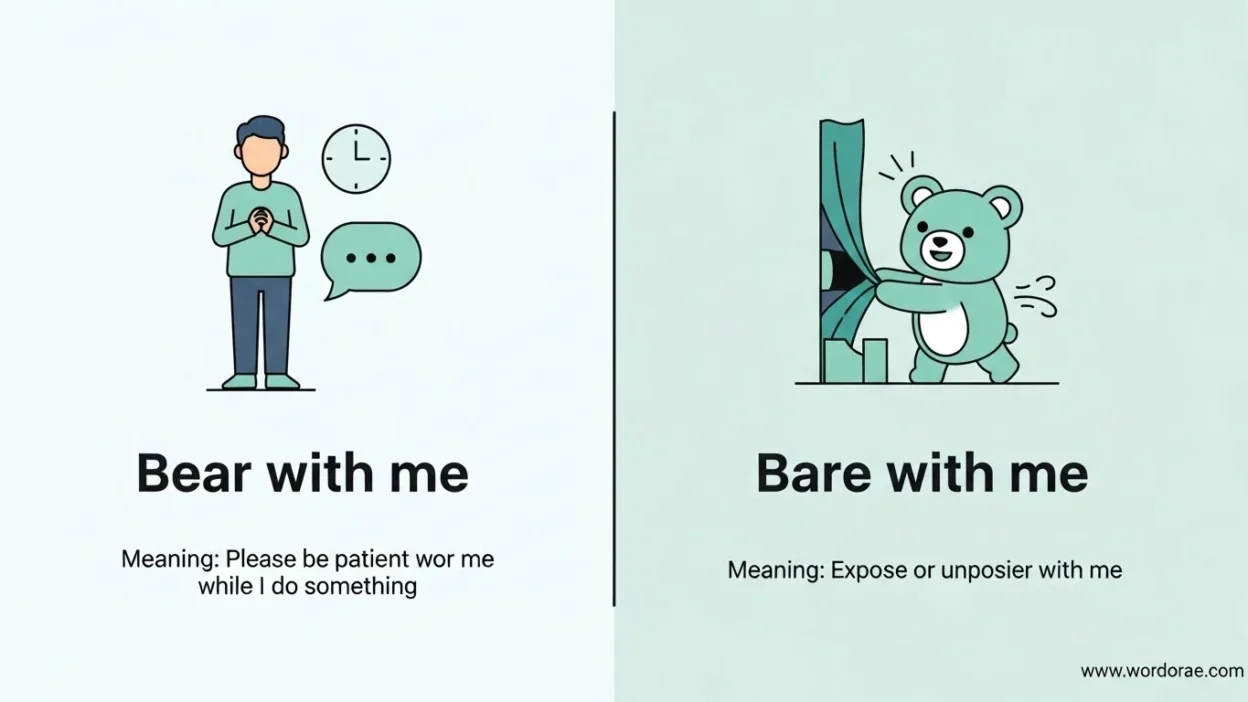
Quick answer: The correct phrase is “bear with me” not “bare with me.”
I see this mistake all the time in emails, work chats, and posts. I even caught myself typing bare or bear with me once and stopping mid-sentence to make sure I wasn’t about to send the wrong meaning
People write “please bare with me” when asking for patience. It sounds fine aloud, but it changes the meaning entirely.
That’s why so many search for is it bear or bare with me, which is correct bear or bare with me, or bear or bare with me meaning.
In this guide, you’ll learn the simple difference, see clear examples, and get an easy trick to remember the right phrase so you never confuse it again.
Bear or Bare With Me: Quick Answer
✔ Bear with me → Correct
❌ Bare with me → Incorrect
Bear = tolerate, endure, be patient
Bare = uncover, expose
Examples:
- ✔ “Please bear with me while I check this.”
- ❌ “Please bare with me while I check this.”
Whenever you’re asking someone to wait, bear with me is the correct phrase even in casual messages like just bear with me or formal writing.
The Origin of Bear or Bare With Me
The phrase comes from the verb bear, meaning to tolerate or endure. This meaning is consistent with phrases like bear the cost or bear the pain.
Bare, however, comes from a completely different root meaning to uncover or expose. Because the words sound identical, even native speakers sometimes confuse them.
This explains searches like bear or bare with me definition or bear or bare with me UK.
British English vs American English Spelling
There’s no difference between UK and US English here. The rule stays the same:
| Phrase | UK English | US English | Correct? |
| bear with me | ✔ | ✔ | Yes |
| bare with me | ✖ | ✖ | No |
Which Spelling Should You Use?
No matter the audience:
- Emails & work messages: Please bear with me
- Casual writing: Just bear with me
- Formal writing: We ask readers to bear with us
If you’re unsure, remember: whenever you want patience, use bear.
Common Mistakes with Bear or Bare With Me
❌ “Please bare with me for a moment.”
✔ “Please bear with me for a moment.”
❌ “Thanks for baring with me.”
✔ “Thanks for bearing with me.”
These errors happen because the words sound identical.
Bear or Bare With Me in Everyday Examples
Emails: “Please bear with me while I gather the report.”
Work chat: “Bear with me, I’m fixing it now.”
Social media: “Bear with me, long post coming.”
Formal writing: “We ask readers to bear with us during the transition.”
Comparison Table: Bear vs Bare
| Word | Meaning | Used in Phrase | Example |
| bear | tolerate, endure | Yes | bear with me |
| bare | uncover, expose | No | bare hands |
FAQs
1. Is it bear or bare with me?
Always use bear with me.
2. Which is correct, bear or bare with me?
Bear with me is correct.
3. What does “bear with me” mean?
It means to be patient or wait.
4. Is “bare with me” ever correct?
Only if you literally mean to uncover something.
5. Can I use “bear with me” in emails?
Yes, it’s appropriate for both casual and professional messages.
6. How can I remember the difference?
Bear = patience; Bare = naked/exposed.
7. Is it formal or casual?
Works in both contexts polite and professional.
Conclusion
The rule is simple: bear with me asks for patience; bare with me is almost always wrong. Understanding the difference ensures your writing is clear and professional.
Next time you’re typing please bear with me, just remember: patience = bear.
This small detail prevents mistakes, avoids confusion, and keeps your communication confident whether it’s an email, a chat message, or a formal document.

I’m Helena Marwick, a grammar-focused writer at Wordorae.com, where I help readers understand confusing English words and usage clearly.
I specialize in making grammar simple, accurate, and easy to apply in everyday writing.