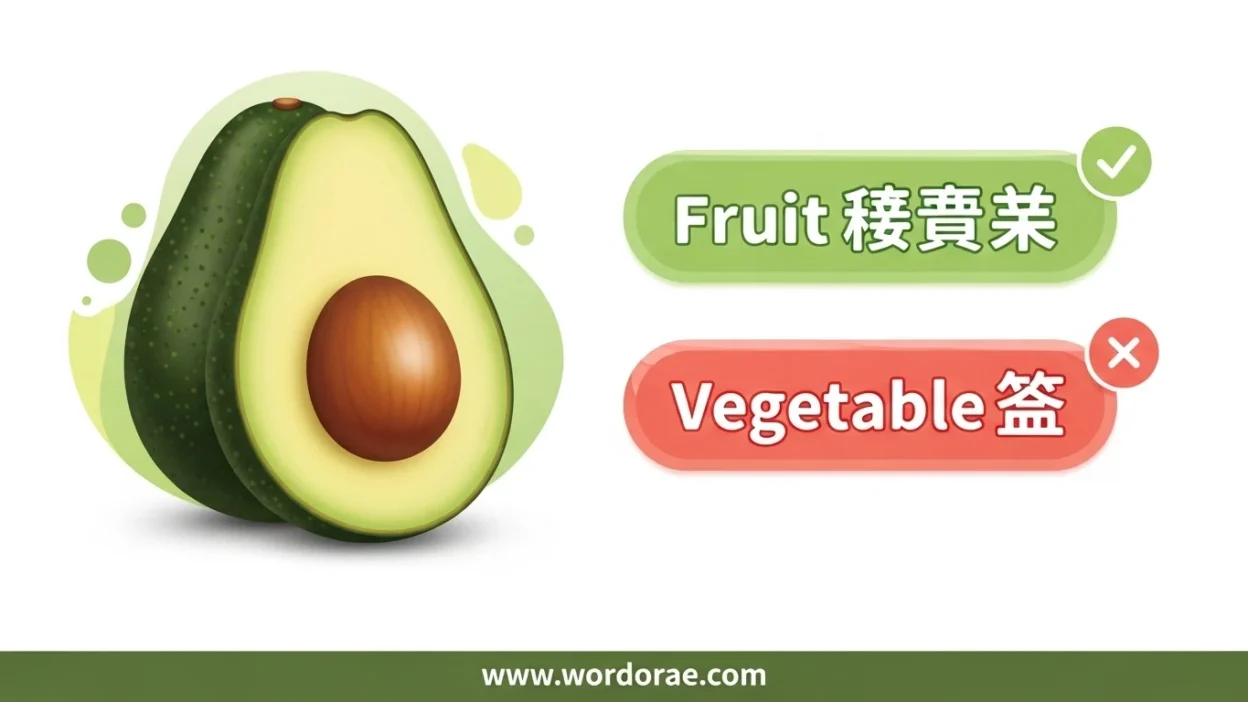
Quick answer: An avocado is a fruit, specifically a berry.
If you’ve ever wondered if avocado belongs with apples or with salad greens, you’re not alone.
People often debate “is an avocado a fruit or a vegetable?”, and it’s one of the most searched questions about this creamy, green superfood. The confusion comes from the way we eat it.
Savory dishes like salads, toast, and guacamole make it feel like a vegetable. But botanically, it’s definitely a fruit.
Understanding the correct classification isn’t just trivia. It affects cooking, nutrition information, and even gardening.
Knowing that avocado is a fruit can also help you understand its growth, ripening process, and why it’s so rich in healthy fats compared to other fruits.
In this article, we’ll explain everything about avocado’s classification, its history, common misconceptions,
How it’s used in everyday cooking, and the science behind why this “vegetable-looking” food is really a fruit. By the end, you’ll never be confused again.
Is an Avocado a Fruit or a Vegetable – Quick Answer
Avocado is a fruit. More specifically, it is a single-seeded berry.
Examples of correct usage:
- “I added avocado to my fruit salad because it’s technically a fruit.”
- “Avocado toast is delicious, but don’t forget it’s a fruit at its core.”
Incorrect thinking:
- ❌ “Avocado is a vegetable, so it belongs in the veggie drawer.”
Botanically, any plant part that develops from the flower and contains seeds is considered a fruit.
Since avocados grow from flowers and have seeds inside, they fit the definition perfectly.
The Origin of the Avocado
Avocados come from Central and South America, particularly Mexico, where they have been cultivated for thousands of years.
The word “avocado” comes from the Spanish “aguacate”, which itself derives from the Nahuatl word “āhuacatl”.
Interestingly, despite their botanical classification as fruits, avocados have long been treated like vegetables in culinary traditions due to their creamy texture and mild, savory flavor.
Common Misconceptions
Here are some reasons why people mistakenly call avocados vegetables:
- ❌ Savory taste: Often used in salads, sandwiches, and guacamole.
- ❌ Culinary habits: Most vegetables are eaten with savory dishes, and avocado fits the pattern.
- ❌ Storage methods: Stored in refrigerators like other vegetables.
Tip: Always remember the botanical definition counts seeds and flower development, not flavor or how we eat it.
That’s why tomatoes, cucumbers, and avocados are all fruits, even if we treat them as vegetables in the kitchen.
Avocado in Everyday Examples
Cooking:
- Smoothies: “Add avocado for creaminess, remember, it’s a fruit!”
- Salads: Often combined with vegetables, but still botanically a fruit.
Snacks:
- Guacamole: A classic example where avocado is treated like a vegetable in flavor, but remains a fruit.
Gardening:
- Avocado trees flower, and their fruit grows from flowers containing seeds, reinforcing the fruit classification.
Nutritional Perspective
Avocados are unique because, unlike most fruits, they are high in healthy fats rather than sugars. This is why they are often grouped with vegetables in dietary guides.
| Nutrient | Amount per 100g |
| Calories | 160 kcal |
| Fat | 15 g |
| Carbohydrates | 9 g |
| Fiber | 7 g |
| Protein | 2 g |
Despite the high-fat content, it is monounsaturated fat, which is heart-healthy and part of a fruit’s natural oil composition.
Avocado : Trends & Usage Data
Search trends show high interest in “is an avocado a fruit or a vegetable?” worldwide, especially among:
- Students learning plant biology
- Health-conscious individuals
- Cooking enthusiasts and chefs
Botanical clarity matters for SEO and content accuracy, making “avocado fruit vs vegetable” a popular long-tail keyword.
Comparison Table: Fruit vs Vegetable
| Feature | Avocado as Fruit | Avocado as Vegetable (Incorrect) |
| Seeds present | ✅ Yes | ❌ No |
| Grows from flower | ✅ Yes | ❌ No |
| Botanical classification | ✅ Fruit | ❌ Incorrect |
| Culinary use | Savory/sweet | Savory |
| Nutritional fats | ✅ High | ✅ High |
FAQs
1. Is an avocado a fruit or vegetable?
It’s a fruit, botanically classified as a berry.
2. Why do people think it’s a vegetable?
Because it’s used in savory dishes and has a creamy texture.
3. Can you eat avocado like a vegetable?
Yes, culinary use is different from botanical classification.
4. Are all fruits sweet?
No, fruits like avocado, tomato, and cucumber are savory.
5. What kind of fruit is an avocado?
A single-seeded berry.
6. Does avocado belong in fruit salads?
Yes, technically, but flavor pairing depends on taste.
7. Is avocado high in sugar?
No, it’s high in healthy fats.
Final Thoughts
Avocados often confuse people because they look and taste like vegetables. But the truth is, an avocado is a fruit, specifically a single-seeded berry. Its seeds, flower origin, and botanical definition make it clear.
Despite being treated like a vegetable in culinary use salads, guacamole, and avocado toast it remains a fruit scientifically.
This distinction is more than trivia; it’s helpful for nutrition, gardening, and even cooking.
Understanding why avocados are fruits can also help with dietary planning, as their fat content differs from most sweet fruits.
Next time someone asks, “Is avocado a fruit or vegetable?” you can confidently say fruit and explain why.
By recognizing this, your cooking, writing, and plant knowledge all benefit from accuracy.
Remember, even if it’s eaten like a vegetable, its fruit classification never changes.

I’m David Miller, a grammar expert and author at Wordorae.com, specializing in clear, simple explanations of confusing English grammar and word usage.
I help readers write with confidence by turning complex grammar rules into easy, practical guidance.